

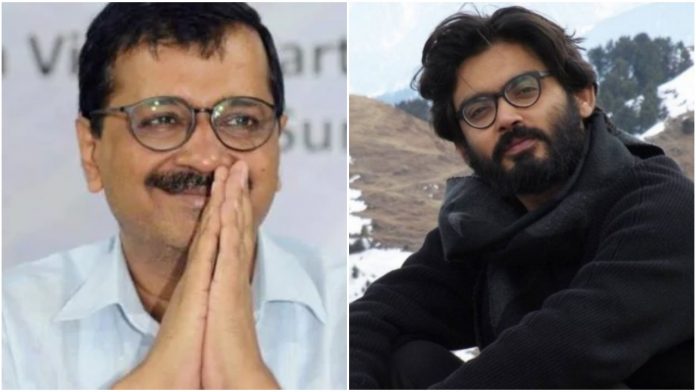
On 29th July, a Delhi Court had summoned radical Islamist Sharjeel Imam to appear on 1st September for the sedition case against him. The court took the cognisance of the offences under the Unlawful Activities Prevention Act (UAPA) based on the charge sheet filed by the Police. Imam allegedly made instigating speeches at Aligarh Muslim University in January.
Delhi government has not yet given the prosecution sanction to prosecute Sharjeel Imam under sedition. Court takes cognizance of chargesheet under UAPA. pic.twitter.com/6DkhaiWi8W
— Raj Shekhar Jha (@rajshekharTOI) July 30, 2020
The police informed the court that prosecution sanction to prosecute Imam under sections 124A (sedition) and 153 A (punishment for wanton vilification or attack upon religion, etc.) is still pending with the Delhi government. Dharmendra Rama, additional sessions judge, did not take cognisance of these sections. As per the law, investigating agencies can file charge sheets in sedition cases only after the approval of the state government.
The court said in its order, “In view of the same, I take cognisance for commission of offence under section 13 of UAPA in the present matter. However, the issue of taking cognisance for the commission of offence under section 124A (sedition), 153A (punishment for sedition), 153B (Assertion prejudicial to national integration) and 505 (circulation of certain statement, rumours, etc) of the Indian Penal Code, is deferred for the time being for the want of requisite sanction.”
Sharjeel Imam is lodged in Guwahati jail
Imam is currently lodged in Guwahati jail. He was earlier tested positive for Covid-19 that delayed his transfer to Delhi. The court said that if Imam cannot be present physically in the court on the next date, the hearing will take place via video conferencing.
Imam wanted to ‘cut-off’ Assam, and the NE states from India
Sharjeel Imam is accused of giving incendiary speeches to provoke and instigate riots. He was heard instigating people to organise a blockade and cut off the North Eastern states from the rest of India to force the government to conceded to their demands. His speeches in AMU are also under probe as the UP government has told that he had instigated people to run riots, vandalise temples and loot during the anti-CAA protests.
Delhi Police arrested imam on 28th January from Bihar. A charge sheet was filed against him in connection to riots outside Jamia. The police alleged that he instigated riots with his speeches during anti-CAA protests. Several videos of Sharjeel surfaced during the anti-CAA protests in which he was giving seditious speeches. In the charge sheet filed on Saturday, the Police also attached CFSL report that confirmed the voice in videos matches with the voice samples Sharjeel provided on court’s orders.
Delhi government’s snail-speed in sanctioning approval for sedition cases
This is not the first time Delhi government under Aam Aadmi Party has delayed permission to prosecute someone under sedition charges. In 2019, Patiala House Court had to tell the Delhi government that they cannot stop the file for such a long time in the sedition case against Kanhaiya Kumar. The AAP government sat on the file for more than a year. At that time Kejriwal government rejected permission to Delhi Police and said that Kanhaiya and his gang’s speeches were not against India. Now, they are repeating the same in Sharjeel Imam’s case.


