

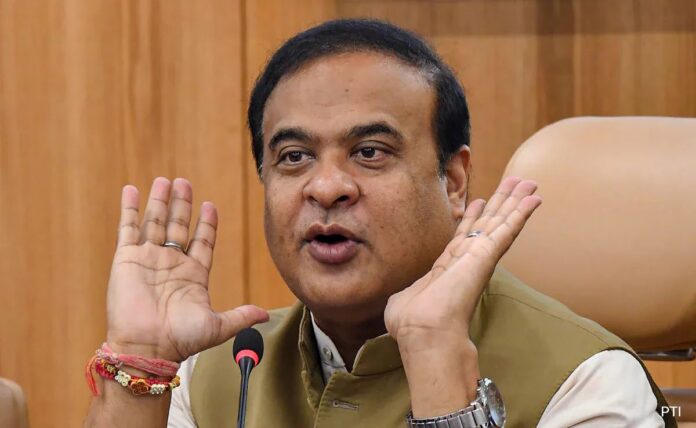
The Supreme Court on Monday struck a note of clear displeasure as it declined to entertain petitions seeking registration of a police case against Assam Chief Minister Himanta Biswa Sarma over alleged hate speech.
At the centre of the controversy were two issues: a video released by the Assam unit of the BJP showing Sarma firing at a photograph of Muslims, and his earlier remarks about “Miyas”, a term used for Bengali-speaking Muslims whom the BJP has often branded as “illegal infiltrators”.
While urging political parties to exercise restraint and “act within the boundaries of constitutional morality,” the court also took a dim view of the growing practice of rushing straight to the Supreme Court, especially on the eve of elections. “This is becoming a trend just before polls,” the petitioners were told.
A bench led by Chief Justice Surya Kant questioned why the petitioners had not first approached the Guwahati High Court, calling it a “disturbing trend” to bypass High Courts in every matter. “Don’t undermine the validity of our High Courts,” the Chief Justice remarked, adding that such moves end up “demoralising” them.
Appearing for the petitioners, senior advocate Abhishek Singhvi argued that the Supreme Court could exercise its discretionary powers in this case, particularly since the plea sought a court-monitored Special Investigation Team (SIT) probe. Pushing back against the court’s concern about bypassing the High Court, Singhvi said the Chief Minister was “demoralising the Constitution and an entire community”.
“This involves the rights of people. We are seeking registration of a police case. If this is not heard, fundamental rights will be diminished,” he said, expressing apprehension about pursuing the matter in Assam. “Send me to another High Court then.”
Singhvi invoked Articles 14, 15 and 21 of the Constitution, arguing that the case squarely involved equality before law, protection against discrimination, and the right to life and personal liberty. He also pressed Article 32, which allows direct access to the Supreme Court for the enforcement of fundamental rights. “We are seeking an SIT… but what can any SIT do in Assam against the boss of Assam?” he asked, adding that Sarma was a “habitual and repeat offender” and that this was an “ideal case” for the court to step in.
The bench, however, remained unconvinced.
“The Supreme Court cannot become a convenience forum for shopping,” the Chief Justice said, rejecting the suggestion of shifting the case to another High Court. “There are good lawyers there as well. The entire effort is to undermine the authority of the High Courts, and this is a calculated attempt. I have to take care of judicial administration across the country.”
Earlier, the Jamiat Ulama-i-Hind had also moved the Supreme Court over the Chief Minister’s “Miya” remarks. In its plea, filed by Jamiat chief Maulana Mahmood Madani, the organisation argued that the term is a derogatory reference to Muslims and that when such language is used by someone holding a high constitutional office, it cannot be brushed aside as mere political rhetoric or protected free speech.
