

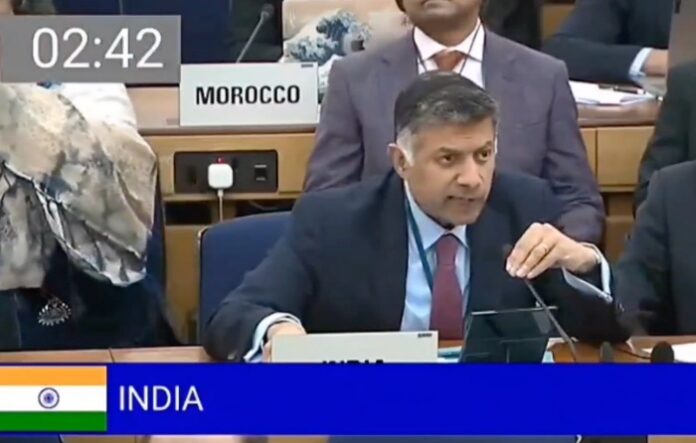
India’s Permanent Representative (and High Commissioner to the UK) Vikram Doraiswami condemned the attacks on commercial shipping during the ongoing war between US-Israel and Iran as “unacceptable,” highlighting dangers to crews, navigation safety, and global energy supply chains.
During a meeting of the International Maritime Organization, the top UN Maritime body, Doraiswami expressed condolences for lost lives, including three Indian seafarers, while calling for de-escalation through dialogue and diplomacy. India has activated a 24/7 helpline for affected seafarers and coordinated rescues via the IFC-IOR.
On March 11, multiple ships, including the Thai-flagged Mayuree Naree, Japan-flagged ONE Majesty, and Star Gwyneth, were struck by projectiles, causing fires, hull damage, crew evacuations, and missing seafarers, who also included Indian nationals. Hundreds of Indian nationals who work in the global shipping industry are currently stuck in the Strait of Hormuz, facing an uncertain future and dwindling supplies.
“India is among the top 3 contributors to the global seafaring workforce, constituting over 13% of seafarers in the world. An estimated 23,000 Indian seafarers have been impacted by the current crisis. 24 Indian-flagged vessels are currently in the Persian Gulf region. 22 are stuck in the west of the Strait of Hormuz, with 611 Indian seafarers onboard, and 2 vessels in the east of the Strait of Hormuz, with 47 seafarers onboard. India’s energy security and trade are critically dependent on the Strait of Hormuz”, Doraiswami stated at the IMO session.
Over 20 confirmed incidents have been reported since early March, with traffic plummeting from a pre-crisis average of 138 vessels daily to just a handful.
Due to the ongoing war, commercial shipping through the Strait of Hormuz, which carries 20% of the world’s energy supplies and most of India’s LNG, has been severely impacted, effectively blocked. After intense dimplomatic efforts, India has managed to negotiate passage for a few ships. Two LPG tankers named Shivalik and Nanda Devi, and a crude oil tanker named Jag Ladaki have cross the Strait so far. Many Indian-flagged vessels are still stuck.
The war has also caused significant damage to commercial energy infrastructure, especially Qatar’s Ras Laffan facility.
