

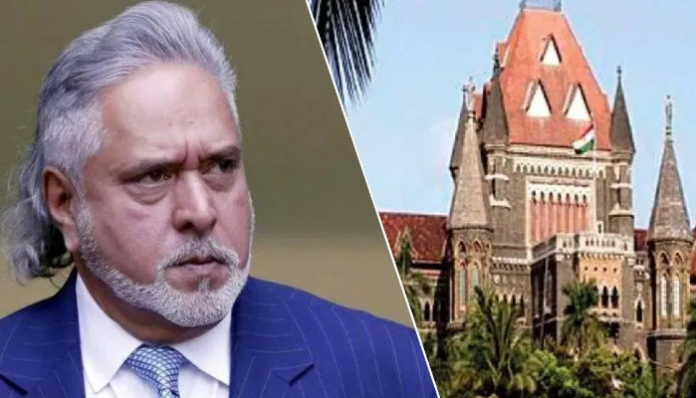
On 18th February (Wednesday), Fugitive Vijay Mallya told the Bombay High Court that he cannot commit to a date for his return to India due to continued restrictions imposed by the United Kingdom courts. According to him, his passport has been revoked, and he is not permitted to leave England or Wales owing to the rulings. However, the Indian court termed his claim as an “excuse.”
Mallya presented his case before a bench of Chief Justice Shree Chandrashekhar and Justice Gautam Ankhad via his attorney Amit Desai. The statement was submitted in response to the court’s previous order directing him to specify whether he planned to return to India for trial while pursuing his petitions contesting the Fugitive Economic Offenders (FEO) Act’s constitutionality and the decision designating him as a fugitive economic offender. The bench had stated unequivocally that it would not consider arguments about the merits of the FEO Act challenge until the petitioner was physically present in India.
Desai contended that hearing the petition shouldn’t be contingent on his client’s in-person presence and referenced two Supreme Court judgments in which he asserted that pleas were considered even if the petitioners were not present. “Pursuant to orders passed by the Courts in England, the petitioner is not permitted to leave or attempt to leave England and Wales or apply for or be in possession of any international travel document. In any event, the petitioner is unable to precisely state when he will return to India,” he insisted.
Additionally, Desai argued that Mallya would no longer qualify as a fugitive if he returned to India. “If he were to appear in India, then all these proceedings would be rendered irrelevant as the statute says that once the offender appears in the concerned court of law, then all these orders would be set aside,” he added.
The bench, however, questioned whether Mallya was protecting himself by relying on orders from other courts. “But then what is your apprehension? You merely rely on orders of the Courts in England, but you haven’t spelt out if you have challenged those orders or not. Are you just taking these orders as an excuse?” Chandrashekhar countered.
Meanwhile, Solicitor General Tushar Mehta, who was representing the centre, opposed the prayer and conveyed that the businessman needs to have faith in the Indian legal system. “India has a robust and vibrant legal system which is run by the rule of law,” he submitted and asked the court to direct Mallya to conform to its authority.
He emphasised that Mallya had petitioned the court under its extraordinary writ authority, which is discretionary and equitable in character, remarking that such relief is not available to those who violate the law. Mehta noted, “It is a settled position in law of the land that a person not complying with the law cannot be entrusted with the prerogative writ of this court.”
The 70-year-old former liquor baron faces money laundering allegations in addition to being accused of repeatedly failing to return loans totalling several thousand crores. In January 2019, a special court that handles cases under the Prevention of Money Laundering Act (PMLA) designated him as a Fugitive Economic Offender. In March 2016, Mallya departed India and moved to the UK.
The court also pointed out that the declaration was not based on a personal affidavit but rather on instructions given by Mallya’s lawyer. It instructed the legal team to provide a sworn affidavit that included a copy of the statement, allowing the central government to respond officially. The case has been postponed until 11th March.
