

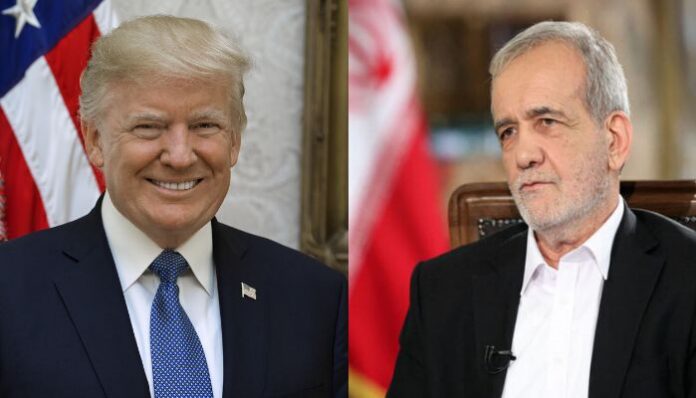
The United States and Iran have formally signed a 14-point Memorandum of Understanding (MoU) aimed at ending the Gulf conflict and restoring stability in the region. US President Donald Trump and Iranian President Masoud Pezeshkian confirmed that the agreement came into effect on Wednesday, 17th June, bringing military hostilities to an end and paving the way for the reopening of the Strait of Hormuz.
US President Donald Trump and his Iranian counterpart, Masoud Pezeshkian, signed a peace deal today, aimed at bringing an end to the months-long war in the Middle East.
— NDTV (@ndtv) June 18, 2026
Trump put his signature to the memorandum of understanding during dinner with French President Emmanuel… pic.twitter.com/F855NIFUGZ
The agreement outlines steps to stop the fighting, revive trade and navigation, address Iran’s nuclear programme, and gradually remove sanctions. Both countries have also committed to negotiating a final agreement within the next 60 days. The 14-Point US-Iran agreement is
1. Permanent end to fighting
The US, Iran and their allies agreed to immediately stop military operations on all fronts, including Lebanon. Both sides pledged not to threaten or use force against each other.
2. Respect for sovereignty
Washington and Tehran agreed not to interfere in each other’s internal affairs and to respect each other’s territorial integrity.
3. Final agreement within 60 Days
The two countries committed to completing a final peace agreement within 60 days, unless both sides agree to extend the deadline.
4. End of US naval blockade
The US will begin removing its naval blockade and restrictions on Iranian ports. The blockade is expected to end completely within 30 days. American forces deployed near Iran will also be withdrawn during this period.
5. Safe passage through Strait of Hormuz
Iran promised to use its best efforts to ensure the safe movement of commercial ships through the Strait of Hormuz without charging any fees.
6. $300 billion reconstruction plan
The US and regional partners agreed to support Iran’s reconstruction and economic development through a fund worth at least $300 billion. The implementation framework will be finalized within 60 days.
7. Removal of sanctions
The US agreed to lift sanctions on Iran, including measures linked to the UN Security Council, the International Atomic Energy Agency (IAEA), and unilateral American sanctions, according to a schedule to be finalized later.
8. Iran’s nuclear commitment
Iran pledged not to develop or acquire nuclear weapons. Both countries will work with the IAEA to decide the future of Iran’s stockpile of enriched uranium.
9. Maintaining the status quo
Until a final agreement is reached, Iran will maintain its current nuclear programme arrangements, while the US will avoid imposing new sanctions or deploying additional forces near Iran.
10. Waivers for Iranian exports
The US Treasury Department will issue waivers allowing exports of Iranian crude oil, petroleum products and related services, including transportation, insurance and banking transactions.
11. Release of frozen assets
Iran will regain access to its frozen and restricted funds once the memorandum is implemented. Both sides will decide the process for releasing these assets during negotiations.
12. Monitoring mechanism
An executive mechanism will be established to oversee implementation of the MoU and ensure compliance with the future agreement.
13. Start of formal negotiations
Talks on the final agreement will begin once implementation starts on the ceasefire, blockade removal, Hormuz arrangements, export waivers and asset-release provisions.
14. UN Security Council endorsement
The final agreement will be backed by a binding resolution of the United Nations Security Council.
The memorandum marks a major step towards reducing tensions in the Gulf region. If implemented successfully, it could reopen vital trade routes, ease economic pressure on Iran, restore stability in the Strait of Hormuz and create a framework for a broader and lasting peace agreement between the two countries.
