

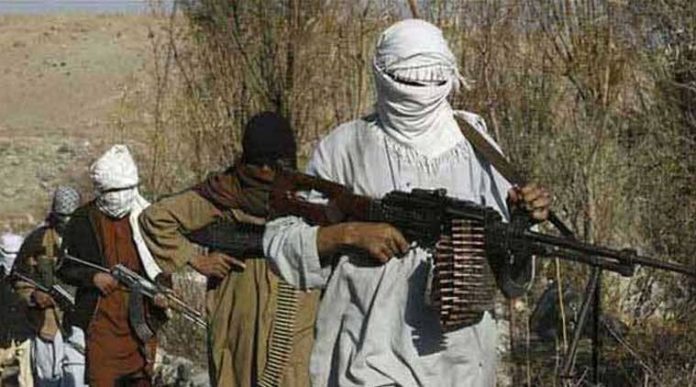
A day after Tehreek-i-Taliban Pakistan (TTP) claimed responsibility for the suicide bombing attack in Quetta, it has now directed the country’s media houses and journalists to refrain from describing them as ‘terrorist outfit,’ reported Dawn.
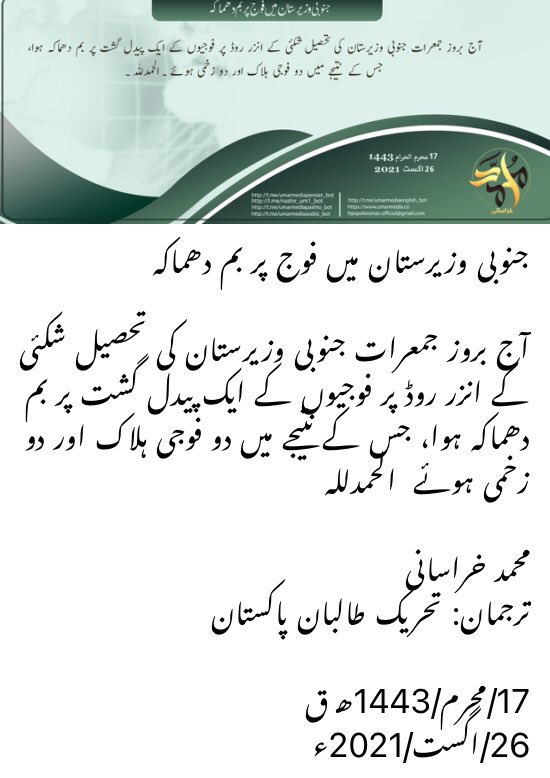
In a statement released on Monday (September 6) on social media, TTP spokesperson Mohammad Khurasani informed that the group had been monitoring the media and warned against the use of titles such as ‘extremists’ and ‘terrorists’. He further cautioned that those founding using such terms will be considered as ‘enemies’ of TTP. “Using such terms for TTP showed a partisan role of media and journalists,” Mohammad Khurasani directed.
He further alleged that the Pakistani media labelled the TTP with ‘obnoxious terms’ to please one party. He reiterated that TTP should instead be referred by its original name of ‘Tehreek-i-Taliban Pakistan’, else the media would be guilty of ‘professional dishonesty’ and ‘creating enemies.’
TTP came into existence in 2007 and was banned in August of the following year. Other groups associated with the terror outfit was banned under the National Action Plan (NAP) in 2014. Ironically, the Pakistan government supports the Taliban in Afghanistan but not in its offshoot in Pakistan.
Suicide bombing attack in Quetta
On Sunday (September 5), a suicide blast in Quetta claimed the lives of four men of the Frontier Corps of Pakistan. According to reports, apart from the three dead, 20 others were injured in the attack. The Tehreek-e-Taliban (TTP) assumed responsibility for the attack. The blast reportedly occurred at 7.30 a.m at Mustang Road in Quetta. The Sohana Khan FC check post was targeted in the attack, the Balochistan Counter-Terrorism Department confirmed.
According to the police, the attacker drove his motorcycle into a vehicle that belonged to the law enforcement agencies. A further investigation into the matter is currently underway. Pakistan Prime Minister Imran Khan condemned the attack in a statement. He said, “Condemn the TTP suicide attack on FC checkpost, Mastung road, Quetta. My condolences go to the families of the martyrs & prayers for the recovery of the injured. Salute our security forces & their sacrifices to keep us safe by thwarting foreign-backed terrorists’ designs.”


