

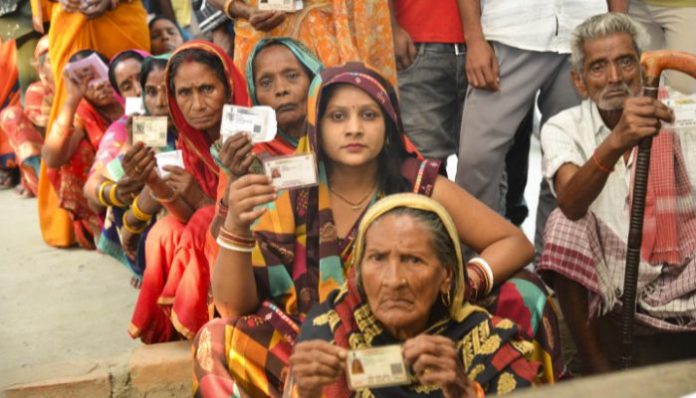
The Election Commission of India has initiated a new project called Special Intensive Revision SIR 2.0. This is a big “clean-up” exercise for the nation’s voter lists, and it starts today in twelve states and Union Territories. This sweeping check will cover nearly 51 crore voters in all. These places include Tamil Nadu, Kerala, West Bengal, Uttar Pradesh, Madhya Pradesh, Rajasthan, Chhattisgarh, Goa, Gujarat, Puducherry, the Andaman and Nicobar Islands, and Lakshadweep.
The main goal of this giant exercise is to make sure the voter lists are correct and updated. This is important because four of these places, Tamil Nadu, Kerala, West Bengal, and Puducherry, are scheduled to have their big Assembly elections in 2026. The Election Commission has stated that the primary aim of the drive is to “weed out” illegal foreign migrants by verifying their place of birth.
This whole move comes after a similar clean-up was just completed in Bihar, where over 68 lakh names were deleted from the electoral rolls in the verification process.
How the House-to-House verification will work
An enumeration stage will go on from today, 4th November, until 4th December. A local functionary, called a Booth Level Officer BLO will visit every household. The Chief Election Commissioner, Gyanesh Kumar, has explained that every BLO will visit every household at least three times to ensure they contact everyone.
The task of the BLO is to assist residents in filling up an “enumeration form.” Submitting the form is necessary as only those who do will be included in the new draft voter list.
If the enumeration form is not received from a household, the reason has to be investigated by the BLO. They will do this by inquiring with neighbours to ascertain whether the person is deceased, has migrated to another city, or if the name was a duplicate entry. After all these house visits are conducted, the Election Commission will publish the first “draft electoral roll” on December 9.
From that day until January 8, 2026, people can see the list and file claims if a name is missing or if a name is seen that shouldn’t be there. After all these issues are checked, the final, official voter list will be published on February 7, 2026.
No documents needed during the first house visit
The Election Commission has clearly instructed its officials that electors do not have to submit any documents, like an Aadhaar card, during the first house visit. Instead, the poll body will try to link a person’s name first with the records of the last major SIR exercise, which was done as far back as 2002-2004.
If they are unable to link a name to those older records, an official notice will be sent to that person. Only then will a person have to furnish documents in order to verify eligibility. This is a slight modification of the process in Bihar. However, not all are on the same page.
The Tamil Nadu government, led by Chief Minister MK Stalin, has moved the Supreme Court challenging this SIR 2.0. They have apprehended that this exercise could be misused to strike off “true voters” in the lists before the state elections.
Similar apprehensions were shared when a similar exercise was done in Bihar, to which the Election Commission had assured the Supreme Court that no eligible citizen of India would be left out. Finally, this new clean-up drive is not taking place in Assam now, though that state, too, goes to polls in 2026.
According to the Chief Election Commissioner, the reason behind this was that Assam has its own separate, ongoing citizenship-checking process, under the supervision of the Supreme Court. A separate SIR for Assam will be announced at a later date.
