

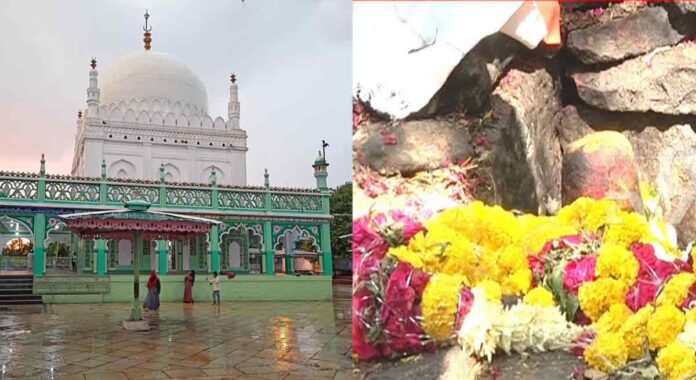
A long-running dispute over worship rights at a shrine in Karnataka has now reached the Supreme Court, with the dargah management seeking urgent directions to stop any puja being held inside the premises during Mahashivaratri.
Karnataka dargah moves Supreme Court to restrain puja on premises, flags repeated attempts to alter its character
— Bar and Bench (@barandbench) February 11, 2026
Read more: https://t.co/jgOSjRTBD9 pic.twitter.com/JQul7Vc3NZ
The shrine is linked to 14th century Sufi saint Hazrat Shaikh Alauddin Ansari, also known as Ladle Mashaik, and 15th century Hindu saint Raghava Chaitanya. The remains of both saints are believed to be at the site.
Within the compound, there is also a structure referred to as the Raghava Chaitanya Shivling. For many years, both Muslims and Hindus have offered prayers there.
Tensions first rose sharply in February 2022 after some miscreants reportedly threw faeces on the Shivling, triggering communal unrest over worship rights. Around the same time, Shree Siddalingaswamy Karuneswar Temple at Andola announced an “Aland Chalo” padayatra, calling on devotees to march and “cleanse a Shivalinga” at the mazaar during Mahashivaratri. The Karnataka Wakf Tribunal stepped in and restrained the proposed event.
The dispute, however, did not end there. According to the petition filed by the dargah before the Supreme Court, attempts have continued year after year to secure permission for Hindu devotees to conduct puja inside the premises during Shivaratri.
In February 2025, the Karnataka High Court allowed 15 members of the Hindu community to enter the dargah compound and perform Shivaratri puja at the Raghava Chaitanya Shivaling under heavy police protection. A similar order had been passed the previous year as well, and pujas were conducted without any major incident.
The dargah’s plea argues that these repeated petitions are part of a pattern aimed at changing the religious character of the shrine. It says that what cannot be achieved through final court decisions is being attempted through interim orders around festival dates.
The petition points to the Places of Worship (Special Provisions) Act, 1991, and claims that festival-based applications are being used to bypass its bar on altering the status of religious places.
The petition also refers to events from 1968, when the Town Municipal Council of Aland, after inspecting the site, rejected a request to build a samadhi or temple inside the dargah compound.
At that time, the council recorded that the site was the mazaar of Hazrath Mardan-e-Gaib, surrounded by Muslim graves, and found no documents to support any non-Wakf construction.
It further states that earlier civil cases seeking to reopen the shrine’s character had failed. After that, fresh petitions began to be filed around Mahashivaratri each year.
The latest is a writ petition filed in 2026 by Sidramayya Hiremath before the Karnataka High Court, seeking permission for him and other devotees to perform puja inside the dargah on 15th February, along with police protection. He had filed a similar plea in 2025, which resulted in limited permission for 15 persons.
The dargah management has told the Supreme Court that these yearly petitions are meant to turn temporary entry during festivals into a regular practice and then reopen the question of the site’s religious nature through repeated litigation.
