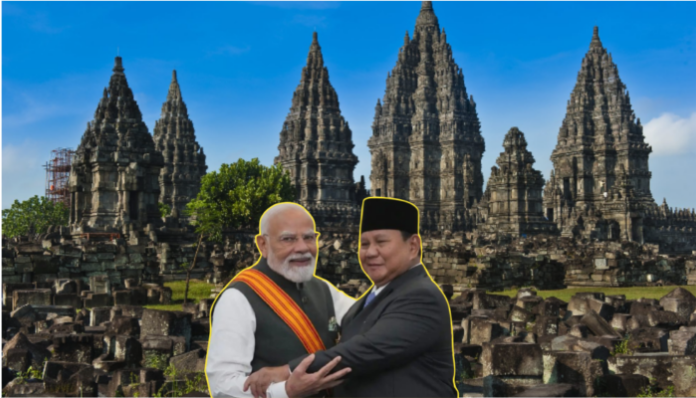
On 6th July (Monday), Prime Minister Narendra Modi arrived in Jakarta for a three-nation diplomatic visit to Indonesia, Australia and New Zealand. The six-day program is a crucial diplomatic move that is designed to strengthen New Delhi’s presence in the Indo-Pacific. However, the Modi government has also introduced heritage diplomacy to reinforce cultural bonds, as India and Indonesia have come together to restore the iconic Prambanan temple complex.
It is Indonesia’s largest Hindu temple site and is present in the Special Region of Yogyakarta in southern Java. PM Modi outlined, “The Prambanan temple, which is more than 1,000 years old, is a symbol of the shared cultural heritage between the two countries,” during a joint press briefing alongside Indonesian President Prabowo Subianto. The two leaders are also going to visit the temple on 8th July.
Jakarta, Indonesia: Prime Minister Narendra Modi says, "Friends, tomorrow I will have the privilege of launching the conservation project of the Prambanan Temple with President Prabowo. The Prambanan Temple, which is more than 1,000 years old, is a symbol of the shared cultural… pic.twitter.com/3OVJ3t3oxV
— IANS (@ians_india) July 7, 2026
Last year, a bilateral agreement was established for India to formally support the temple’s renovations. This marvel from the 9th century proudly holds the designation of a UNESCO (United Nations Educational, Scientific and Cultural Organisation) World Heritage Site since 1991.
Originally consisting of 240 large and small temples devoted to the divine trinity in Hinduism- Brahma, Vishnu and Shiva- the complex is regarded as one of the most outstanding masterpieces of Indic architecture outside of India. Its central feature is a towering temple dedicated to Lord Shiva.
The Siwagrha Inscription (856 AD) revealed that the complex was once known as Siwagrha, which translates to “House of Shiva” and was built during the reign of King Rakai Pikatan of the Mataram Kingdom. A stone interlocking method that does not involve cement or synthetic adhesives was employed for its construction.
The temple’s stone reliefs showcase scenes from the Krishnayana and Ramayana, serving as a breathtaking representation of the Hindu epic whose reach has extended across seas and borders. The esteemed Ramayana Ballet in Indonesia continues to bring the revered tale to life even today.
Every stone at Prambanan has a story to tell. This story brings to life the fascinating tale of the demon Kabandha from the Ramayana, as depicted in the temple’s intricate stone carvings.
— All India Radio News (@airnewsalerts) July 7, 2026
Beyond their artistic brilliance, these reliefs preserve centuries-old narratives,… pic.twitter.com/UJwnEeZpm6
Many of the temples suffered damage over the course of centuries due to earthquakes, volcanic eruptions and passage of time but a significant section of the complex was renovated through decades of conservation and repair. However, Indonesia and India are currently starting a new chapter in their shared history to take care of a common cultural legacy for future generations.
India and Indonesia join hands
Indonesian Culture Minister Fadli Zon recently met with an Archaeological Survey of India (ASI) team to finalise the details. The neighbouring Sewu and Plaosan temple complexes are also part of the larger cultural landscape that would be preserved in addition to the main temple.
ASI specialists decided to utillise the anastylosis process for the initiative after a preliminary inspection. It is a conservation technique that reconstructs monuments mostly with their original stones found on the location. New stones are only put in where they are structurally required and for the integrity of the monument, maintaining the historical authenticity.
Thousands of dispersed stone pieces will need to be meticulously catalogued to match stones to particular temples during the difficult procedure in light of the dispersed building blocks around the grounds. Indonesia is also investigating digital technology and artificial intelligence to “help identify and reassemble the temple stone components.”
India has earlier aided to preserve the 9th century Buddhist Borobudur temple which is in Magelang, Central Java. Notably, India has been proactively involved in cultural conservation measures at a number of ancient temples and monasteries from its immediate neighbourhood to Gulf and Southeast Asia. These include Buddhist, Hindu, and mixed-religious architecture in Bangladesh, Vietnam, Myanmar, Laos, Indonesia, Cambodia and other countries.
The aim of the Modi government extends beyond merely strengthening diplomacy. It seeks to reinvigorate the longstanding legacy of the Indosphere and rekindle the country’s civilisational links.
Joy Kali Matar temple and Ramna Kali temple in Bangladesh
India began to rebuild the 300-year-old Sree Sree Joy Kali Matar Temple in the northern Natore district of Bangladesh. The plan was executed with Indian grant support of Bangladeshi Taka 97 lakhs and a total cost of 1.33 crores under the Government of India’s High Impact Community Development Project (HICDP) Scheme following the signing of an MoU (Memorandum of Understanding) in 2016. It is among Bangladesh’s oldest temples, established by Shri Dayaram Roy in the 18th century. He was the prominent Dewan of Rani Bhahani of Natore and founder of the Dighapatia Royal Family.
Dhaka’s Ramna Kali temple which was destroyed by Pakistani forces during their brutal “Operation Searchlight” in March 1971, was inaugurated by President Ram Nath Kovind in 2021. It was reconstructed with India’s assistance after an announcement was made in 2017, when the then-Indian External Affairs Minister launched 15 development projects in Baridhara.
The 400-year-old religious place was reportedly built during the Mughal period by the Hindu saint Haricharan Giri. The temple grew in popularity in the early 20th century, when renowned saint Ma Anandamayi founded her ashram in its premises.
Thiruketheeswaram temple in Sri Lanka
India agreed to provide aide to the tune of LKR (Sri Lankan Rupee) 326 million to restore Thiruketheeswaram Temple in Mannar, Sri Lanka. It is one of the holiest Hindu shrines in the country’s north. Shaivites across the subcontinent regard it as one of the five sacred Ishwarams devoted to Lord Shiva.
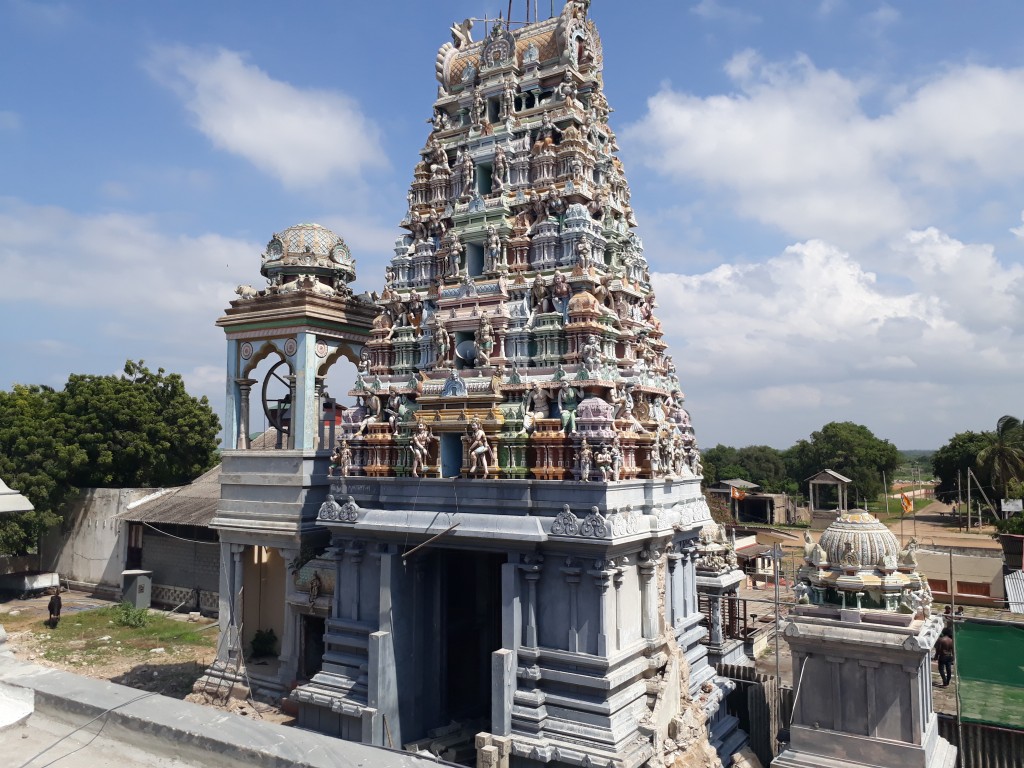
It was closed for 12 years during the armed war and reopened in 2002. ASI and the College of Architecture and Sculpture in Mamallapuram participated in the pivotal assignment after a joint declaration between the two nations in 2010. The repaired complex has not yet been officially inaugurated but the conservation task which commenced in 2012 has made progress toward completion.
Wat Phou temple in Laos
India has worked in Vat Phou in southern Laos since 2009. The UNESCO World Heritage Site was a Lord Shiva temple founded by the Khmer people in the 11th century before progressively changing into a Buddhist centre of worship. India has contributed technical expertise and funded several stages of structural conservation to protect the centuries-old edifice. The initial phase lasted between 2007-2017.
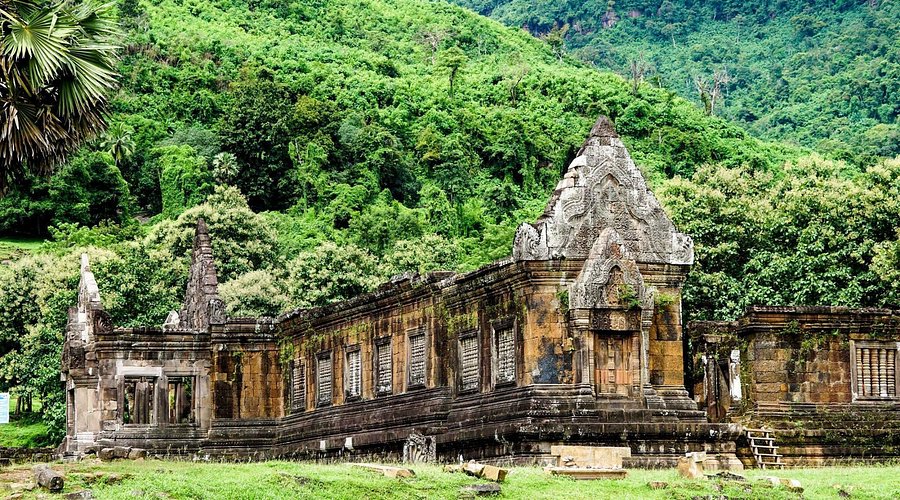
The second phase of the venture began a year later and is predicted to be completed in 2028 at a projected cost of Rs 24 crore. Wat Phou is connected to both Shaivite religious customs and pre-Angkorian Khmer architecture. The location is a part of the Champasak cultural setting and is close to the Mekong River.
My Son Sanctuary in Vietnam
India undertook repair work at the UNESCO-listed My Son Sanctuary in Quang Nam province of Vietnam in 2017. The temple complex is mostly made up of Shaivite temples and was constructed between the 4th and 13th centuries. It was the religious hub of the Champa kingdom. It also has Cham Buddhist temple towers from the 7th to the 11th centuries.
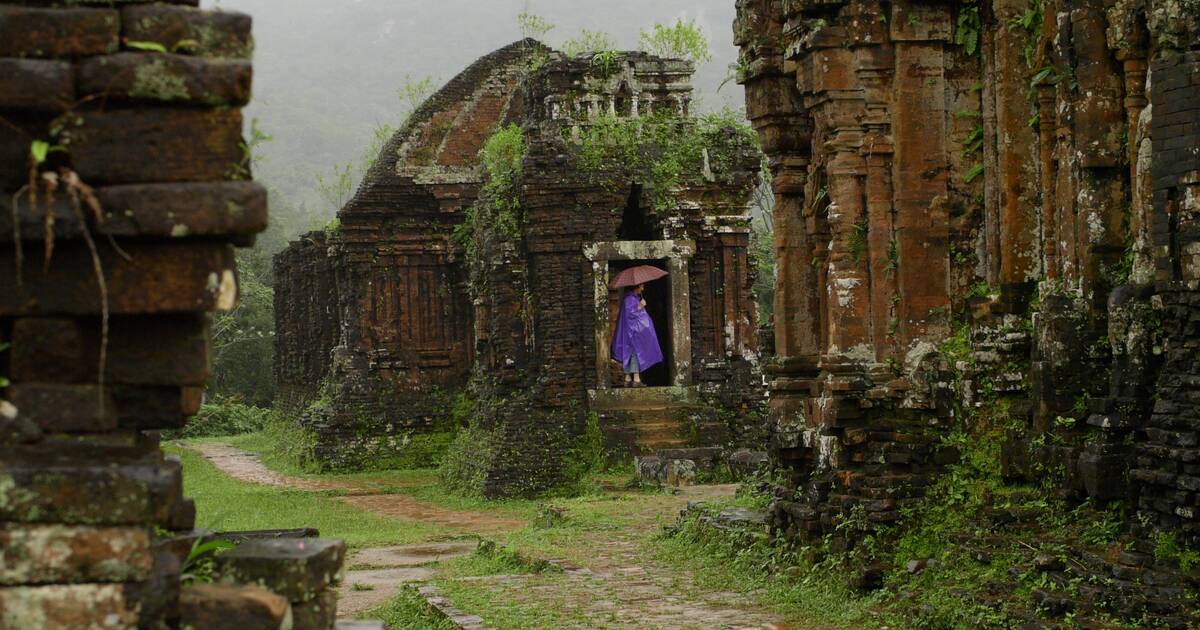
The E-F temple group has 11 structures that will be preserved between 2025 and 2029. A centuries-old Shiva Linga was discovered by Indian archaeologists during the conservation operation, asserting its historical relation to Hindu faith and traditions that were born in the Indian subcontinent. A, H and K group of temples were entirely restored by ASI in 2023.
Ta Prohm, Preah Vihear and Angkor Vat in Cambodia
Ta Prohm and Preah Vihear are UNESCO World Heritage Sites which were built by Khmer Empire in Cambodia. The former is a complex of temples from the 12th and 13th centuries situated in Siem Reap. India has been actively involved in its conservation since 20023, stressing on the preservation of its authentic fabric and structural stability.
Preah Vihear is a complex of temples dedicated to Lord Shiva that dates back to the 11th century on a 525-meter cliff in the Dangrek Mountains. An agreement was signed in 2018, after which India started to cooperate in its conservation. Preah Vihear has consistently remained a significant source of contention between Cambodia and Thailand, often leading to violent conflicts.
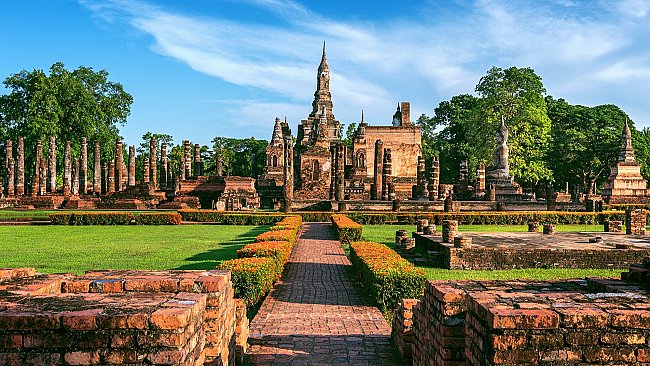
India was the first nation to respond to Cambodia’s request to save Angkor Wat which is also a product of the ingenuity of Khmer Empire. The ASI conducted a full 7-year restoration of the site between 1986 and 1993 including the central tower, the Samudra Manthana Gallery and the moat’s northern embankment. The action helped stabilise one of the most renowned archaeological sites in the world by removing vegetation, improving drainage and conserving elaborate stone bas-reliefs. It was the biggest conservation effort India had undertaken abroad.
ASI has also helped in the restoration of Ashram Maha Russei. It is a unique sandstone Hindu temple from the Funan or pre-Angkorian era that dates to the 7th century. It was set up during King Bhavavarman and has Gupta architectural elements from India.
Shrinathji temple in Bahrain
The 200-year-old Shrinathji (Lord Krishna) temple in Bahrain’s capital Manama was redeveloped for $4.2 million by India. It is the oldest temple in the region. The project was introduced when PM Modi visited the Arab country in 2019. He became the first Indian prime minister to land there. The total area of the land was 16,500 square feet and the four-level structure was scheduled to span 45,000 square feet, standing at an overall height of 30 meters.
The modern landmark complex houses the sanctum sanctorum and prayer rooms, highlighting its past and legacy. Additionally, there are facilities for customary Hindu rites and marriage ceremonies.
More proposals under review
Restorations are just one aspect of Modi government’s heritage conservation programs. For potential future restoration services, ASI has surveyed other cultural monuments in Vietnam, such as Dong Duong Buddhist Monastery and Nhan Tower. According to an agreement inked in December 2020, Indian experts offered restoration suggestions for the monastery.
ASI has also put together similar plans for Nepal’s Pashupatinath temple. India has helped preserve Buddhist monuments like Myanmar’s Ananda Temple and earthquake-damaged pagodas in Bagan along with ancient Islamic monuments. This exemplifies a comprehensive approach that might concentrate on civilisational and religious roots but is not confined to them.
The Ministry of External Affairs reported that India has finished over 50 cultural and heritage projects overseas and is collaborating on approximately 25 others at present.
The Prambanan temple project signifies another step in the direction of soliddifying civilisational lonkages with other nations, showcasing how historic and mutual ties have the potential to shape diplomatic relationships, a notion that India has clearly understood. Therefore, the Modi government has made regular efforts not only to reinvigorate the same but also to use them as a foundation broadening bilateral partnerships.