

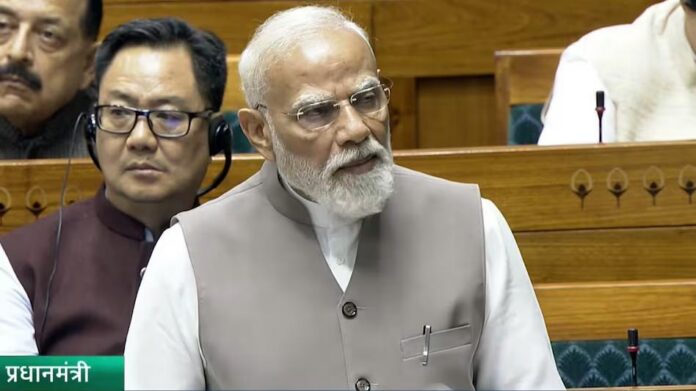
Addressing the Lok Sabha, PM Modi made it clear that attacks on commercial vessels and disruptions in global shipping corridors are “unacceptable,” underscoring the seriousness with which India views the unfolding crisis.
A critical chokepoint under stress
The Strait of Hormuz is not just another shipping lane; it is the artery through which a significant share of India’s crude oil, natural gas, and fertiliser imports pass. Any instability in this narrow corridor has immediate implications for India’s energy security and broader economic stability. With ongoing conflict in West Asia making navigation increasingly hazardous, Indian ships have faced heightened risks, including potential attacks, insurance spikes, and logistical bottlenecks.
Diplomatic shield for maritime safety
At the core of India’s response has been sustained diplomatic engagement. The Modi government has been in continuous dialogue with key regional stakeholders to ensure that Indian commercial vessels can transit safely. “Through diplomacy, India is continuously making efforts for the safe passage of Indian ships, even in this atmosphere of war,” the Prime Minister stated in Parliament. This approach reflects a calibrated balancing act, maintaining ties across competing blocs in West Asia while prioritising uninterrupted trade flows.
Multi-Sector war room approach
Beyond diplomacy, the government activated a coordinated, multi-ministry response mechanism, PM Modi highlighted. High-level consultations were held across sectors, including petroleum, shipping, fertilisers, power, and trade, to assess vulnerabilities and prepare contingencies. According to official inputs, the government carried out detailed evaluations of fuel and energy availability, supply chain resilience, and food and fertiliser security, while also examining shipping alternatives.
Short-term, medium-term, and long-term mitigation strategies were mapped out to ensure that disruptions do not cascade into domestic shortages or inflationary shocks.
Diversification and supply chain buffering
Recognising the risks of overdependence on a single corridor, India has also explored diversifying shipping routes and sourcing strategies. While the Strait of Hormuz remains critical, efforts are underway to reduce exposure through logistical recalibration and supplier diversification. At the same time, domestic measures have been initiated to cushion external shocks, including prioritising LPG for household consumption and ramping up internal production capacities. With India importing nearly 60 per cent of its LPG requirement, proactive management has become essential during this period of uncertainty.
Minimising impact on citizens
Despite the geopolitical turbulence, the government’s stated objective has remained clear: insulating the common citizen from the fallout. Efforts are being made to ensure that supplies of petrol, diesel, and cooking gas remain stable, even as global markets react to the crisis. “Our focus remains on minimising difficulties for common households,” PM Modi emphasised, highlighting the administration’s intent to manage the crisis without allowing it to translate into everyday hardship.
