

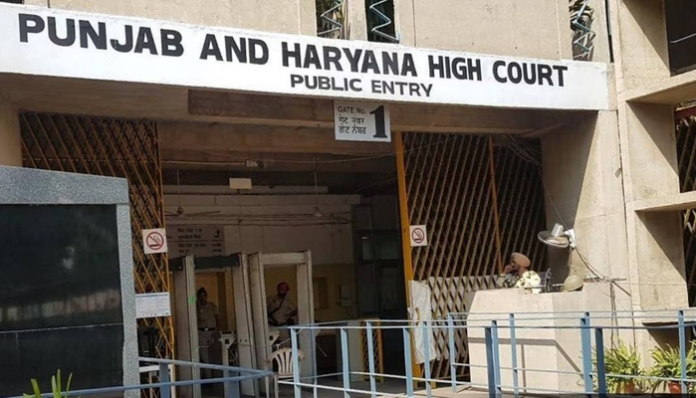
The Punjab and Haryana High Court recently stayed an order of interim maintenance passed against a husband, whose wife tried to burn him alive by pouring an inflammable liquid over him. Justice Kirti Singh on Wednesday (22nd April) issued a notice on the husband’s plea challenging the maintenance order of a Ludhiana court under Section 125 of the Code of Criminal Procedure (CrPC). “In the meantime, operation of the impugned order dated 25.8.2025 shall remain stayed,” Justice Singh stated in the notice. Notably,
On August 25, 2025, the Additional Principal Judge, Family Court, Ludhiana, had directed the husband to pay a monthly amount of ₹5,000 to his wife as interim maintenance. The husband approached the High Court against the order and apprised the court that his wife is facing a trial for attempting to murder him.
The husband’s counsel submitted before the court that his client and his wife have had consistent matrimonial discord ever since they got married in 2019. He said on the intervening night of May 13-14, 2020, when the husband was sleeping, his wife poured an inflammable liquid (spirit chemical) on him and set him ablaze. The husband suffered 45 per cent burns and remained admitted at CMC Hospital, Ludhiana, for more than four months.
The husband has undergone eight surgeries, and the doctors have recommended a ninth surgery. Besides, because of burn injuries, he requires specialised garments and regular medical care. The husband’s counsel informed the court that his client is the sole earning member of the family and that after the incident, he has been rendered financially and physically incapacitated.
An FIR was registered on May 15, 2020, under Sections 307, 326-A and 120-B IPC against the wife, who had been absconding for over a year. Her anticipatory bail plea was also turned down by courts, including the Supreme Court. She was arrested on October 21, 2021, after the high court’s intervention. The trial in the criminal case against her is currently at the stage of evidence.
The husband’s counsel argued that granting maintenance to the wife under the circumstances would be tantamount to rewarding her act of domestic violence against the husband. This would cause irreparable harm to a victim who is himself struggling with massive medical expenses and loss of livelihood.
