

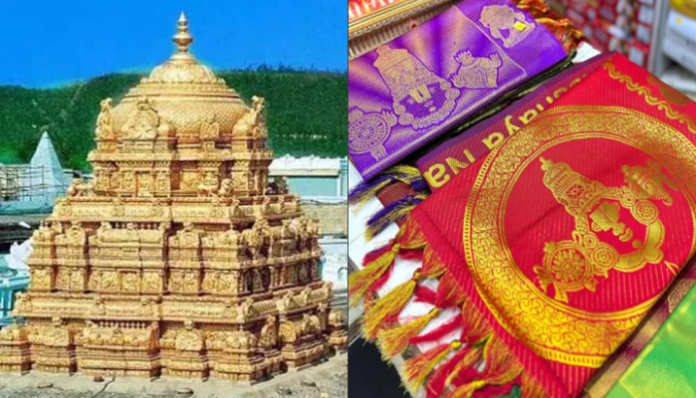
The Andhra Pradesh government has been asked to look into a procurement scam by the Tirumala Tirupati Devasthanams (TTD), which oversees the renowned Tirumala temple. Pattu Sariga dupattas which are ceremonial silk shawls provided to donors, Veda Aseervachanam participants and visiting dignitaries during special darshan are the subject of the controversy.
The temple board charged that a supplier has been defrauding TTD for almost ten years by delivering polyester dupattas under the guise of pure mulberry silk, resulting in losses of 54.95 crores. The Andhra Pradesh Anti-Corruption Bureau (ACB) has been officially tasked with conducting a thorough inquiry into the case. The purchase committee’s review of a plan to purchase 21,600 silk dupattas shed light on the matter.
TTD chairman BR Naidu had instructed the vigilance and security wing to probe if the dupattas matched the initial tender specifications, following the allegations. The move reportedly exposed the fraud which took place between 2015 and 2025. The fabric was delivered in flagrant defiance of the guidelines of the tender.
TTD officials found that the material was of low quality and did not adhere to the fundamental requirements of the tender. Additionally, they discovered that samples were routinely sent to a single Kanchipuram institution for quality certification, disregarding other verification procedures.
BR Naidu outlined, “A shawl that costs about Rs 350 was being billed at Rs 1,300. The total supplies would amount to more than Rs 50 crore. We have asked for an ACB (Anti-Corruption Bureau) probe.”
BREAKING || The Central Silk Board exposes 'Tirumala Dupatta Scam'.
— TIMES NOW (@TimesNow) December 10, 2025
TTD’s claim: Polyester dupattas were sold as silk.
'Discrepancy continued for 10 years'
'Shawls lacked the mandatory Silk Mark tag'@keypadguerilla & @MeenakshiUpreti with details. pic.twitter.com/XLNy3itUbj
The samples were gathered from the Vaibhavotsava Mandapam in Tirumala and the TTD storehouse in Tirupati. Afterward, they were sent to the Central Silk Board laboratories in Bengaluru and Dharmavaram for verification by the officials. The outcomes confirmed that 100% polyester was utilised to make the shawls. Mandatory holograms were forged as well as the traditional Sankhu, Chakra and Namam imprints were absent. After analysing the supplier’s transactions, the TTD vigilance division sent reports to the board.
VRS Export of Nagari in the Tirupati district alongside its sister companies have been providing TTD with silk shawls for about ten years, according to investigation. It sometimes routes shipments through businesses run by relatives. A case worker connected to the procurement chain had been moved but failed to report to the new position.
#BreakingNews | TTD bought ₹100 silk garments for ₹1,400, says vigilance probe, a shocking racket inside one of India’s holiest institutions@pvramanakumar @GrihaAtul with details#Tirumala #TTDScam pic.twitter.com/P7vMMg4aSy
— News18 (@CNNnews18) December 10, 2025
A contract to supply a further 15,000 dupattas at a cost of Rs 1,389 per piece, dupattas was also awarded to the company during the same time. The vigilance officers now suspect polyester might be used in the same.
According to the eatablished standards, every dupatta must be entirely of mulberry silk, with a minimum resulting count of 31.5 denier and 20/22 denier silk yarn employed for both the warp and the weft. It must be 100 ends per inch, 80 picks per inch, 1 metre wide, 2.3 meters long with a 2.5-inch border on both sides. Along with the Sanku, Chakra, and Namam symbols, each dupatta must have “Om Namo Venkatesaya” printed in Sanskrit on one side and similarly in Telugu on the other. They have to adhere to set standards for border design, weight, and size.
The board has now invited new tenders and revoked the current ones.
