

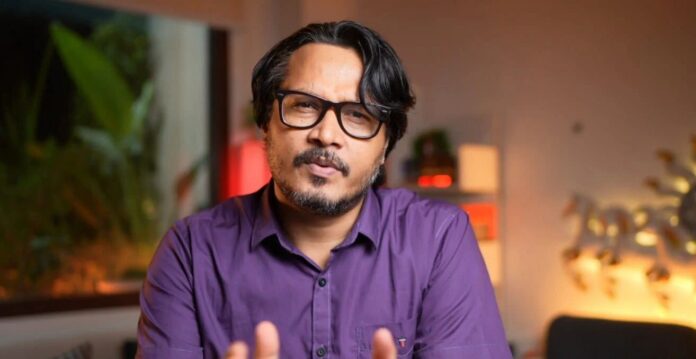
The Delhi High Court has refused to grant anticipatory bail to YouTuber and commentator Ajeet Bharti in a case involving alleged caste-related remarks concerning Nagina MP Chandrashekhar Azad and Dr BR Ambedkar.
Justice Saurabh Banerjee, while dismissing Bharti’s plea on Thursday, observed that the allegations prima facie attracted Sections 3(1)(r) and 3(1)(s) of the Scheduled Castes and Scheduled Tribes (Prevention of Atrocities) Act, 1989. Since the special law places a statutory restriction on anticipatory bail when these provisions are prima facie attracted, the court held that Bharti’s plea could not be entertained.
Section 3(1)(r) deals with intentionally insulting or intimidating an SC/ST member with an intent to humiliate in a place within public view, while Section 3(1)(s) covers the use of caste names while abusing an SC/ST member.
The case stems from a video uploaded to Bharti’s verified social media accounts on August 22. A complaint was subsequently filed by Balakram Bauddh, Delhi State President of the Azad Samaj Party (Kanshi Ram), alleging that Bharti made caste-related and derogatory comments concerning Azad and Ambedkar.
The FIR was registered on August 23 at North Avenue Police Station under provisions of the SC/ST Act, along with Sections 196(1)(c) and 351(3) of the Bharatiya Nyaya Sanhita and provisions of the Information Technology Act.
Bharti had approached the High Court after the Patiala House Court rejected his anticipatory bail application on September 7. The trial court had concluded that the material presented before it prima facie disclosed offences under the SC/ST Act.
During the High Court proceedings, Bharti’s counsel, Advocate Jai Anant Dehadrai, challenged the applicability of the SC/ST Act. The defence argued that the alleged statements had to be examined in their full context and that they did not amount to intentional humiliation based on caste. Counsel also submitted that Bharti had spoken about caste discrimination and reservation and that some of his remarks arose in the context of alleged comments directed at his mother and sister.
The Delhi Police opposed the plea, maintaining that the alleged statements were directed at a particular caste and were made publicly through social media. The complainant’s counsel also argued that the remarks were deliberate and repeatedly referred to caste.
The trial court had particularly taken note of remarks concerning the marriageability of a sitting MP, observing that references to an “upper” and “lower” caste hierarchy in the context of marriage prima facie indicated an intent to humiliate.
