

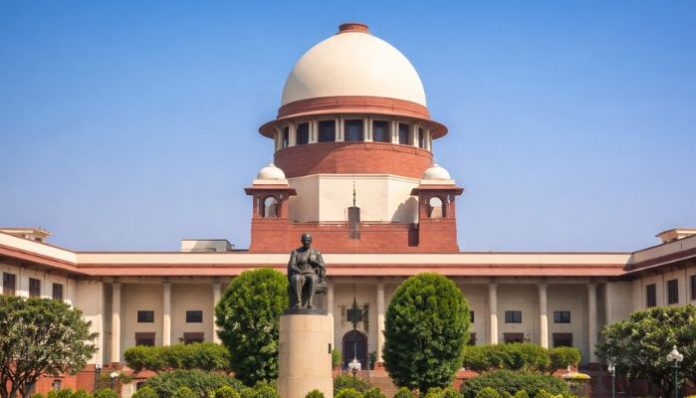
The Supreme Court of India on Tuesday, 17th February, expressed its deep concern over what it termed as a worrying trend of lawyers using artificial intelligence tools to draft court petitions without proper checks. The court stated that it had seen several petitions where the judgments and legal extracts cited by lawyers were misquoted.
STORY | 'Absolutely uncalled for': SC expresses concern over growing trend of lawyers using AI to file pleas
— Press Trust of India (@PTI_News) February 17, 2026
The Supreme Court on Tuesday expressed serious concern over a growing trend of lawyers filing petitions drafted with AI tools that contain non-existent judgements such as… pic.twitter.com/Hg22FVZ05U
A bench led by Chief Justice of India Surya Kant, along with Justices Joymalya Bagchi and BV Nagarathna, said it has been increasingly noticing pleadings that appear to have been drafted with the help of AI tools.
During the hearing, the Chief Justice said the court had been informed that some lawyers have started depending on AI for drafting petitions. He made it clear that such practice, if not properly verified, can mislead the court.
Sharing a specific example, Justice BV Nagarathna said that there was a case titled “Mercy vs Mankind” that had been quoted before the court, but no such judgment actually exists.
The Chief Justice also mentioned a different case that had come up before Justice Dipankar Datta, where all the precedents mentioned in the petition were found to be non-existent. “All precedents cited never existed,” he remarked, pointing to the seriousness of the issue.
Justice Nagarathna also said that in some cases, lawyers had quoted judgments that had actually been passed by the Supreme Court, but the part of the judgment that had been quoted in the case did not exist in the original judgment.
The court’s remarks are part of a larger concern within the judiciary about the growing role of artificial intelligence in legal work. Over the past year, not just the Supreme Court but other courts as well have noticed pleadings and even court orders that relied on case laws which could not be traced in official records.
Judges have repeatedly said that the technology can be used to help with research and managing heavy case loads and the final responsibility always lies with lawyers and judges. The court has stressed that every citation and legal reference must be carefully checked against authorised sources before being submitted on record.
