

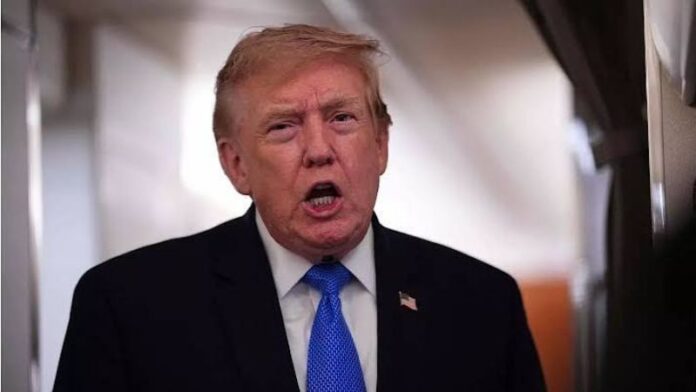
The US has taken a decisive step toward cracking down on countries purchasing oil from Russia. On Friday (August 7, 2026), the US Senate approved a bill that, once enacted into law, could give President Donald Trump the authority to impose additional tariffs of up to 100 percent on imports from certain countries purchasing oil and gas from Russia.
India and China fall directly under the scope of this proposal. The bill passed the Senate with an 86 to 11 vote. However, to become law, it still requires approval from the House of Representatives and the President’s signature.
100% Tariff on Countries Buying Oil from Russia
The new bill aims to increase economic pressure on nations purchasing large quantities of energy from Russia. Under the proposal, the President could be granted the authority to impose tariffs of up to 100 percent on goods coming from China, India, Azerbaijan, Hungary, and Slovakia.
The US argues that continued energy purchases from Russia generate revenue for Moscow, which can be used to financially support its ongoing war against Ukraine. However, it is important to understand that the passage of the bill by the Senate does not immediately apply a 100 percent tariff on India.
The law would give the President the authority to do so, but the decision to implement actual tariffs will ultimately depend on the President’s discretion and the final form of the law.
The bill has now been named the ‘Lindsey O Graham Sanctioning Russia and Iran Act of 2026’ after Republican Senator Lindsey O Graham Graham was among the key proponents of this legislation and passed away in July.
India Already Under Pressure with Up to 50% Tariffs
The biggest concern for India in this entire matter is that this new action comes at a time when Indian goods are already under pressure from US tariffs. In August 2025, the US imposed an additional 25 percent tariff on Indian products due to India’s purchases of crude oil from Russia.
This pushed total tariffs on certain Indian items up to 50 percent. Despite this, India did not make significant cuts to its Russian crude oil purchases. Following the Ukraine war, Russia offered oil at discounted rates to several countries, helping Indian refineries secure crude oil at relatively lower prices.
Tensions in West Asia and increased risks along shipping routes also made Russian oil an important alternative source for India. India is the world’s second-largest buyer of Russian crude oil.
Indian purchases of Russian oil remained strong in 2026, with a sharp spike in imports recorded in June. As such, if the proposed new tariff of up to 100 percent is actually implemented, it could impact India-US trade and Indian exporters.
New Sanctions on Putin, Tough Stance on Iran Too
In addition to potential tariffs on countries buying energy from Russia, the bill includes several other strict provisions against Moscow. The proposal contains provisions to impose new sanctions on Russian President Vladimir Putin, senior officials, oligarchs, and financial institutions connected to the Kremlin.
The bill also seeks to step up US pressure on Iran alongside Russia. It proposes extending the duration of the 1996 Iran Sanctions Act until 2031. This law could bring companies investing in Iran’s energy sector under US sanctions.
Looking at it this way, the bill is not limited merely to potential tariffs on countries buying oil from Russia, but is an effort to advance America’s broader economic sanctions policy against both Russia and Iran.
Next Test in the House After the Senate
Following approval from the Senate, the bill will now move to the US House of Representatives. With the House scheduled to reconvene on August 31 after the Congressional recess, an immediate decision is unlikely.
Approval by the House of Representatives followed by presidential assent will be required for it to become law. While the bill has received bipartisan support from many lawmakers, there are also disagreements within the US Congress regarding its tariff-related provisions.
Some lawmakers argue that granting the President such sweeping tariff authority could be dangerous and affect America’s own consumers and trade relationships. Democrat Senator Richard Blumenthal tied his support for the bill to Graham’s legacy, stating that he would have been proud of this step.
On the other hand, Rand Paul and a few other lawmakers warned that placing excessive tariffs on a key partner like India could also damage US interests. The key question now is what form the bill takes when approved by the House of Representatives and whether any exemptions or special provisions are retained for countries like India in the final law.
If the bill becomes law and the President exercises this authority, it could create new pressure on India-U.S. trade relations as well as India’s strategy for purchasing oil from Russia.
