

UNDP (United Nations Development Programme), the global development network of the United Nations, has assessed the Central government’s ‘Aspirational Districts Programme’ and found it to be extremely effective in accelerating development. It said that in the last three years since the initiative has been implemented, these districts have shown more growth and development than ever before.
According to the UNDP appraisal, Ranchi, Chandauli, Simdega, Sonbhadra and Rajgarh were identified as the top five districts with maximum change in net resilience since 2018. Meanwhile, the least improved districts according to the UNDP’s resilience and vulnerability index were Sitamarhi in Bihar, Gumla (Jharkhand), Dantewada (Chhattisgarh), Bijapur (Karnataka), and Nawada (Bihar).
“Given the positive impact of the programme, it is necessary to ensure the focus on development is encouraged further and momentum gained so far in expediting growth is maintained. Based on the findings of the evaluation, it is recommended that the success of the programme be scaled up and replicated for other sectors and districts,” the UNDP report recommended.
UNDP lauds PM Modi for personally monitoring the motivating district collectors
The report stated that the most notable feature of the programme, that has considerably helped to its success, is the country’s senior political leadership’s dedication to bringing speedy growth to India’s underdeveloped areas. It lauded Prime Minister Narendra Modi for personally monitoring the program and motivating the district collectors to deliver their best at the field level.
Aspirational Districts Programme launched by PM Modi in 2018
The Aspirational Districts Programme was launched by Prime Minister Narendra Modi in 2018, with the goal of expediting the transformation of 112 of India’s most backward districts across 28 states by bringing together government programmes and policies. The initiative was led by the government think tank Niti Aayog, in collaboration with the central and state governments.
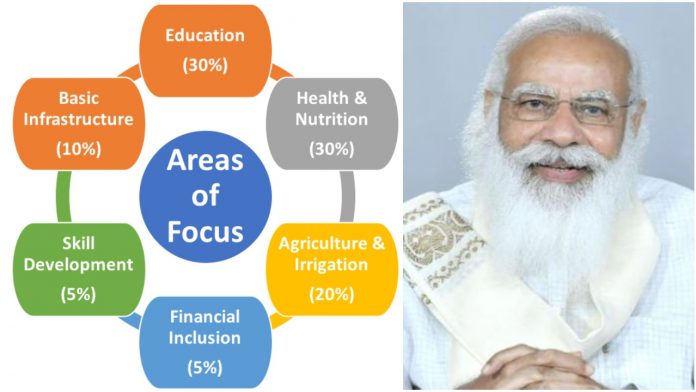
The primary focus of this initiative is on five critical sectors:
- Healthcare
- Education
- Agriculture and water resource
- Financial inclusion and skill development
- Basic infrastructure
“Overall, findings from the net resilience index indicate that the aspirational districts, on average, have been on an upward trajectory since the inception of the programme. A closer look at the best performers indicates an improvement in resilience along with a corresponding reduction in vulnerabilities,” the report said.
“On the other hand, the least improved districts have seen significant increases in vulnerabilities. The latter calls for focused attention on specific sectors where these districts have underperformed. Replicating successful programs and learnings from top performers might form the basis of the inclusive growth among the aspirational districts,” it added.
The report furthered that, more significantly, the programme was established with the goal of lowering inter-and intra-state disparities, and it is on course to accomplish that goal. The distinctive aspects of introducing competition, handholding assistance from the federal and state governments, and collaboration with multiple agencies are proven effective in realising the aim of holistic development.
“However, stakeholders such as prabhari officers and development partners also warned that the momentum gained at the inception of the programme is starting to diminish and efforts must be made to motivate the districts”, the report said, adding that since the programme has been running for three years, it may be necessary to implement re-training and learning programmes on best practices among the districts in order to re-establish momentum and work toward the remaining goals.


