

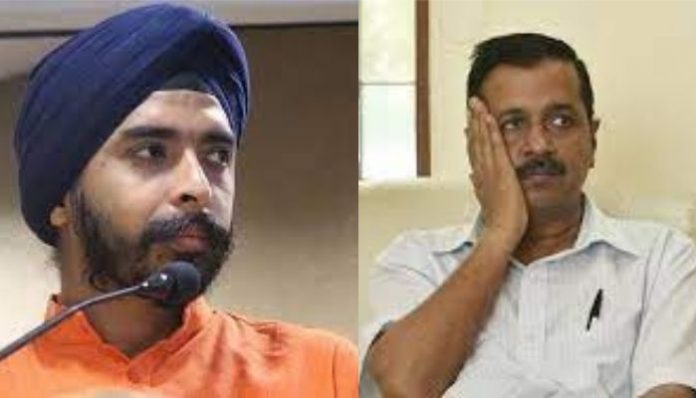
Punjab and Haryana High Court on 8th April 2022 slammed the Punjab police during a hearing on a petition filed by Bharatiya Janata Party (BJP) Leader Tajinder Pal Singh Bagga. The HC directed the Punjab Police to not violate the Supreme Court guidelines and asked it to follow the top court’s judgment in the Arnesh Kumar case.
Big Breaking : Punjab Police should not violates Supreme Court Guidelines : Punjab Highcourt
— Live Adalat (@LiveAdalat) April 8, 2022
During hearing on petition filed by
BJP Leader @TajinderBagga HC cautions Punjab Police
Punjab Police requested time to put evidences before court
Next hearing on 20th April
The Punjab Police requested the court to give some time to put evidence before the court, following which the court adjourned the case till the next hearing, which is to be held on 20th April 2022.
Tajinder Pal Singh Bagga took to Twitter to express his gratitude to those who helped him in this legal battle. Posting from his Twitter handle, Bagga tweeted, “The High Court stopped the repression policy of the Punjab government. Punjab police are told that they cannot arrest as per the Arunesh Kumar judgment. I thank honorable Tejasvi Surya, and my lawyers RS Rai, Chetan Mittal, and Neeraj Ji who helped me to fight this battle in the court and outside the court.”
हाई कोर्ट ने पंजाब सरकार की दमन नीति पर लगाई लगाम।पंजाब पुलिस को कहा अरुणेश कुमार जजमेंट के हिसाब से नही कर सकते गिरफ्तार। मैं माननीय @Tejasvi_Surya जी,
— Tajinder Pal Singh Bagga (@TajinderBagga) April 8, 2022
और मेरे वकील आर एस राय जी,चेतन मित्तल,नीरज जी का हार्दिक धन्यवाद करता हूँ जिन्होंने कोर्ट और कोर्ट के बाहर इस लड़ाई में मदद की
Tajinder Pal Singh Bagga files petition against FIR filed against him by Punjab Police
On 6th April 2022, Tajinder Pal Singh Bagga moved to Punjab and Haryana High Court against the FIR filed against him by Punjab police. The charges mentioned in the FIR included making provocative statements, criminal intimidation, and promoting enmity between different groups. During a hearing on Tajinder Pal Singh Bagga’s petition that sought quashing of the FIR filed against him, Punjab high court said that Punjab Police should not violate Supreme Court guidelines. The Punjab police Punjab requested some time to produce evidence before the court.
On 6th April 2022, when the petition was filed, the Court stayed further investigation in the matter till the Court reached any decision.
A complaint was filed by Dr. Sunny Singh Ahluwalia, Lok Sabha Incharge & Spokesperson, Aam Adami Party. In his complaint, Ahluwalia alleged that Bagga and other unknown persons gave a statement on March 30 in which he instigated his followers to cause violence, use force, and cause hurt to Delhi CM Kejriwal and other AAP leaders. On the basis of this complaint, an FIR was registered against Bagga.
On April 2, Bharatiya Janata Party leader Tajinder Pal Singh Bagga said in a statement that while he was in Lucknow, Punjab Police arrived at his home in Delhi, presumably to arrest him. He alleged that Punjab Police failed to inform Delhi Police about their arrival in the state, which is against the law.
What is Arnesh Kumar Judgment?
Arnesh Kumar Guidelines or Arnesh Kumar vs State of Bihar (2014) is a landmark judgment of the Indian Supreme Court. According to this, arrests should be an exception, in cases where the punishment is less than seven years of imprisonment. In the current case, Punjab high court asked the Punjab police to follow this guideline.


