

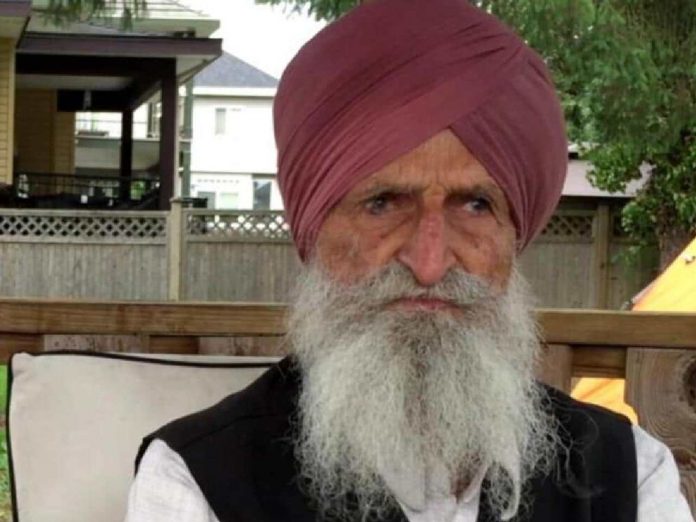
Sarwan Singh, 92, a resident of Bahaudinpur village in Jalandhar, was overwhelmed with emotions when he met his nephew lost to the partition riots over 75 years ago at Gurdwara Darbar Sahib, Kartarpur, in Pakistan.
Sarwan’s nephew, Mohan Singh, then six years old, was separated from his family during the Partition riots in 1947, during which 22 of his family members lost their lives in the communal conflagration in Chak 37 village in Pakistan.
But Mohan somehow miraculously survived the onslaught unleashed in the wake of the partition when millions of Hindus and Sikhs were slaughtered by the Islamist supremacists who wanted to purge Pakistan of non-believers. However, survival came at a cost. Mohan Singh relinquished his faith and became Afzal Khaliq.
Seven and a half decades later, Mohan met his uncle and his daughter Rachhpal Kaur when the duo visited the resting place of Sikhism’s founder Guru Nanak. Both Sarwan Singh and Mohan (Afzal) were swept with emotions as the two found themselves short of words to express their pleasure over meeting each other after 75 years.
After returning from Pakistan, Sarwan said, “I cannot believe I found my nephew. There was no hope. God blessed me long age to meet him.”
He further added, “I wish he comes to India if both the governments agree to his visit.”
During the partition, Mohan and his family, who lived in modern-day Pakistan, were attacked by a group of rioters. While they slaughtered men, the women in the house jumped into the well to save their honour. Mohan had managed to flee from the place. He was raised by a Muslim family in Pakistan and was converted to Islam.
Neither Sarwan nor Mohan knew they were related to each other until a Punjab-origin man, based out of Australia, Gurdev Singh, assisted the two families to unite after separately coming across their respective Partition accounts. Singh had watched a documentary, in which Sarwan Singh spoke about the identifying marks of the missing child. He had also seen the interview of one Partition victim based out of Pakistan, who had described a similar account of the ordeal that befell him. He managed to get the contact numbers of both the families and got them to speak over the phone.


