

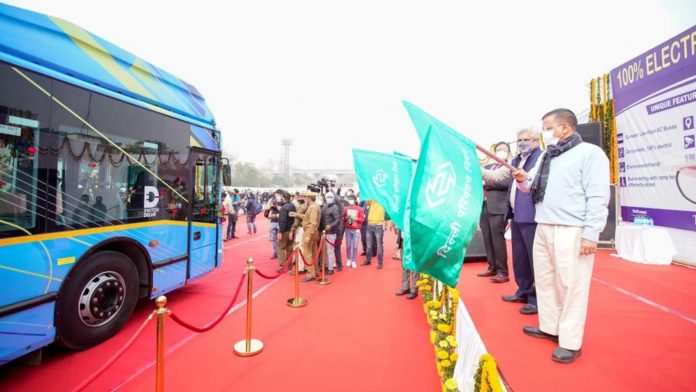
According to reports, the Central Bureau of Investigation (CBI) has launched a preliminary investigation into accusations of corruption in the Delhi Government’s acquisition of 1,000 low-floor buses and their yearly maintenance contract. In June of last year, a three-member committee formed by former Delhi Lieutenant Governor Anil Baijal identified “procedural lapses” in the maintenance agreement and recommended that it be scrapped.
After the BJP questioned corruption in the annual maintenance contract (AMC) of DTC’s bus procurement in the Assembly last year, the home ministry recommended a CBI inquiry last August. A three-member committee then issued a report on the orders of the then-LG of Delhi.
The committee stated in an 11-page report that the AMC promotes “cartelization” and “monopoly pricing.” It also included the purchase and AMC tendering sequence, alleging that it created a situation in which both bidders were aware that they were the sole players in the game. In its findings, the committee stated that it “focused its attention only on the procurement process of AMC of the buses.”
This comes after the CBI named 15 suspects, including Delhi Deputy Chief Minister Manish Sisodia, in an FIR filed on Friday, August 19, 2022, in connection with the excise policy scam.
Searches were conducted at 31 places, including Delhi, Gurugram, Chandigarh, Mumbai, Hyderabad, Lucknow, and Bengaluru, which resulted in the recovery of incriminating documents/articles, digital recordings, and so on. The CBI has also charged Arva Gopi Krishna, the former excise commissioner, as well as deputy commissioner Anand Tiwari and assistant commissioner Pankaj Bhatnagar.
It has been suspected that irregularities were committed in changes to the Excise Policy, granting excessive favours to licensees, waiving/reducing licence fees, extending L-1 licences without authorisation, and so on. It is further alleged that illegal earnings from these activities were channelled to concerned public personnel by private parties, who then made fraudulent entries in their books of accounts.
Last year, the Delhi excise department, headed by Manish Sisodia, introduced a new policy that resulted in government liquor shops being closed and private firms being handed licences. Along with Manish Sisodia and Excise employees, the CBI has implicated other private individuals as suspects in the fraud. In addition to the 15 people identified in the FIR, the CBI also included ‘other unknown public servants and private persons’ as accused in the FIR.


