

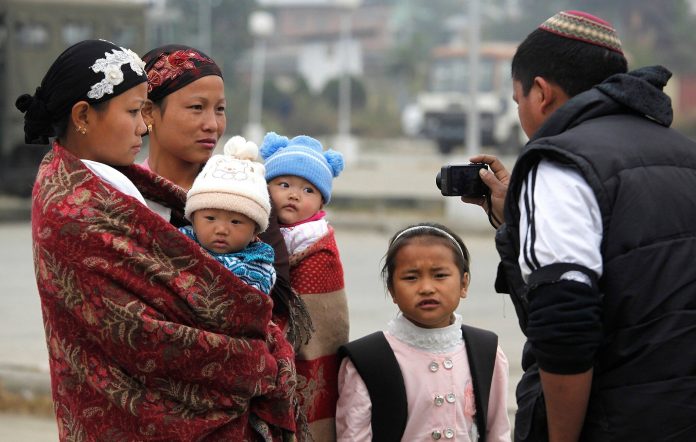
The Israeli government has unveiled a detailed, multi-year plan to relocate thousands of members of the Bnei Menashe Jewish community from India’s northeastern states, framing the move as both a humanitarian step and a strategic effort to reinforce Israel’s volatile northern frontier.
Israeli PM Benjamin Netanyahu described the decision as an “important and Zionist” move after the government approved a proposal to absorb around 5,800 Bnei Menashe by 2030. The community, primarily based in Mizoram and Manipur, will be resettled in stages in Israel’s Galilee region, a strategically sensitive belt in northern Israel that borders Lebanon and has been repeatedly destabilised by tensions and hostilities with Hezbollah. In recent years, prolonged security threats from across the border have forced tens of thousands of Israeli residents to evacuate the area, making demographic reinforcement a key state priority.
As per the approved roadmap, the first batch of around 1,200 immigrants is scheduled to arrive next year. The absorption ministry will extend comprehensive support, including financial assistance, Hebrew language training, employment counselling, temporary housing and dedicated social integration programmes to facilitate their transition into Israeli society. For this initial phase alone, the Israeli government has earmarked approximately €23.8 million (about $27.4 million), underlining the strategic importance it attaches to the project.
This is not the first wave of migration by the community. Over the past two decades, nearly 4,000 members of the Bnei Menashe have already made aliyah to Israel under earlier government-backed initiatives. The latest plan is intended to complete the process of relocating the entire remaining community and reunite families that have remained separated across national borders.
Notably, the plan has been jointly coordinated with the Indian government, reflecting a rare level of bilateral alignment on a sensitive demographic and cultural issue.
The move also comes against the backdrop of Israel’s broader demographic and geopolitical considerations. Israel’s population currently stands at roughly 10.1 million, with about 73% identifying as Jewish, while the Palestinian territories are home to an estimated 5.5 million people. Demographic balance continues to be a central pillar of Israeli state policy, particularly in the context of the long-running Israeli–Palestinian conflict.
The Bnei Menashe community: The ‘lost tribe’ of Israel
The Bnei Menashe community traces its lineage to the biblical tribe of Manasseh, one of the so-called “lost tribes” of Israel. Historically, many members of the community followed Christianity before formally converting to Judaism. They now observe traditional Jewish customs, celebrate festivals like Sukkot, and have established synagogues in their localities. Their claim of ancient Israelite ancestry received formal religious recognition only in 2005, when Israel’s then Sephardi Chief Rabbi acknowledged them as descendants of a lost tribe.
Most of the new immigrants are expected to be settled in the Galilee, a mountainous and historically significant region that includes cities such as Nazareth, Tiberias and Safed, and forms Israel’s northern frontier with Lebanon, alongside the Jordan Valley and the Sea of Galilee.
The announcement coincides with expanded diplomatic engagement between New Delhi and Tel Aviv. On the same day, Netanyahu met Indian Commerce Minister Piyush Goyal to discuss strengthening trade ties, advancing a bilateral trade agreement and promoting the India–Middle East–Europe Economic Corridor (IMEC), signalling how culture, migration and geopolitics are becoming increasingly intertwined in India–Israel relations.
