

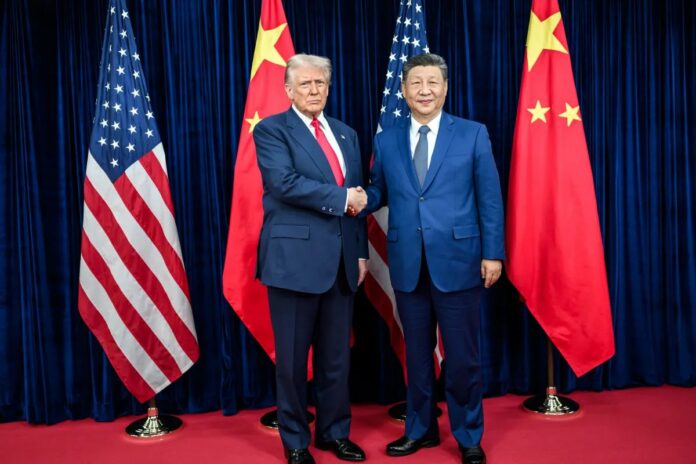
China has formally declined an invitation from the United States to join the proposed Gaza “Board of Peace,” underscoring Beijing’s insistence that any global conflict-resolution mechanism must operate within the United Nations–centred international order.
The position was articulated by Yu Jing, spokesperson for the Chinese Embassy in India, who posted the statement on X on Thursday. Quoting China’s Ministry of Foreign Affairs, Yu said Beijing had received the US invitation but would continue to practise what it described as “true multilateralism.” China, she added, remains committed to safeguarding the UN-centred international system, the international order based on international law, and the principles enshrined in the UN Charter.
China’s response comes as US President Donald Trump pushes to formally unveil the Gaza Board of Peace on the sidelines of the World Economic Forum in Davos this week. Pitching the initiative as an alternative to existing multilateral structures, Trump described it as “the most prestigious board ever assembled” and launched a sharp critique of the United Nations, arguing that his proposed body would deliver outcomes the UN had failed to achieve.
Addressing reporters, Trump claimed that peace in the Middle East had been advanced by “taking out” the Iranian nuclear threat and said the Board of Peace would do the work the UN “should have done,” while still coordinating with it. He emphasised that the initiative would begin with Gaza and the wider Middle East but eventually expand to address conflicts across the globe.
Trump also said he wanted participation from all countries, noting that several influential — and, by his own description, “controversial” — figures were involved. He claimed Russian President Vladimir Putin had been invited and had accepted, and that the majority of invited nations had responded positively.
The Gaza Board of Peace forms part of Phase 2 of Trump’s 20-Point Peace Plan for West Asia, aimed at stabilising Gaza after the war and overseeing post-conflict reconstruction. First floated last September as a mechanism to end the Gaza conflict, the proposal now appears to have evolved into a broader platform for mediating international disputes.
According to a White House statement, the board’s Executive Committee would supervise key portfolios tied to Gaza’s stabilisation and long-term development, including governance capacity-building, regional engagement, reconstruction, investment mobilisation, and large-scale financing. Countries committing USD 1 billion would be granted permanent seats, while non-contributing participants could serve three-year terms.
US special envoy Steve Witkoff told CNBC on Wednesday that as many as 25 countries had already accepted the invitation. Those reportedly on board include Israel, Kosovo, the United Arab Emirates, Hungary, Belarus, Azerbaijan, Egypt, Armenia, Turkey, Pakistan, Qatar and Jordan, even as major powers such as China signal discomfort with an initiative positioned outside the UN framework.
