

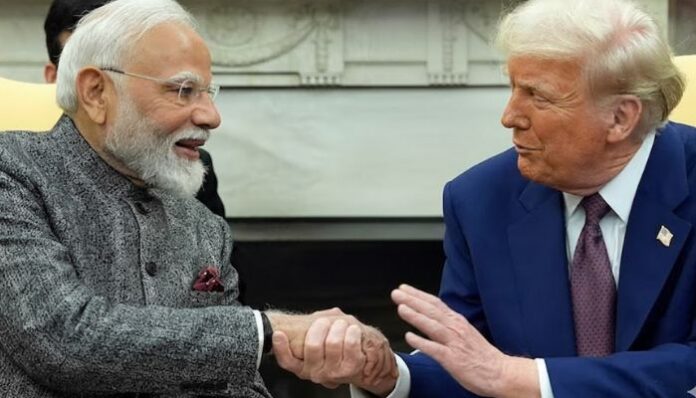
India has secured a strong edge in global trade after the United States agreed to reduce import tariffs on Indian goods. Under the new trade deal, Indian exports to the US will now face a tariff of 18%, which is lower than most South Asian neighbours and several major export competitors.
Trump announces India trade deal, cuts tariffs to 18% .
— IndiaToday (@IndiaToday) February 3, 2026
Govt sources hail mother of all deals.
India rare nation with multi-country trade deals.@tweettokarishma with more details#India #UnitedStates #TradeDeal @anjalipandey06 pic.twitter.com/vo6LcuacJr
This change gives Indian exporters a better position in the US market, especially at a time when tariffs remain high for many other countries.
How India compares with neighbours and rivals
With the revised rate, India now stands ahead of Pakistan, which faces a 19% tariff, while Bangladesh and Sri Lanka continue to face 20% tariff on their exports to the US. Among Southeast Asian economies, Vietnam is subject to a 20% US tariff. Indonesia, Malaysia, Thailand, and the Philippines all face 19% tariff.
The gap becomes much wider when compared to China, whose exports to the US currently face tariffs of around 34%, almost double India’s rate.
Phone call that changed the deal
The tariff cut came after a phone conversation on 2nd February between US President Donald Trump and Prime Minister Narendra Modi. Soon after the call, Trump announced that Washington would reduce the reciprocal tariff on Indian goods from 25 % to 18 % with immediate effect.
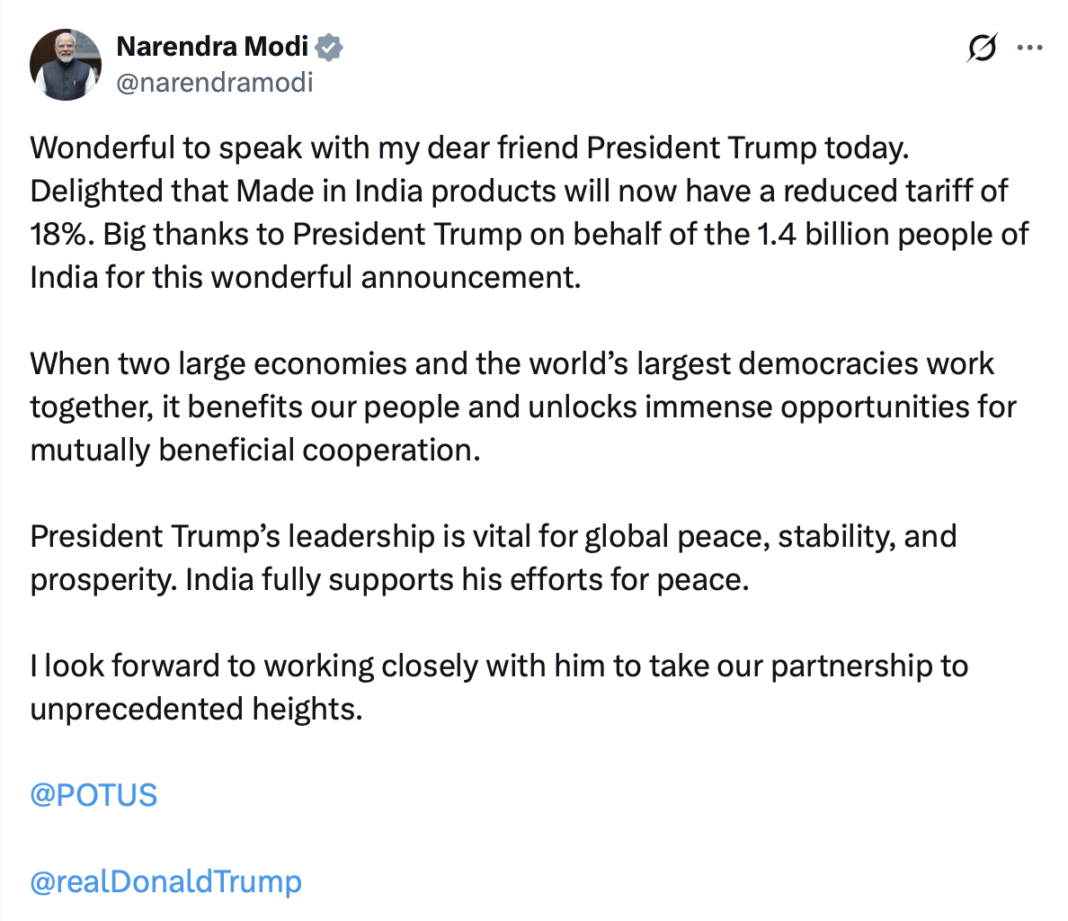
Reacting to the announcement, Modi wrote on the social media platform X that he was delighted Indian products would now enjoy a lower tariff and thanked Trump on behalf of the Indian people.
What the US and India agreed on
In a post on Truth Social, Trump said the tariff cut was done out of friendship and respect and claimed that India may also reduce its own tariffs and non-tariff barriers on American goods to zero. He also said India had agreed to cut down purchases of Russian oil and increase energy imports from the United States, and possibly from Venezuela.
From heavy tariffs to a better spot
Before this deal, India was among the most heavily taxed major economies. In August last year, Trump imposed a steep 50% tariff on Indian imports. This included a 25 % reciprocal duty and another 25 % linked to India’s continued purchase of Russian crude oil. Brazil faced a similar 50% tariff.
The new agreement has sharply improved India’s position, bringing it closer to the lower end of the global tariff scale.
Standing strong among other export economies
In South Asia, only Afghanistan has a lower tariff at 15%, but its exports and manufacturing capacity are very limited compared to India. India also gains an edge over major export-driven economies in Southeast Asia, especially Vietnam, which competes closely with India in electronics, garments and footwear.
India’s place in the global picture
Globally, India’s 18% tariff compares well with several large exporters. Brazil continues to face 50% tariff, while Myanmar and Laos face 40 %. South Africa faces 30 %, and Mexico 25 %. Even developed nations like Canada, at 35 % and Switzerland, at 39 %, face higher tariffs than India.
Only a small group of countries enjoy lower rates than India. These include the United Kingdom at 10 %, and nations such as Japan, South Korea and members of the European Union, which face tariffs of around 15 % under earlier trade deals with Washington.
With this agreement, India has clearly moved into a stronger and more competitive position in global trade.
