

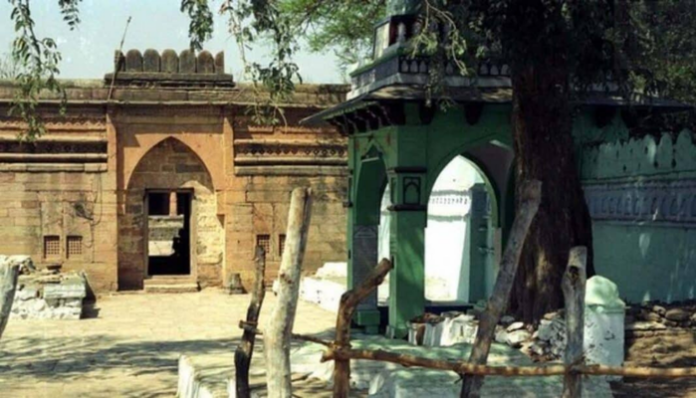
The Indore Bench of the Madhya Pradesh High Court on Monday (23rd February) directed the parties in the Dhar Bhojshala-Kamal Maula mosque case to file their objections, suggestions and recommendations on the Archaeological Survey of India (ASI) survey report within two weeks. A division bench of Justice Vijay Kumar Shukla and Justice Alok Awasthi scheduled the next hearing of the case for 16th March.
The ASI survey report was submitted to the High Court on July 15, 2024, after a division bench of the High Court directed ASI on March 11, 2024, to conduct a scientific survey of the Bhojshala complex and submit a report. The process of survey, excavation and documentation commenced on March 22, 2024 and lasted 98 days. The entire process was carried out by a team of archaeologists, epigraphists, chemists, conservators, surveyors, photographers and draftsmen.
After the completion of the process, the ASI compiled a 2,189-page survey report. After the submission of the survey report to the High Court, the case reached the Supreme Court, where it was ordered that the report was to be kept in a sealed envelope.
The Dhar Bhojshala-Kamal Maula mosque case relates to a dispute regarding the religious identity and historical character of the Dhar Bhojshala complex, which also houses the Kamal Maula mosque. The Hindu side has been asserting that the Dhar Bhojshala complex is a temple dedicated to Vagdevi (Goddess Saraswati). On the other hand, the Muslim side claims the site because of the presence of the 11th-century Kamal Maula Mosque in it. The site is protected by the ASI.
Findings of the report
The survey report revealed that the existing structure was made from the parts of pre-existing temples, and it was modified and converted into a mosque. It notes that inscriptions dating from the 12th to the 20th centuries in multiple languages and scripts, including Sanskrit, Prakrit, local dialects in Nagari script, and Arabic and Persian, were discovered during the investigation. It said that the Bhojshala complex was used as a religious space, a centre of learning and a place of public movement at different times.
The inscriptions had references to Parijatamanjari Natika, Avanikarmasatam and Nagabandha. A large inscription refers to the play Parijatamanjari, which was composed by Madan, who was the guru of Parmar ruler Arjunvarman of Dhar. The play, in its preface, states that it was first staged in a temple dedicated to the Goddess Saraswati.
The report further states that an inscription refers to two Prakrit poems of 109 verses each, one identified as Avanikarmasatam and believed to have been composed by Maharajadhiraja Bhojdev. Furthermore, the Nagabandha inscriptions found in the western pillared hall are described as grammatically and educationally significant, pointing to the tradition of the site as a centre of learning associated with King Bhoj.
It also notes that about 50 inscription fragments from the 13th century were recovered, along with a broken piece of a statue base. Several plaques were also found whose inscriptions appeared deliberately erased before being reused in later construction. Besides, 34 small engraved names were documented, some from the 13th century and most from the 16th century.
Many inscriptions from the 11th and 12th centuries have been linked to the Parmar period. Some of them have Sanskrit verses praising Goddess Saraswati, including invocations such as ‘Shri Saraswatyai Namaha’ and references to a teaching tradition. After examining them, the ASI associated the inscriptions with the medieval Hindu temple tradition.
The report also mentioned that the current structure has elements of Islamic architecture, such as arches, the mihrab orientation and Persian inscriptions. These indicate its later use as a mosque or dargah. Some inscriptions found by the ASI had references to Sufi traditions.
56 Arabic and Persian inscriptions within the complex, including 43 ink-written texts, were also found during the survey. These inscriptions contained visitor records, religious sayings, prayers and verses of Persian poetry. Within the Kamal Maula shrine complex, verses from the Quran were found inscribed on four tombs.
A Persian inscription at the site cites the name of Sultan Mahmud Shah I of Malwa and records that records the construction of galleries, courtyards, chambers, a well and bath structures within the shrine complex. The construction of these structures is dated to 861 Hijri (1456-57 AD), and the inscription was engraved in 866 Hijri (1461-62 AD).
A separate inscription refers to the reconstruction of old mosques in Dhar during the Tughlaq period. The 43 ink inscriptions, dated between the 16th and 20th centuries, record names of visitors and literary or religious references. One inscription records the visit of Syed Hussain, identified as a deputy engineer of Gwalior State, in 1905.
Apart from the inscriptions, the survey report records several architectural and sculptural remains. Over 1,700 artefacts were found, including sculptures, structural fragments, pillars, walls and mural elements. Mythological sculptures of Lord Shiva and Vasuki Nag, depicted as a seven-hooded serpent, were among the recovered remains.
The survey report notes that floral motifs, kirtimukhas, lotus patterns and sculpted depictions of deities were recorded on pillars, beams and base stones. In addition to that, ruins of statues, dance postures and mythological symbols were also recorded. In the foundation of the complex, the ASI recorded the presence of wall alignments, pillar bases and stone flooring whose orientation and layout matched traditional temple architectural plans. Additional structural features similar to sacrificial pits were observed at some locations.
According to the ASI report, the initial conservation plans of the monument were made in 1902-03 during the British period. In 1951, the site was declared a Monument of National Importance.
