

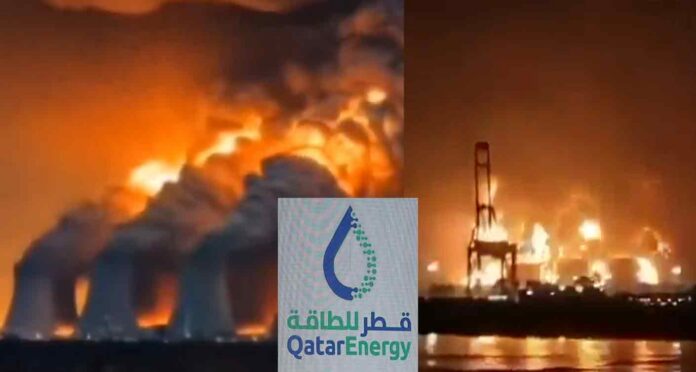
Iranian strikes on Qatar’s energy infrastructure have knocked out two LNG production trains and one gas-to-liquids facility at the Ras Laffan hub, destroying 12.8 million tonnes per year, which is 17% of the country’s total LNG export capacity for three to five years, QatarEnergy CEO Saad Sherida al-Kaabi said on Wednesday. The attack will cause an estimated loss of $20 billion in annual revenue and threaten Liquefied Natural Gas supplies to Europe and Asia.
The attacks, which came in retaliation for earlier Israeli strikes on Iranian facilities, have forced QatarEnergy to extend force majeure declarations on its long-term LNG contracts. Production cannot resume until hostilities cease, the CEO stressed.
“I never in my wildest dreams would have thought that Qatar would be — Qatar and the region — in such an attack, especially from a brotherly Muslim country in the month of Ramadan, attacking us in this way,” al-Kaabi told Reuters in an exclusive interview.
The two damaged LNG trains, identified as S4 and S6, together with the affected gas-to-liquids (GTL) plant cost approximately $26 billion to build. ExxonMobil holds a 34% stake in train S4 and a 30% stake in train S6, while Shell is a partner in the GTL facility. The GTL plant itself could take up to a year to repair, but full LNG restoration is expected to take far longer.
Al-Kaabi warned that the scale of the damage has set the entire Gulf energy sector back 10 to 20 years. “For production to restart, first we need hostilities to cease,” he said. He also urged all parties — Israel, the United States and others — to “stay away from oil and gas facilities.”
The disruption is projected to cost QatarEnergy an estimated $20 billion in annual revenue. Long-term contracts supplying LNG to Italy (Edison), Belgium (EDFT), South Korea (KOGAS) and China (Shell and others) will be affected. Beyond LNG, Qatar’s exports of other products will also fall sharply. As per estimates, supply of condensate will fall by 24%, liquefied petroleum gas by 13%, helium by 14%, and both naphtha and sulphur by 6%.
Qatar, the world’s largest LNG exporter, had already declared force majeure after earlier strikes on Ras Laffan. The latest attacks have extended that declaration, potentially for up to five years, depending on how long the conflict continues.
The strikes have also shaken Qatar’s longstanding reputation as a safe haven in the Gulf. “That image, I think, has been shaken,” al-Kaabi said.
Global energy markets are now bracing for prolonged supply tightness, particularly in Europe and Asia, at a time when many buyers were already seeking to diversify away from Russian gas. Analysts say the outage could tighten LNG spot prices and delay new project timelines across the region.
