

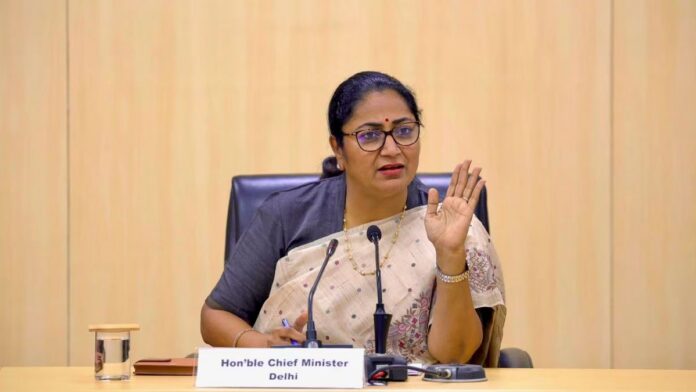
The Delhi government on Saturday opened its draft Electric Vehicle (EV) Policy 2026 for public consultation, inviting citizens, industry players and other stakeholders to share feedback within 30 days. The draft, published by the Transport Department, outlines the city’s roadmap for cleaner mobility till 2030 and is aimed at tackling vehicular pollution through accelerated EV adoption.
Delhi CM Rekha Gupta took to X to ask the public to share their feedback on the draft EV policy formulated by the government.
दिल्ली में प्रदूषण है, दिल्ली की हवा खराब है… यह तो हर व्यक्ति कह सकता है, लेकिन समाधान क्या है?
— Rekha Gupta (@gupta_rekha) April 11, 2026
पहली बार किसी सरकार ने इस गंभीर विषय पर गंभीरता से काम किया है। दिल्ली शहर के लिए ईवी पॉलिसी का ड्राफ्ट हम लेकर आए हैं। https://t.co/zy5SyeG4Wz पर यह ड्राफ्ट अपलोडेड है।
अब सभी… pic.twitter.com/ti5hl7iX8M
Officials said suggestions can be submitted via email or post, while urging people to avoid visiting government offices to prevent crowding. Inputs received after the deadline will not be considered. The proposed policy builds on Delhi’s earlier EV push, with a sharper focus on expanding charging infrastructure, strengthening the EV supply chain, and reducing dependence on internal combustion engine vehicles.
At its core, the policy combines incentives with regulatory measures to drive adoption across segments. Electric two-wheelers priced up to ₹2.25 lakh will receive graded incentives over three years, starting at ₹10,000 per kWh (capped at ₹30,000) in the first year. Electric auto-rickshaws could get up to ₹50,000 in the first year, while incentives for electric goods carriers may go up to ₹1 lakh, tapering in subsequent years.
The draft also emphasises scrappage-linked benefits to accelerate the transition. Buyers replacing older vehicles, especially BS-IV and below, stand to receive additional incentives, including up to ₹1 lakh for electric cars and ₹25,000 for three-wheelers. The government says the policy aims not just to boost EV sales, but to build a comprehensive ecosystem spanning charging networks, battery recycling, servicing, and component recovery, while ensuring fiscal prudence and transparent implementation.
