

The Chhattisgarh High Court has refused to cancel criminal proceedings against 11 social activists accused of making controversial remarks about the Hindu religion during a public meeting in Jashpur district in February 2024. The Court said the case involves questions that can only be decided after evidence is examined during a full trial and cannot be settled at the initial stage.
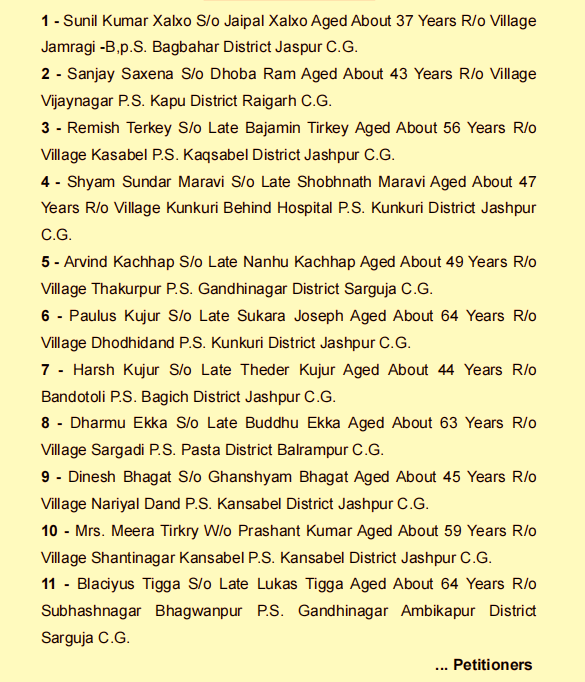
A Division Bench of Chief Justice Ramesh Sinha and Justice Ravindra Kumar Agrawal dismissed the petition filed by Sunil Kumar Xalxo, Sanjay Saxena, Remish Terkey, Shyam Sundar Maravi, Arvind Kachhap, Paulus Kujur, Harsh Kujur, Dharmu Ekka, Dinesh Bhagat, Meera Tirkry and Blaciyus Tigga, who had sought to quash the FIR, chargesheet and criminal proceedings against them. The case was filed after they made the comments at a public meeting organised by Bharat Mukti Morcha and Rashtriya Christian Morcha.
What the case is about
The case began after Karnail Singh, the district president of Vishva Hindu Parishad Jashpur, filed a complaint at Kunkuri Police Station on 28th February, 2024. “The speakers insulted Hindu Gods and Goddesses, for which they must be punished. The entire Hindu and Brahmin community has also been insulted. The communities are enraged and are demanding strict punishment,” the complainant said.
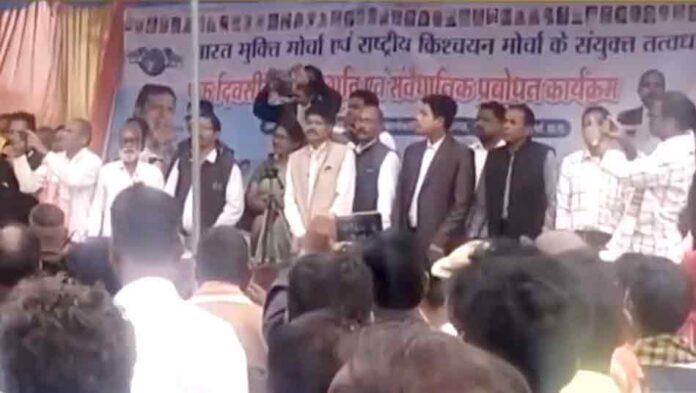
According to the prosecution, the activists attended a public meeting organised by the Bharat Mukti Morcha and Rashtriya Christian Morcha at Saliyatoli Mini Stadium in Kunkuri on 27th February, 2024. During the event, speakers reportedly said that the word “Hindu” means “thief, dacoit, robber and slave” and that “Hindu is not a religion but an abuse”. They also reportedly made remarks against religious preacher Dhirendra Shastri and the Chhattisgarh Chief Minister and urged people to break Electronic Voting Machines (EVMs) and oppose elections conducted through them.
The complaint stated that the speeches were capable of promoting hostility amongst communities, affecting national integration and disturbing communal harmony. After the complaint was filed, the police filed a hate crime report against 12 people on 4th March 2024.
Following an investigation, police filed a chargesheet, and the trial court framed charges under Sections 153A, 153B, 295A, 505(2), 294 and 34 of the Indian Penal Code. The sessions court later upheld the order, after which the activists moved the High Court.

The prosecution said that such statements cannot be viewed in isolation and are required to be examined in the backdrop of the audience before whom they were made and their potential impact on communal harmony and public order.
Notably, while 12 people were named in the FIR, one of them named Roopnarayan Ekka didn’t join the petition to quash the case.
Activists cited free speech
The petitioners argued that they work for socially and economically weaker sections and that their statements were part of discussions on social, political and religious issues. They said their comments were protected under Article 19(1)(a) of the Constitution and were linked to promoting scientific temper and social reform under Article 51A(h). They also claimed there was no deliberate intention to hurt religious feelings or create enmity.
Court says a trial is necessary
Rejecting the plea, the High Court said such arguments cannot be examined while deciding a petition under Section 528 of the Bharatiya Nagarik Suraksha Sanhita (BNSS), which corresponds to Section 482 of the CrPC.
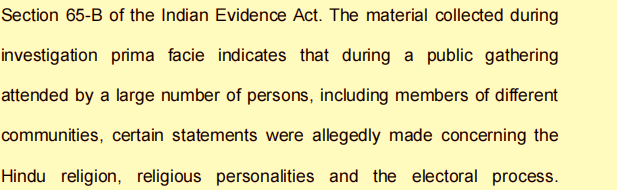
The Bench observed, “The material collected during investigation prima facie indicates that during a public gathering attended by a large number of persons, including members of different communities, certain statements were allegedly made concerning the Hindu religion, religious personalities and the electoral process.”
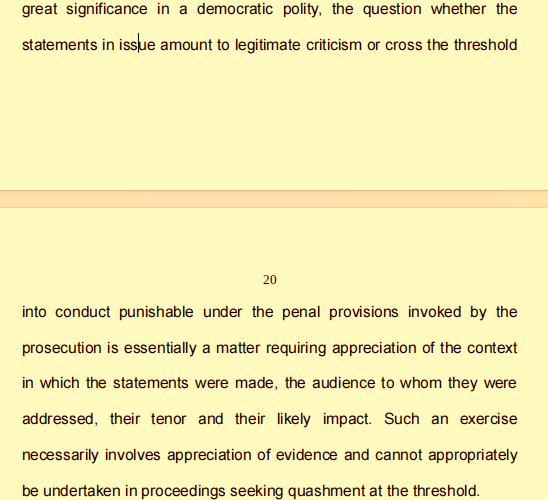
The Court also said, “The question whether the statements in issue amount to legitimate criticism or cross the threshold into conduct punishable under the penal provisions invoked by the prosecution cannot appropriately be undertaken in proceedings seeking quashment at the threshold.”
Responding to the defence argument that the petitioners are social activists, rationalists or adherents of scientific temper and that their statements were intended merely to encourage social reform, the court stated that it could not be a ground for quashing the proceedings at this stage.
The Bench further held that the absence of any actual communal violence or public disorder alone cannot be a reason to end the prosecution. It noted that the investigation included witness statements, pamphlets, videography of the event, along with a Section 65-B Evidence Act certificate, showing the case was supported by material evidence and not based on mere assumptions. The Court clarified that its observations are only for deciding the quashing plea and will not affect the trial on the merits.
The judgement stated, “no ground is made out for quashing the FIR, the charge-sheet, the order dated 19.09.2025 passed by the learned Judicial Magistrate First Class, Kunkuri framing charges against the petitioners, the revisional order dated 24.01.2026 passed by the learned First Additional Sessions Judge, Kunkuri, or the consequential criminal proceedings arising therefrom. The petition, being devoid of merit, deserves to be and is accordingly dismissed.”
The High Court clarified that observations made by the court are only related to the plea to quash the case, and they are not comments on the merits of the case. “The trial Court shall proceed independently and decide the matter strictly in accordance with law and on the basis of the evidence that may be adduced before it,” The court added.
