

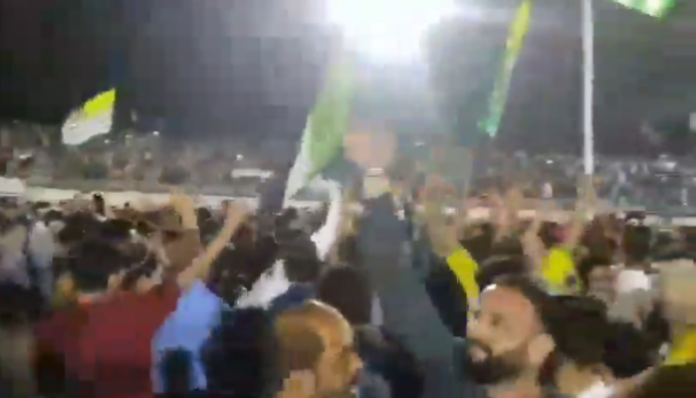
On 11th June (Thursday), the Pakistani troops and Rangers opened fire with AK-47 rifles on thousands of unarmed protestors in Pakistan-occupied Kashmir’s (PoK) Rawalkot at the Eidgah Ground, resulting in at least 16 fatalities and 37 injuries. The peaceful protest was organised against inflation, demanding affordable rice, bread, electricity and fundamental rights.
In Rawalakot, between 60,000 and 70,000 people had gathered to demonstrate against Pakistan’s occupation and oppressive policies in the area. Notably, 30 people were killed and 200 others were injured after violent clashes with security forces just two days ago on 9th June (Tuesday).
The latest agitation was also organised to demand justice for the victims. “Ye jo dehshatgardi hai, iske peeche wardi hai (This terrorism is being carried out by those in uniform),” they chanted. Residents of Khai Gala hamlet, including elderly, women and children, marched against the violence and closed the markets.
Rawalakot in PoJK witnessed a horrific crackdown after Pakistani Army personnel & Rangers opened fire on 60,000-70,000 unarmed protesters gathered at Eidgah Ground. Citizens demanding affordable flour, rice, electricity & basic rights came under indiscriminate gunfire. pic.twitter.com/CE2vUq8gRk
— Songs of Chinar (@SongsOfChinar) June 11, 2026
Grieving families looked for their beloveds after the demonstrators were shot at, leaving fields and highways smeared in blood. Despite the violence, PoK political activist Sardar Aman Khan pledged to carry on the movement. According to him, Pakistan accuses anyone who advocates for human rights of being a “terrorist.”
Local political figures and members of the Joint Awami Action Committee (JAAC) spoke at the assembly, criticising the handling of the protests by the authorties and demanding an impartial inquiry into the fatalities and injuries. The leaders called on human rights organisations and the global community pay heed to the critical situation and advocate for justice for the impacted families. JAAC has been suddenly charged by the Pakistani government with “engaging in terrorism” and “creating anarchy.”
Amnesty International vehemently denounced the crackdown, charging authorities of employing extreme force, stifling dissent and breaching fundamental human rights as regional polls approach. Witnesses attested that dozens of protesters were in critical condition with serious bullet and shrapnel wounds. Gunshot wounds claimed the life of at least one protester at the site.
The aforementioned events come after prior unrest in the same city on 7th June (Sunday), when confrontations between protestors and paramilitary forces resulted in 11 deaths and over 70 injuries. The military establishment, directly led by Army Chief General Asim Munir, used a vastly disproportionate force to put an end to the agitation, according to intelligence sources monitoring the situation.
JAAC has asked for the elimination of the 12 reserved assembly seats for non-residents because it undermined the local authority. It charged that these seats would enable outsiders to influence local assembly decisions on behalf of Pakistan’s major political parties. According to insiders, these seats remain heavily influenced by the Pakistani military and intelligence services.
The outfilt has submitted 38-point agenda which also demanded regional economic reforms, such as reduced energy costs along with subsidised flour and electricity.
