

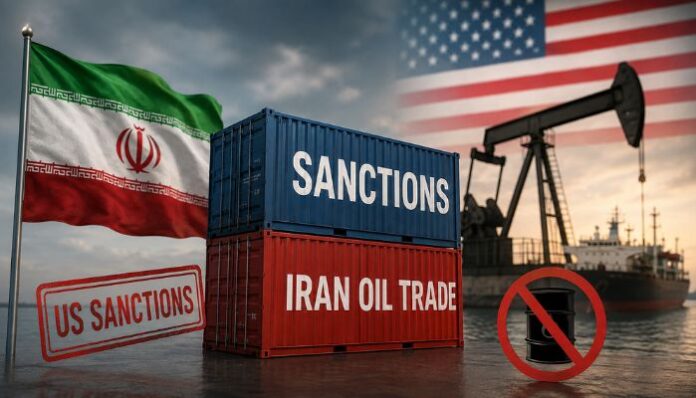
On 24th August, the Donald Trump administration imposed sanctions on four India-based companies over their alleged involvement in the trade of Iranian oil and petrochemical products worth around USD 119 million. Three Indian nationals have also been sanctioned as part of Washington’s latest effort to cut Iran off from international sources of revenue.
The sanctions have been announced under the US Treasury Department’s Operation Economic Outcast, which Washington says is aimed at putting greater pressure on Iran’s financial network. The latest action comes as the US continues to warn countries and businesses that doing business with Iran could expose them to American sanctions.
According to the US Treasury, one of the companies, Sadashiva Overseas Limited, imported around USD 69 million worth of petroleum products originating from Iran between February 2024 and June 2025. Some of these shipments were connected to Bonjoure Commodity FZE, a company that Washington had already sanctioned.
#World I The United States has sanctioned four India-based companies and three Indian nationals over their alleged involvement in the trade of Iranian petroleum and petrochemical products, as Washington steps up economic pressure on Tehran under its new ‘Operation Economic… pic.twitter.com/meAymIGD9k
— News18 (@CNNnews18) August 26, 2026
The companies named in the latest action are:
- Sadashiva Overseas Limited: The India-based company imported around USD 69 million worth of Iranian-origin petroleum products between February 2024 and June 2025. Some shipments were linked to previously sanctioned Bonjoure Commodity FZE.
- PP Softtech Private Limited: The company was accused of importing around USD 25 million worth of Iranian-origin petroleum products.
- Prakrutees Infra Impex India Private Limited: The company was also accused of importing around USD 25 million worth of Iranian-origin petroleum products.
- Portease Partners LLP: An India-based customs broker, the company was sanctioned for allegedly helping facilitate several shipments of Iranian petrochemical products into India.
The US Treasury also targeted three Indian nationals. Prashant Garg, director of PP Softtech, was sanctioned along with Indrismiya Asharafmiya Shekh and Harish Ramchandra Rangi, who were linked to the activities covered by the sanctions.
US steps up economic pressure on Iran
US Treasury Secretary Scott Bessent said the latest measures were designed to increase pressure on Tehran. He described the campaign as an “economic D-Day” and said the measures would “tighten the noose” around the Iranian government.
Washington has increasingly warned companies and countries that economic engagement with Iran could have consequences. The US says the objective is to weaken Tehran’s ability to generate revenue and maintain its international financial connections.
The latest sanctions come despite a fragile ceasefire between the US and Iran. A long-term settlement has yet to be reached. Washington has previously targeted Indian businesses over Iranian oil dealings, including four India-based companies sanctioned in February and another six companies and three Indian nationals targeted in July last year.
The latest sanctions package was much wider, with around 20 companies based in China and Hong Kong and four Chinese nationals also included. In total, nearly 60 individuals, companies and vessels were sanctioned by the US Treasury.
Iran rejects US pressure
Iran has strongly rejected the latest sanctions and accused Washington of violating international law. Its Foreign Ministry said the US campaign amounted to pressure and intimidation against countries dealing with Tehran.
“No honourable state that values its sovereignty and national interests will accept the normalisation of such gross lawlessness and systematic bullying,” the Iranian Foreign Ministry said.
Iranian Economy Minister Ali Madanizadeh said the country was prepared to deal with the economic pressure and had a “two-year plan” to counter the sanctions.
Iranian Parliament Speaker Mohammad Baqer Ghalibaf also dismissed US warnings against countries trading with Iran as “big talk”. He claimed that Iran’s trading partners had told Tehran that they considered the US threats “utterly meaningless”.
Ghalibaf further argued that the US did not have enough economic influence to force other countries to completely end their relations with Iran.
