

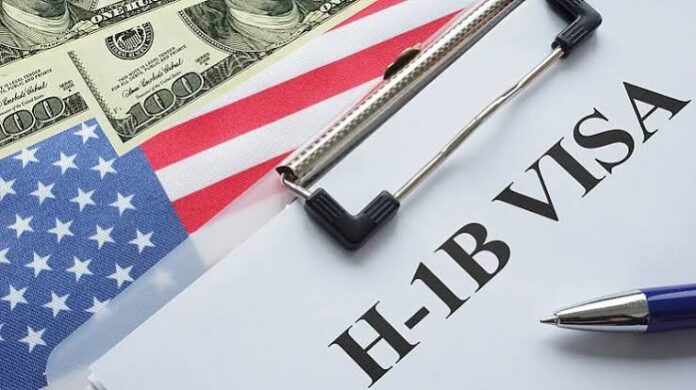
A proposed policy change by the Donald Trump administration could end the ability of certain H-4 visa holders to work legally in the United States, potentially affecting thousands of spouses of H-1B professionals, with Indian families likely to bear a significant share of the impact.
The proposal seeks to reverse a policy introduced more than a decade ago that allowed eligible spouses of H-1B visa holders to obtain Employment Authorisation Documents (EADs) and take up jobs in the US.
The plan, listed on Reginfo.gov under the Office of Information and Regulatory Affairs, is titled “Removing H-4 Dependent Spouses From the Classes of Noncitizens Eligible for Employment Authorisation.” It has been included in the Department of Homeland Security’s long-term regulatory agenda, although no date has yet been announced for its release.
The potential impact on Indian women is particularly significant. Data on H-4 EAD applications between 2014 and 2017 showed that 93 per cent of approvals went to Indian nationals, while 94 per cent of those beneficiaries were women.
The Department of Homeland Security has proposed removing certain H-4 dependent spouses of H-1B workers from the category of noncitizens eligible to apply for employment authorisation.
The proposal would effectively roll back the changes introduced through a 2015 rule that allowed eligible H-4 spouses to obtain work permits. The DHS document says the move would restore the previous policy under which H-4 dependent spouses were not eligible for employment authorisation.
However, H-4 EAD holders are not losing their work permits immediately.
The measure is currently only a proposal. Before it can become law, DHS would have to publish a formal Notice of Proposed Rulemaking in the Federal Register, provide an opportunity for public comments and subsequently issue a final rule. Until that process is completed, H-4 spouses with valid EADs can continue working under existing rules.
An H-4 visa itself does not grant employment rights. It is issued to spouses and children of H-1B visa holders so that families can live together in the US. Eligible H-4 spouses must obtain a separate Employment Authorisation Document before they can legally work.
The proposal is also not the first attempt to roll back H-4 work authorisation. During Trump’s first term, DHS proposed removing employment eligibility for certain H-4 spouses in 2017. That proposal was ultimately not finalised and was withdrawn in 2021.
The latest move comes amid a broader tightening of the administration’s immigration policies affecting skilled foreign workers. The administration has also proposed a major increase in the cost of new H-1B hires and sought changes to the period H-1B workers receive to find another employer after losing their jobs.
The proposed H-4 change could have an outsized effect on Indian-origin families because Indian nationals accounted for around 71 per cent of approved H-1B petitions in FY2024, according to USCIS data cited in the report.
For families that have relied on two incomes, the removal of H-4 work authorisation could therefore have consequences extending well beyond immigration paperwork, potentially affecting household finances, careers and long-term plans in the United States.
For now, however, the existing H-4 EAD system remains in place. The proposed rollback would only take effect if the administration completes the formal rule-making process and issues a final rule.
