

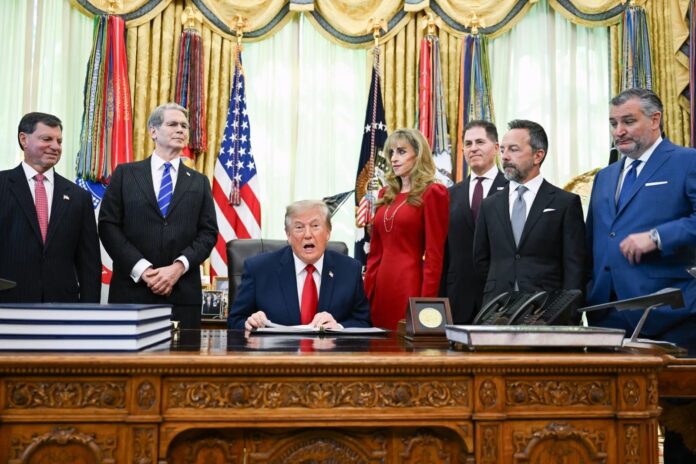
More than 60 million American children now have a Trump Account waiting to be claimed, following the US Treasury Department’s completion of automatic enrolment under a programme designed to encourage long-term investing and wealth creation from childhood.
Treasury Secretary Scott Bessent described the development as a major milestone in the Trump administration’s effort to give American children an early financial head start.
But automatic enrolment does not mean every child has received $1,000 from the government.
What are Trump Accounts?
Trump Accounts were created under the One Big Beautiful Bill Act and are structured under Section 530A of the US tax code. The accounts became available for contributions on July 4, 2026.
They are designed for eligible children under 18 with valid Social Security numbers. The money is invested rather than simply held as cash, allowing it to potentially grow over many years through compound returns.
The central idea is straightforward: start investing early and give children decades for their money to grow.
Who gets the $1,000?
Children who are US citizens and were born between January 1, 2025, and December 31, 2028, can qualify for a one-time $1,000 federal contribution.
However, the payment is not automatic.
Parents or authorised guardians must claim the automatically created account and separately elect to receive the government contribution. In other words, automatic enrolment creates the account, but parents still need to take action to unlock the $1,000.
Parents, relatives, employers and other eligible contributors can also add money to the accounts, subject to programme limits.
Private donors are adding more money
The programme has attracted substantial private backing.
The Dell family has committed $6.25 billion to provide $250 contributions to Trump Accounts for 25 million children.
There has also been a commitment involving SpaceX stock for the accounts of more than two million children.
Such contributions could significantly increase the value of accounts beyond the government’s initial contribution, particularly if the money remains invested for many years.
How is it different from a 529 plan?
Trump Accounts are not simply another version of America’s existing college-savings plans.
A 529 plan is primarily designed for education expenses, with tax advantages for qualified withdrawals.
Trump Accounts are structured more like traditional IRA-style investment accounts and are intended for broader long-term wealth creation. The money remains subject to restrictions and tax rules, meaning it is not simply a cash payment that becomes freely available when a child turns 18.
The account generally transitions into a traditional IRA for the beneficiary when the child reaches adulthood.
Why is the programme significant?
Supporters argue that the biggest advantage is time.
A $1,000 investment made during childhood could potentially grow into several thousand dollars over 18 years if markets perform well. Additional contributions could increase that amount substantially.
The programme could also introduce children to investing at an early age and make long-term wealth-building more familiar to families who have never participated in financial markets.
Critics, however, argue that $1,000 alone will not dramatically change a child’s financial future. Wealthier families may also be able to contribute substantially more than lower-income households, potentially creating large differences in account balances.
Others question whether government resources would have a greater immediate impact if directed towards child poverty, healthcare or housing.
For now, Trump Accounts represent a major experiment in giving children an investment asset rather than simply a short-term benefit.
With more than 60 million accounts automatically created, the next question is how many parents will claim them, activate eligible government contributions and continue investing for their children’s future.
