

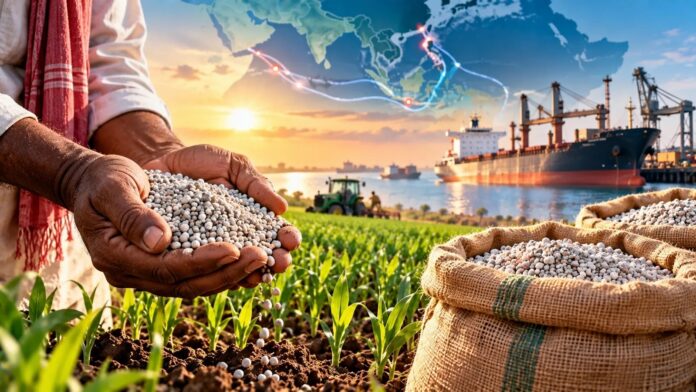
In 2026, India successfully secured fertiliser supplies through a smart mix of diplomacy, trade deals and smart domestic production enhancement, but the real test begins when those supplies have to reach millions of farmers during the narrow Rabi 2026–27 sowing window. The season is particularly important for wheat, with the government targeting 121 million tonnes of production. Uttar Pradesh, Madhya Pradesh, Punjab, Haryana and Rajasthan together account for roughly three-quarters of India’s wheat output, making developments in these states critical to national food security.
Irrigation is another challenge when it comes to the Rabi season. Wheat generally requires four to six irrigations, with the first, at the crucial Crown Root Initiation stage, needed within roughly 21–25 days of sowing. The 2026 monsoon was under stress; reservoir levels in parts of northern India were below the previous year’s levels. Punjab and Haryana face particularly serious groundwater depletion; most of Punjab’s 153 development blocks are classified as over-exploited. Canal systems have their own difficulties, ranging from inadequate reservoir releases to siltation and failure to deliver sufficient water to tail-end villages.
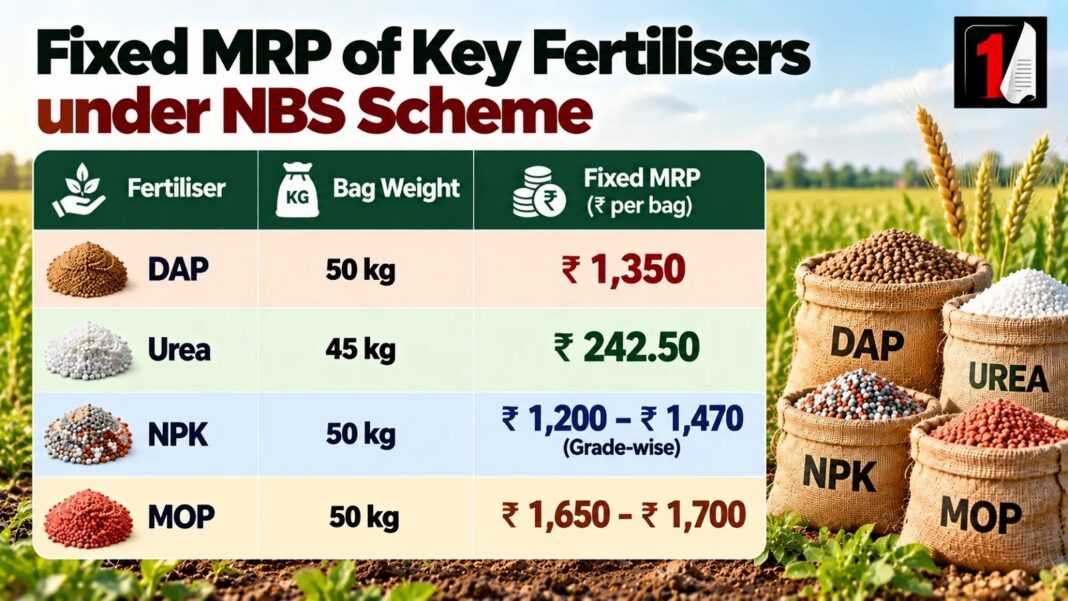
The third pressure point is DAP fertiliser distribution. India remains heavily dependent on international markets for phosphatic fertilisers and their raw materials, importing an estimated 80–90% of its phosphoric acid and finished DAP requirements. International DAP prices remained elevated in 2026, while geopolitical disruptions added further uncertainty. Yet Indian farmers continue to receive a 50-kg DAP bag at a controlled price of ₹1,350, with the government absorbing much of the difference through subsidies and additional financial support. The Centre says overall fertiliser availability is sufficient and uses the Integrated Fertiliser Management System to track movement from factories and ports to districts and retailers.
However, there is a crucial distinction between national availability and local accessibility. Aggregate figures can show a comfortable surplus while a farmer in a particular district still spends hours queuing outside a cooperative society. Fertiliser consignments can be delayed by railway-rake and logistical constraints, while cooperatives may receive only part of their requirement at a time. Private dealers can compound the problem through black-marketing or “tagging”, that is, forcing farmers buying DAP to purchase additional products, effectively raising the cost beyond the official MRP.
These pressures differ across India’s wheat belt. Uttar Pradesh faces enormous distribution challenges simply because of its size, alongside late paddy harvesting in Purvanchal and limited irrigation in Bundelkhand. Punjab combines intensive fertiliser use with severe groundwater depletion and dependence on electricity-powered tube wells. Haryana struggles with canal water reaching tail-end districts and reports of malpractice among private fertiliser sellers. Madhya Pradesh experiences sudden spikes in DAP demand when wheat and gram are planted immediately after soybean harvesting. Rajasthan faces double pressure because mustard sowing begins before wheat, and both crops require phosphatic fertiliser, while parts of the state must balance irrigation and drinking-water requirements.
India, therefore, needs more than just additional fertiliser stocks. Balanced nutrient use could reduce excessive dependence on DAP and urea. Soil Health Cards, alternatives such as NPK, Single Super Phosphate, Nano DAP and organic phosphate sources, and reforms to the fertiliser subsidy system could improve efficiency. Better public tracking of district-level fertiliser stocks could also allow farmers to know where supplies are actually available. Meanwhile, zero-tillage technologies such as the Happy Seeder could conserve soil moisture and reduce irrigation requirements.
Ultimately, Rabi 2026 season is going to be a test of India’s entire agricultural supply chain. Securing fertiliser from Russia, Saudi Arabia, Morocco or elsewhere is an important geopolitical achievement, but food security is ultimately decided at the farm gate. A surplus recorded in Delhi means little if DAP reaches a village after the sowing window, seed is unavailable when the field is ready, or irrigation fails during the crop’s critical growth stage. India’s Rabi success will hence depend on converting national-level preparedness into last-mile delivery: getting the right seed, the right nutrients and the right amount of water to the farmer at precisely the right time.
Read about the complex arithmetic and challenges of Rabi season and how India is preparing to meet them in this detailed article in Chapter One Magazine.


