Home Blog Page 6379

Video and stats highlights from India v South Africa match

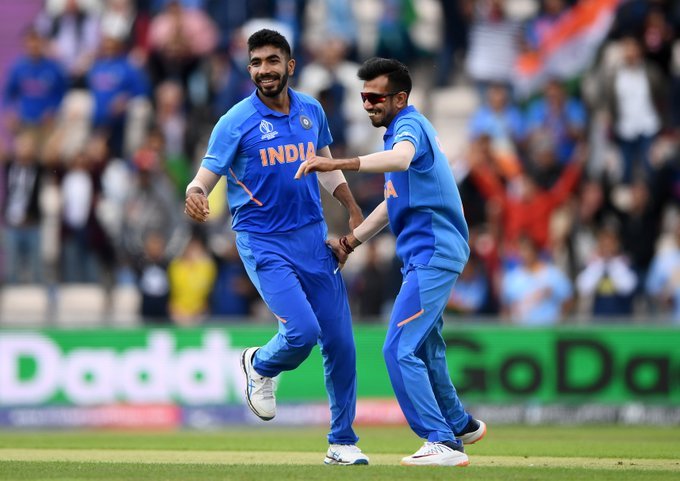
After a long delay, India cricket fans finally got to see their team playing in the World Cup. And it was a great start to India’s World Cup campaign as they won their opening game handsomely against the Proteas.

After winning the toss, Faf opted to bowl first and why not, side batting first at Southampton in the last ten matches have won eight times. But Bumrah, who was making his debut in World Cup and playing his 50th ODI for India, had some other ideas.

Watch Fall of Wickets (South African Innings)


India required just 228 runs to win. But if India had Bumrah; South Africa had Rabada. The pitch was also helping the seamers, and Rababa made sure that India does not get off to a flying start. Rohit, on the other hand, was determined to stay on the wicket and made sure that India reaches the target safely. Rohit’s 122* was later called as his best ODI hundred by the skipper Virat Kohli.

Watch the Run chase (Indian innings)


Stats

  • Rohit Sharma scored his 23rd ODI hundred; he is now only behind Sachin Tendulkar (49) and Virat Kohli (41) in this list of most ODI hundreds for India.
  • Rohit Sharma became only the 7th Indian batsman to score 2 or more hundreds in World Cup. The other six are – Tendulkar (6), Ganguly (4), Dhawan (2), Kohli (2), Dravid (2) and Sehwag (2).
  • Chahal’s 4 for 51 is his 4th best bowling figure in ODIs, also the 6th best bowling figure by a bowler in World Cup against South Africa.
  • The win against South Africa is 50th ODI win under Kohli’s captaincy. He achieved this feat in his 69th game as captain.
  • Bumrah played his 50th ODI, India won 39 of those. The second best Indian to win most matches in their first 50 ODIs. Kedar Jadhav has 40 wins in his first 50 ODIs.
  • Chahal’s 4 for 51 are the best figures so far in the tournament from any bowler who has completed their full allocation of 10 overs.

Uttar Pradesh: Five arrested after Muslim mob ransacks temple to protest against loudspeakers being used for bhajan-kirtan

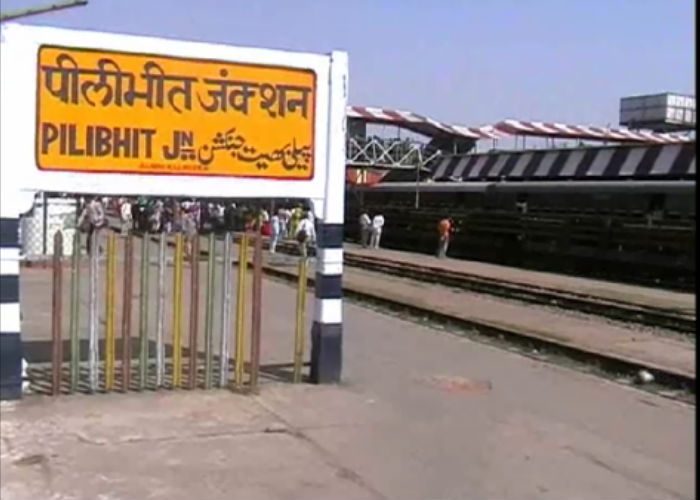
Communal tensions prevail in Rohanya village in Pilibhit, Uttar Pradesh, after a Muslim mob ransacked a temple to oppose loudspeakers. The mob broke the loudspeaker and took away the idols of the temple along with them. As per reports, five men, Mehboob, Monis, Israel, Azaad and Alanoor have been arrested and a case has been registered for trying to create enmity between religious groups.

At a temple situated on the outskirts of Rohanya temple, people would gather and pray and play devotional songs on the loudspeaker. The village has both, Hindu and Muslim population. At around 9 pm on Tuesday night, a mob reached the temple and asked them to stop using the loudspeaker. They reportedly said that since the next day (yesterday) was Eid, the temple should stop playing devotional songs on the loudspeakers as they want to do namaz. The people in the temple protested saying that the namaz is carried out inside the village.

Agitated, the mob cut off the wire of the loudspeaker and even removed the idols and threw them away. When the priest protested, the mob beat him up as well. After the mob left, the priest and others called up the police which arrived to ensure the communal tension does not escalate. The police even got the idols back inside the temple.

The matter soon escalated and the police had to step in to control the communal tension.

Pilibhit Police had confirmed that in Bilaspur station, a case has been registered against five accused under section 147 (rioting), 295 (injuring or defiling place of worship with intent to insult the religion of any class), 504 (intentional insult with intent to provoke breach of the peace), 506 (criminal intimidation) and 153A (promoting enmity between different groups on ground of religion) of the Indian Penal Code.

Amidst a severe economic crisis, Pakistan military trims down the defense budget

In throes of worsening economic catastrophe, Pakistan’ military has decided to slash the defense budget in a bid to help the country emerge out of its financial woes. However, Major General Asif Ghafoor, Director General (DG) Inter-Services Public Relations (ISPR) took to Twitter on Tuesday to suggest that voluntary cuts in the defense budget for next fiscal year would not be at the cost of defense and security.


Ghafoor termed Indian media ‘fake’ for spinning reports on their internal budgeting choices.


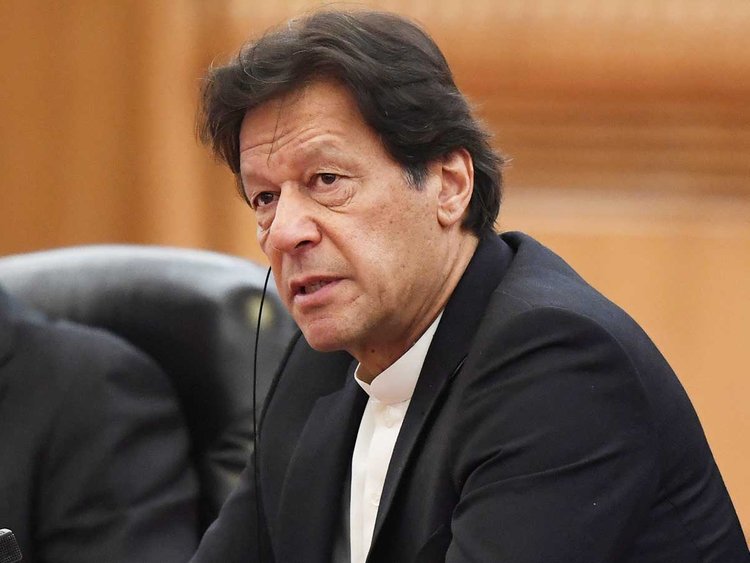
Pakistan Prime Minister Imran Khan appreciated the gesture by Pakistan military of accepting the voluntary cut in the defense budget in the backdrop of a grave financial abyss the country finds itself staring at.

The cash-strapped nation is currently grappling with the worst financial crisis in its history. The recently published World Bank report, which had retained its projection of India’s growth at 7.5% per annum for the next three fiscal years had predicted the growth of South Asia countries except for Pakistan, whose growth it is set to drop at 2.7% in the FY19-20.

Such is the gravity of the economic crisis in Pakistan that on the occasion of Eid, PM appealed to the people of Pakistan to stand united and help overcome the dire economic situation.


Since the time of his election as Pakistan Prime Minister, Khan has been negotiating with world leaders to winkle out bail packages and temporarily assuage the looming economic disaster without much help. A conducive environment for terrorism to spawn and flourish has also added to the woes of Pakistan as investors have remained away from the terror-prone country.

Pakistan is in desperate straits as economists’ predict its economy is on the brink of collapse. The former finance minister of Pakistan, Asad Umar believes that the only solution to Pakistan’s problems is a bailout by the International Monetary Fund (IMF). He opines the balance of payment crisis presently faced by Pakistan is unprecedented and approaching IMF for a bailout is unavoidable. However, he did acknowledge that the conditions laid down by the Fund were far more strict compared to the previous occasions.

To deal with the current situation, Islamabad is finalizing a bailout package from the IMF to ward off the Balance of Payment crisis, notwithstanding short term loans of more than a billion from allies such as China and Saudi Arabia. The precarious situation that Pakistan finds itself in dictates the military’s move of cuts in the defense budget for the next fiscal year rather than the lofty ideals of inclusiveness and tribal development as stated by Ghafoor.

We had reported earlier that China is making efforts to help its friend and neighbour Pakistan and has decided to give USD 2.1 billion in loan to help Pakistan revive its sinking economy.

Newslaundry CEO and former Kejriwal aide calls a woman journalist ‘hysterical’ for countering fallacious report by his outlet

Feeling dejected and angry after their ‘hate crime’ propaganda was busted, Newslaundry CEO Abhinandan Sekhri, a free-trial version of multi-talented ‘intellectual’ Yogendra Yadav, now seems to have resorted to making cheap slurs against journalist Swati Goel Sharma by calling her ‘hysterical’ for presenting facts.

Swarajya journalist Swati Goel Sharma had written a report based on ground reports regarding the alleged scuffle in Gurugram between two individuals, which was initially propped by the media as a hate crime despite the fact that there were no signs of communal angle whatsoever.

As many ‘liberal-secular’ media had already sat on a narrative to push their agenda to target the Hindus for alleged hate crime on Mohammad Barkat Alam in Gurugram, the timely reportage by Swati Goel Sharma in Swarajya had cleared some air regarding the true nature of the incident. Along with other media houses, Newslaundry, which is fighting for relevance and existence, had also used the opportunity to target the Hindu community by implying that the attack on Alam was an example of ‘hate crime’.

In fact, Newslaundry came up with its own ‘ground report‘ following Swarajya’s ground report to imply that the Swarajya report covering the alleged attack on Alam in the recent ‘topi’ incident at Gurugram had some discrepancies. In the report, which reads more like a ‘revenge report’, instead of countering Swarajya’s report on facts, tried to cast aspersions on Swati’s reportage.

Swarajya’s Swati Goel Sharma tore into Newslaundry’s biased reportage through a series of tweets.


However, when Swati lashed out on Newslaundry’s biased reportage which cast aspersions on her credibility as a journalist, Sekhri thought such a reaction defending one’s reportage was ‘hysteria’.


Swati Goel Sharma in her report had further highlighted the fact that how victim Alam had changed his statements by presenting two sets of stories – one to the police during filing the FIR where he had not mentioned about the group forcing him to chant “Jai Shri Ram” slogans, while making new set of claims to the media in Delhi claiming that he was forced to raise Hindu religious slogans during the scuffle.

Even Gurugram Police Commissioner Mohammad Akil had held a press conference to clarify that many of Barkat’s allegations do not match with his statement in the FIR as well as with the footage obtained from CCTV cameras. The police had even hinted that the victim may have been tutored to change his statements pertaining to the incident.

As reported by Swarajya, Murtaza, one of the cousins of the victim had revealed that Haji Shahzad Khan of the controversial and communal group Muslim Ekta Manch had met Alam without his knowledge and took his cousin to Delhi. Interestingly, Murtaza had expressed his anguish over Khan using Alam to make videos to highlight the incident.

Perhaps people at Newslaundry wanted to hide this fact and hence took offence against the citing of Murtaza’s statements. In their report, they went on to term Murtaza statement against Haji Shahzad Khan as Swarajya’s ‘insinuation’.

A screenshot from Newslaundry’s report. Click on the image for bigger resolution.

Further, the Newslaundry reporter has used his creative discretion to term Murtaza statements as “poor recollection” of facts while dictating Swati Goel Sharma on the manner of reporting to be followed. Interestingly, the reporter at Newslaundry has selectively quoted Murtaza whenever it suited his agenda, but calls it as a “poor collection of facts” whenever it busts his propaganda.

As facts pertaining to the case began to emerge, outfits like Newslaundry seem to have got upset and begun to shoot the messenger by twisting ground reports. This was further pepped with Newslaundry’s CEO Abhinandan Sekhri brazening it out and indeed choosing to attack those who counter his outfit’s shenanigans.

Sekhri is a long-term aide of Aam Aadmi Party chief Arvind Kejriwal. He had co-founded the NGO ‘Public Cause Research Foundation’ which eventually evolved into ‘India Against Corruption’ movement that gave birth to AAP. He also co-founded Newslaundry, a self-declared media watchdog, which has till now deleted at least two of its own reports as they went against self-declared ‘liberal’ journalists.

One civilian killed, one injured as terrorists open fire inside a house in Kakapora area of Pulwama district in Jammu and Kashmir

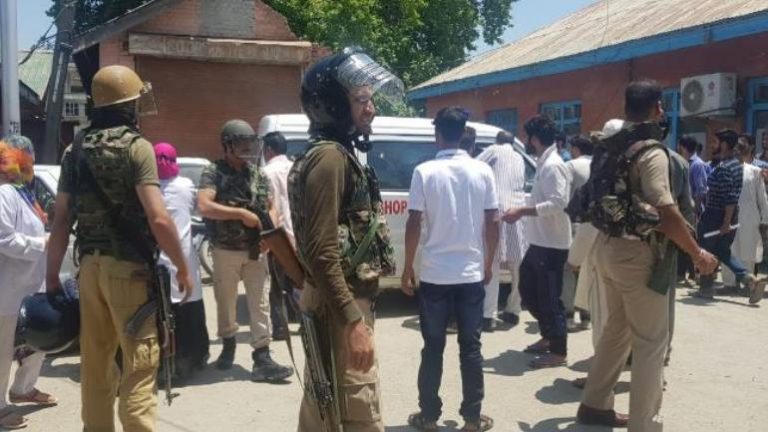
A woman was shot dead this morning by terrorists in Kakapora area of Pulwama district in Jammu and Kashmir. She was immediately rushed to a nearby hospital where she was declared brought dead. According to the police, terrorists barged into the woman’s house and opened fire. This information was shared by the Kashmir Zone Police on Twitter.


The victim who was identified as Nigeena Bano died on the spot while another civilian named Mohammad Sultan suffered serious injuries. He was referred to Srinagar hospital where he is currently being treated for his injuries.

“Both the civilians received critical gunshot wounds. Both were evacuated to a nearby hospital for medical treatment. However, Nigeena Bano succumbed to her injuries,” a police official confirmed.

Innocent civilians and security personnel have become easy and frequent targets for terrorist attacks in the state. A Special Police of Officer (SPO) of J&K police named Khushboo Jan was shot dead by terrorists in March this year in a similar style. A few days later in the same month, a 24-year old man from Bemnipora in Shopian was brutally killed by terrorists. The body of the victim identified as Tanveer Ahmed Dar was found in Kachdoora.

Delhi Police rubbishes media reports claiming a car hit 17 people offering Namaz on Eid

Delhi Police has categorically denied media reports claiming that a speeding car had rammed into people offering namaz in the Khureji area of East Delhi causing injuries to at least 17 persons on Wednesday when Eid was being celebrated. News agency IANS had reported the incident, which was then picked up by various news publications.

The report by IANS had quoted a statement from Deputy Commissioner of Police (DCP) Shahadara, Meghna Yadav confirming the injury of 17 people in the incident. This report was further picked up by publications including The Quint, India Today, India TV and Business Standard making similar claims.

However, DCP Yadav has categorically denied making such claims. When OpIndia spoke to DCP Meghna Yadav to get a confirmation, she denied giving such a statement to any news agency and termed it a ‘lie’.

“They are all lying, whichever media portal is quoting my statement claiming 17 injuries. There is no one injured,” clarified DCP Yadav in conversation with Opindia. “Three people walked into the police station much later after the incident claiming they were injured. But there was no visible injury,” she further added.

All the three who claimed to have been injured were later sent for medical examination.

DCP Yadav divulged that the place where the incident happened usually remains crowded but no namaz was being offered at the time when a speeding car passed through the area. In fact, people who were offering the prayers had already dispersed by that time.

Incidentally, the claim of injury was picked up mostly by the English media, while some reports in the Hindi media had clarified that no one was injured and no car had hit people offering namaz on Eid day.

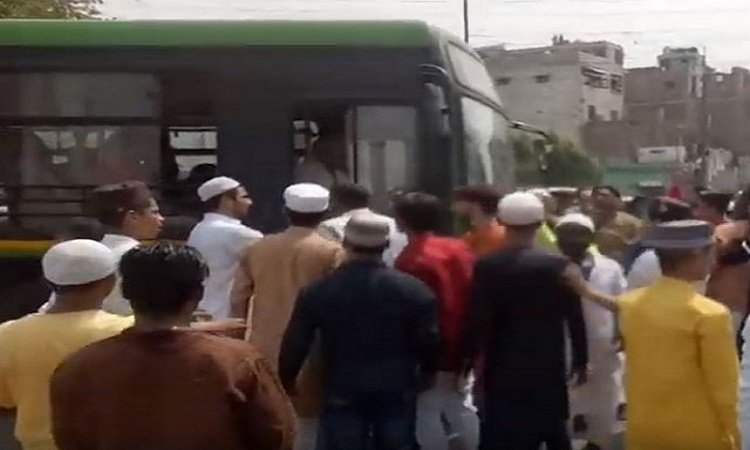
A report in Amar Ujala for example had carried the statement by Delhi police officer that no one was injured. The report further said that the crowd assembled for namaz had indulged in stone pelting to protest the speeding car, which they feared could have caused grievous injuries to the faithfuls.

Meanwhile, some videos claiming to have captured the violent protests by the namazis have gone viral on social media:

World Bank retains forecast of 7.5% growth in FY19-20 for the Indian economy

The World Bank has stated that the India Economy is poised to retain a 7.5 per cent growth for the next three years on the back of strong investment and private consumption.

In its Global Economic Prospects released by the International Bank on Tuesday, it pegged India’s growth in the fiscal year 2018-2019 at 7.2 per cent. It also stated that the stagnation in government consumption was counterbalanced by robust investment, that benefitted from public infrastructure spending.

The Bank has asserted that the growth in the Indian economy will remain at 7.5 per cent, unchanged from the previous forecast, and will remain same for the next two fiscal periods, making it the world’s fastest growing economy for the next 3 years. China, on the other hand, is experiencing headwinds in its economy, with its growth rate for FY19 projected to drop to 6.2 per cent and then subsequently to 6.1 per cent in 2020 and 6 per cent in 2021.

The report mentions that the private consumption and investment will gain from rising credit growth amid more accommodative monetary policy, with inflation having dropped below the Reserve Bank of India’s target. It also added that the Support from delays in planned fiscal consolidation at the central level should partially offset the effects of political uncertainty around elections.

The outlook for South Asia remains positive with regional GDP expected to expand to 6.9 per cent in 2019, 0.2 percentage point down from previous predictions due to downward revisions for Pakistan, but it will rise up to 7 per cent in 2020 and 7.1 per cent in 2021. Pakistan’s growth is expected to slow down further at 2.7 per cent in FY19-20.

The Washington-based lender has observed the military clash between the two South-Asian neighbours in mid-February this year remained contained and the economic ramifications were not substantial. However, it added that rekindling of tensions between the two neighbours can fuel uncertainty, deflate the investors from investing in the region, an apparent remark for the Pulwama attack and the retaliatory Balakot airstrikes by India.

It further added that the comprehensive implementation of GST in India is yet to be complete and hence there is ambiguity about the GST revenue. The report mentioned that the contribution of exports to economic activity is expected to remain weak with moderate global trade growth.

Goa court rejects Congress MLA’s plea to drop charges where he is accused of ‘buying a girl’ for Rs 50 lakh

The newly elected Congress MLA from Panaji, Atanasio Monserrate, will now face trial in the 2016 rape case where he was accused of ‘buying a minor girl’ for Rs 50 lakh after an additional session court in Panaji on Monday rejected MLA’s plea to drop the charges against him.

Finding credibility in the charge-sheet filed by the investigating officer, Additional District and Sessions judge, Sherin Paul, fixed June 12 for the formal framing of charges.

Atanasio ‘Babush’ Monserrate was charge-sheeted last year under Section 376 of the Indian Penal Code and Section 506 of the Protection of Children from Sexual Offences Act after being booked in 2016 for allegedly raping a minor after drugging her.

Monserrate will now have to undergo trial under the Prevention of Children from Sexual Offences Act (POCSO) for rape and wrongful restraint.

Expressing his displeasure at the verdict, the Congress MLA said “We are going to face trial here. We will go to the HC to tell them to expedite the matter. I want to tell them basically to finish it. Even it if goes on a daily basis I want to finish it. This order was on expected lines as my lawyers had first only told me,” he said.

Monserrate who recently won the Panaji seat during Goa bypolls has a history of changing parties. He started his political career with the United Goan Democratic Party (UGDP) and became MLA. Later, he joined the BJP in 2004 only to return to the UGDP in 2007. A few years later, he was in the Congress but was sacked for anti-party activities in 2015. He then joined the Goa Forward (GF) and was an office-bearer until he re-joined the Congress in April 2019.

In the case which goes back to 2016, the victim, then a minor, had accused Monserrate of buying her for Rs 50 lakh, drugging her and sexually assaulting her. He had spent around eight days in jail after he surrendered before the police. He was granted bail eight days later after his lawyers successfully argued that the charges against him lacked credibility. Monserrate has also been booked for extortion in the past.

Monserrate had then accused the ruling government of deliberately targeting him ahead of the 2017 Goa Assembly elections and had denied all the charges against him.

Moreover, Goa police had on May 31 booked Atanasio Monserrate along with two others for allegedly molesting a woman during an anti-encroachment drive outside a casino in the city.

The victim in her complaint against Monserrate, mayor Uday Madkaikar and former mayor Yatin Parekh alleged that the MLA and his associates abused her, pushed her and made vulgar gestures. An FIR had been filed under sections 323 (voluntarily causing hurt), 354 (outraging modesty), 504 (breach of the peace), 506 (criminal intimidation) of the Indian Penal Code. The MLA, however, denied the allegations and filed for anticipatory bail on June 1.

Draft National Education Policy: A great step forward in restoring Dharmic civilizational values with a modern context

The long-awaited National Education Policy (NEP) is finally out in draft form for public opinion before finalisation. Former HRD Minister Prakash Javdekar, who has often been a target of ridicule due to his apparent lack of initiative in detoxification of our syllabus from leftist influence, deserves compliments for presiding over and enabling a comprehensive, excellent and forward looking National Education Policy document that addresses most of the problems plaguing our education sector today and turns the direction of our education system towards core Dharmic civilizational values in a modern day relevant format.

The new Draft NEP is a big step in the right direction, with several dramatic changes that can potentially revolutionize education in our country if implemented properly. This is the first of a series of articles that deep-dives into various aspects of the NEP.

Changes in Right to Education Act

The Draft NEP acknowledges the several problems with RTE Act in its current form and suggests major modifications to this controversial and draconian Act.

The good:

  • Extension of RTE Act to pre-primary early childhood education has been limited to public education system only. “It will be obligatory for the public system to provide appropriate quality and infrastructure”.
  • Loosening of input restrictions of the RTE: “regulations on inputs will be limited to ensuring safety of children, access and inclusion, non-profit and minimum learning outcome standards”. This is a big step forward in protecting small and low-cost high-quality schools from elitist and unsatisfiable requirements under the current RTE.
  • Clause 12(1)(c) (25% free seat reservation in non-minority institutions) to be reviewed: For the first time, the government acknowledges that this clause has failed in its purpose and will be reviewed, and if on review it is decided to continue the 25% free seat reservation, it will be made applicable even on minority institutions that don’t serve primarily their minority group, and all efforts will be made towards timely settlements of dues.

The bad:

  • Extension of the Act up to 12th Grade
  • The act should ideally have been abolished and repealed as it has utterly failed in almost all its objectives.
  • A firm stand should have been taken on implementation in all educational institutions irrespective of their majority / minority status, instead of hiding behind the fig leaf of “misuse of minority status”.

Elimination of hard separation of educational steams

In what may turn out to be a lethal blow to Leftist hegemony on humanities Draft NEP has also opened up various creative dimensions in students who were compelled to choose only selected streams after 10th grade thereby limiting their creative sides. The hard separation of arts and science streams, as also curricular and extra-curricular activities will be abolished. For example, techies can now also formally pursue their interest in music or history simultaneously and obtain a legitimate degree or diploma in both subjects.

Language and literature

As per the Draft NEP, “When possible, the medium of instruction – at least until Grade 5 but preferably till at least Grade 8 – will be the home language/mother tongue/local language. Thereafter, the home/local language shall continue to be taught as a language wherever possible. High quality textbooks, including in science, will be made available in home languages as is needed and feasible.”

The Draft NEP vindicates the stand of activists who have been struggling for the language they speak at home to be made the medium of instruction. The relevant portions deserve to be reproduced here:

  • English has no advantage over other languages in expressing thoughts; Indian languages are very scientifically structured, and do not have unphonetic, complicated spellings of words and numerous grammatical exceptions; they also have a vast and highly sophisticated ancient, medieval, and modern literature in the Indian context
    Since Independence, the economic elite of India have adopted English as their language; only about 15% of the country speaks English, and this population almost entirely coincides with the economic elite.
  • The elite often use English as a test for entry into the elite class and for the jobs that they control. This attitude has kept the elite class and the jobs they control segregated from the economically weaker sections of society, which contain many hardworking, smart, high quality, highly skilled, and educated people who happen not to speak the language of the colonists and current elite.
  • It has created an unnatural aspiration of parents for their children to concentrate on learning and speaking languages that are not their own.
  • Most advanced countries use their own native languages as the languages of interaction and transaction, and it is suggested that India works towards the same, or its rich language and cultural heritage, along with the rich power of expression, may slowly be lost.”

Some other notable steps suggested for promotion of native languages include:

  • Enhancement of local language with the reading and analysis of uplifting literature from the Indian subcontinent, ancient to modern.
  • Fun course on “The Languages of India” in Grades 6-8 in which students will learn about the remarkable unity of most of the major Indian languages, their origins and sources of vocabularies from Sanskrit and other classical languages, as well as their rich inter-influences and differences, and also learn to speak a few sentences in those languages.
    All students in all schools, public or private, will take at least two years of a classical language of India in Grades 6-8, with the option to continue studying the language through secondary education and university.
  • Excerpts from works of great Indian authors, classical and modern, in all Indian languages, suitably translated into the medium of instruction, will be incorporated as relevant throughout the curriculum across all subjects in order to expose students to great inspirational writings of India.

The traditional three-language formula will be maintained. However, the current practice of the third language being a foreign language is set to change. As per the Draft NEP, “A choice of foreign language(s) (e.g. French, German, Spanish, Chinese, Japanese) would be offered and available to interested students to choose as elective(s) during secondary school. Such an elective would be an elective and not in lieu of the three-language formula.”

Promotion of Sanskrit and other classical languages

As per the Draft NEP, “Facilities for the study of Sanskrit, its scientific nature, and including samplings of diverse ancient and medieval writings in Sanskrit from a diverse set of authors (e.g. the plays of Kalidasa and Bhasa), will be made widely available in schools and higher educational institutions.”

Some notable features include the following:

  • Integration of “history-changing Sanskrit writings” in various school subjects as well as in literature and writing classes (e.g. Bhaskara’s poems on mathematics and puzzles, the incorporation of relevant Panchatantra stories in ethics classes, etc.).
  • Sanskrit will be offered at all levels of school and higher education as one of the optional languages on par with all Schedule 8 languages.
  • In addition to Sanskrit, the teaching of other classical languages and literatures of India, including Tamil, Telugu, Kannada, Malayalam, Odia, Pali, Persian, and Prakrit, will also be widely available in schools.
  • Original stories of the Panchatantra, Jataka, Hitopadesh, and other fun fables and inspiring tales from the Indian tradition will be introduced into the curriculum.
  • Excerpts from the Indian Constitution will also be considered essential reading for students.
  • Highlights from the lives of great Indians such as Mahatma Gandhi, Dr A.P.J. Abdul Kalam, Swami Vivekananda, Guru Nanak, Mahavira, Buddha, Aurobindo, Babasaheb Ambedkar, Tagore, Dr MS Subbulakshmi, S Ramanujan, Dr C.V. Raman, Dr Homi Bhabha etc and all Bharat Ratna awardees shall also be included in the curriculum along with heroes from all over the world such as Albert Einstein, Martin Luther King, Jr., and Nelson Mandela.
  • Indian literature and traditions containing deep knowledge in a variety of disciplines will be incorporated into the existing school curriculum and textbooks. Topics will include Indian contributions to mathematics, astronomy, philosophy, psychology, yoga, architecture, medicine, as well as governance, polity, society, and conservation.

Inculcation of scientific temper and evidence based thinking

As per the NEP, “Evidence-based reasoning and the scientific method” will be incorporated throughout the school curriculum – in science as well as in traditionally “non-science” subjects – in order to encourage rational, analytical, logical, and quantitative thinking in all aspects of the curriculum. For example, in history, one could ask, “What are the possible historical scenarios consistent with the known archaeological and literary evidences?” In music/physics, one could ask, “What frequencies of notes should be used in musical scales, given that notes with resonant frequencies are the ones that sound good together to the ear?” In ethics, one could ask, “What are the positive benefits to society if every individual always acts according to certain ethical principles?”

This is a major departure from the existing system that imposes only one world-view on the student and will encourage the student to look at available materials and decide for themselves based on the evidence and on rational thought.

Indian music, arts and crafts as an integral part of education

The Draft NEP proposes that very student from the Foundational stage onwards will have basic exposure to the notes, scales, ragas, and rhythms of classical Indian music (Carnatic and/or Hindustani) as well as in local folk music, art, and craft in a hands-on way; they will have exposure to both vocal and instrumental music and be strongly encouraged to take up at least one such art more deeply even if they plan to specialise in some other field.
The Policy recognises the importance of schooling systems developing excellent communicators and lays down various strategies for students to develop communication skills.

Vocational training

The Draft NEP proposes that basic knowledge of various livelihoods and life-skills (such as gardening, pottery, wood-work, electric work, and many others) be taught at the Foundational and Elementary level.

It provides for local artisans and practitioners to be hired as tutors by schools or school complexes for teaching each of these skills, and sharing of tutors across multiple schools in the proposed school complex (more on this later). It also provides for Vocational courses to be offered to all students in Grades 9-12 in secondary school in addition to more traditional academic courses.

“Students will have plenty of choice regarding the curriculum, being allowed to mix and match academics with skills education, with sports and arts, and with soft skills training” as per the Draft NEP. This is likely to enable a revival of traditional arts and crafts that are slowly dying out for want of patrons and practitioners.

Incorporation of ethical and moral principles and constitutional values

The Draft NEP proposes that traditional Indian values of seva, ahimsa, swacchata, satya, nishkam karma, tolerance, honest hard work, respect for women, respect for elders, respect for all people and their inherent capabilities regardless of background, respect for environment, etc. will be inculcated in students. The process and the content of education at all levels will also aim to develop Constitutional values in all students. A one-year course on ethical and moral reasoning will be required for all students in Grades 6-8. This addresses a major lacuna in our modern education system that keeps children deprived of moral and ethical values and does not expose them to traditional Indian way of thought, which is the Duty-based approach that starkly contrasts with the Rights-based approach prevailing currently in modern society.

The NEP provides for basic training in health, including preventive health, mental health, nutrition, sex education, personal and public hygiene, and first-aid to be included in the curriculum, along with scientific explanations of the detrimental and damaging effects of alcohol, tobacco, and other drugs. It also provides for a course for all students in Grades 7 and 8 on Critical Issues facing humans in their communities and around the world. In this class, students would learn about current issues that they will likely need to face and hopefully address in their futures as adults.


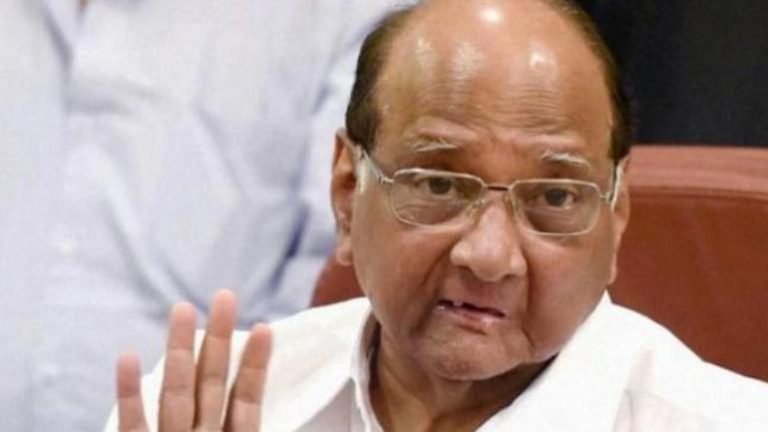
Sharad Pawar’s office mistook V for VVIP with V for Roman V(five): Press Secretary to the President of India

Responding to a report that said that NCP chief Sharad Pawar had boycotted the swearing-in ceremony of PM Modi because he was allotted a seat in the fifth row, Press Secretary to the President of India, Ashok Malik took to Twitter to clear the air about the issue.

Malik tweeted that Sharad Pawar was sent an invitation to attend the swearing-in ceremony for “V-section”, amongst the most senior guests. Malik further added that even within V-section, Pawar was allotted the first row. He alleged that somebody in Pawar’s office might have misconstrued V for VVIP as the Roman V(five).


Sharad Pawar had not attended the swearing-in ceremony which happened on Thursday last week in which PM Modi along with other cabinet ministers took an oath. Reports started pouring in stating that Sharad Pawar had boycotted the swearing-in ceremony because according to him his seniority wasn’t respected by the current regime and that he was extended an invitation to witness the swearing-in ceremony from the ‘V’ fifth row as against the set protocols.

Sharad Pawar was reportedly agitated that a former Union Minister and Chief Minister and a current political party head has not been treated with due respect.