

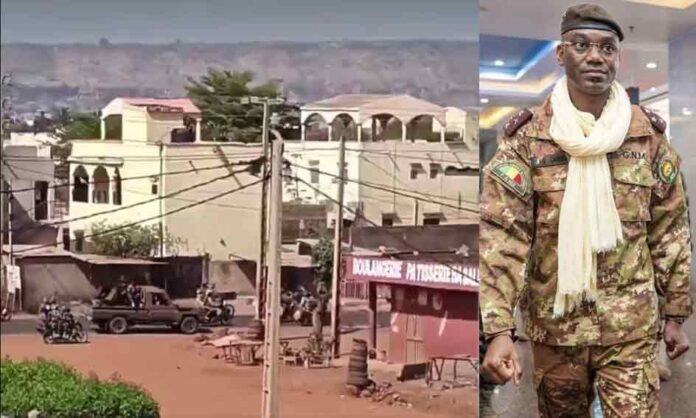
Al-Qaeda-affiliated fighters from Jama’at Nusrat al-Islam wal-Muslimin (JNIM) and Tuareg rebels from the Azawad Liberation Front (FLA) carried out one of the largest coordinated assaults in Mali in recent years on 25 April, targeting military bases, the capital’s airport and key government sites in a direct challenge to the military junta.
Explosions and sustained gunfire were reported from early morning on Saturday in Kati, home to Mali’s main military camp and the residence of junta leaders, as well as Bamako international airport, Mopti, Sévaré, Gao and Kidal. JNIM claimed responsibility for strikes on the residences of junta leader General Assimi Goïta and Defence Minister General Sadio Camara, as well as the Kati base and other targets, stating the operation was coordinated with the FLA. The FLA confirmed its involvement and claimed to have seized control of Kidal and parts of Gao.
Defence Minister General Sadio Camara was killed in a suicide car-bomb attack on his residence in Kati. His house was reported destroyed in the assault. Earlier statements from his entourage had suggested he was safe and not present at the residence, but later accounts from security sources confirmed his death, dealing a significant blow to the junta. The status of other officials remains unclear in some locations.
Sadio Camara was one of the most influential figures within the ruling military leadership and was considered as a possible future leader of Mali. His death is a major blow to the Junta. President Assimi Goïta was immediately moved to a secure location during the attacks, and he remains safe and in control of the military, the govt said.
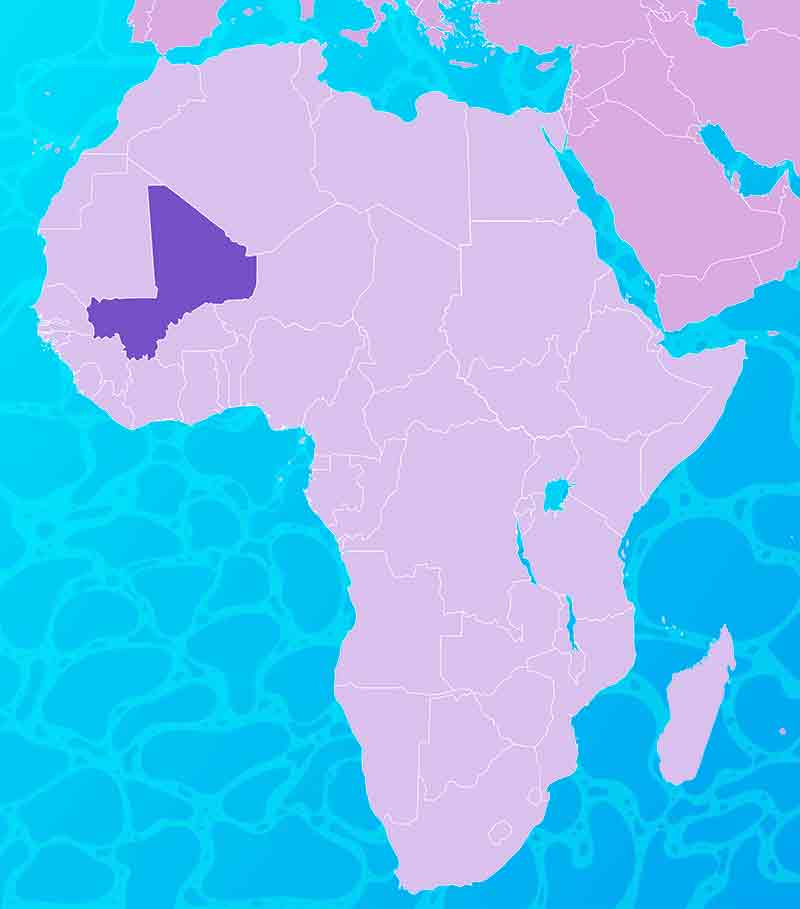
Tuareg-led Azawad Liberation Front (FLA) said its forces had taken control of Kidal and some areas in Gao. Jama’at Nusrat al-Islam wal-Muslimin (JNIM) confirmed that it was involved in the attacks and coordinated with the FLA. They claimed that they attacked the homes of the country’s leader, General Assimi Goita, and Defence Minister General Sadio Camara, among other targets.
“We had been working on this operation for a long time, in a well-planned manner, and in fact, in alliance with JNIM,” Mohamed Elmaouloud Ramadane, spokesman for the FLA, told the BBC. Similarly, JNIM also confirmed that they executed the attacks in collaboration with FLA.
As per reports, FLA attacks were primarily focused on northern cities, while the jihadist group JNIM staged simultaneous attacks on multiple locations across the country. The army said that it was fighting “terrorist groups” that had attacked army barracks in Bamako and other areas on Saturday in the military-ruled nation.
The Malian army said it had repelled the attacks, killing “several hundred” assailants in a large-scale operation. A government spokesperson declared the situation “completely under control”, though an overnight curfew was imposed in Bamako for three days and the airport remained closed. Fighting and sporadic gunfire were reported to persist into Sunday in some areas, prompting the United Nations to call for an international response.
Media reports indicate that Russian mercenaries from the Africa Corps, the rebranded and state-controlled successor to the Wagner Group, now operating under the Russian Ministry of Defence, joined Malian government forces in combating the attacks. Local sources reported that they actively fighting alongside Malian troops in Bamako, Kati and other targeted locations. Russian-aligned media described the defence as a coordinated effort between the Malian Armed Forces and Russian units, crediting the joint operation with preventing the seizure of key infrastructure.
Russian-aligned media agency African Initiative claimed that the coordinated effort by the Malian Armed Forces and Russian units prevented the seizure of key infrastructure by the attackers, including the presidential palace area, and thwarted what it termed a “Syrian scenario”. The report stated, “The co-ordinated actions of the armed forces made it possible to avoid serious damage to the country’s key military facilities and to inflict heavy losses on the jihadists.”
Media describe the assaults as unprecedented in scale and coordination, highlighting the alliances between jihadist and separatist groups in the Sahel and exposing vulnerabilities in the junta’s security posture, which relies heavily on Russian support. President General Assimi Goïta has not made a public statement, but the government maintains it retains control of the country. The president’s whereabouts remain unknown. Mali’s foreign minister accused unnamed neighbouring states and foreign powers of backing the attackers.
The attacks come amid ongoing instability in Mali since the 2020 and 2021 coups that brought the military to power. JNIM and other jihadist groups have exploited the withdrawal of French and UN forces, while Tuareg separatists continue to press claims in the north.
