

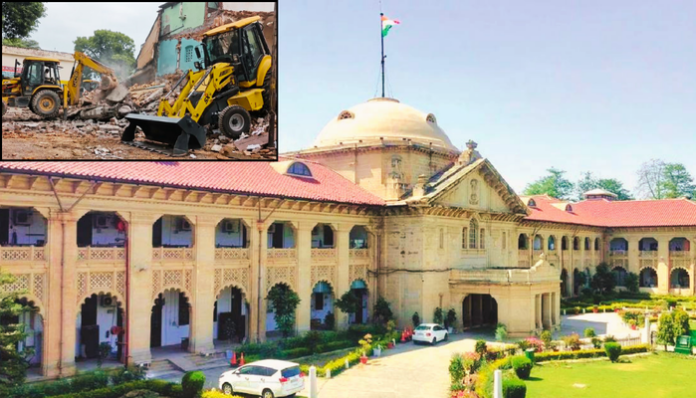
Allahabad High Court on Friday (September 11, 2026) stayed the ₹6.41 crore penalty imposed on the management of the illegal mosque demolished by authorities in Saharanpur, Uttar Pradesh, earlier this month. The High Court sought the Uttar Pradesh government’s counter-affidavit on the petition within three weeks. The next hearing of the matter will happen on October 12, 2026.
A Single Bench of Justice Rohit Ranjan Agarwal passed the order of stay on a petition filed by Mohammad Tanveer Ahmad, representing the mosque management. The petition challenged a City Magistrate’s order dated July 16, 2026, and a district court order passed on September 2, 2026.
The City Magistrate had ordered the eviction of the mosque from the land belonging to the Collectorate and imposed a penalty of ₹6.41 crore on the mosque management. The City Magistrate’s order was upheld by the district court, and the illegal mosque was subsequently demolished by the administration on September 5, 2026.
The demolition of the illegal mosque sparked widespread outrage from members of the Muslim community and opposition parties. The mosque management challenged the demolition of the mosque before the Allahabad High Court, as well as the orders passed by the City Magistrate and the District Court.
The petitioner claimed before the court that the revenue records showed that the mosque land belonged to two Muslims. He further claimed that the mosque was also entered into the Waqf register. The petitioner argued that the eviction order should not have been passed without first deciding the ownership of the mosque property.
The petitioner’s claims were countered by Additional Advocate General Manish Goel, who pointed out inconsistencies in the claims made by him at different stages. Goel said that the revenue records and entries cited by the petitioner were found to be fraudulent by the authorities and that he could not produce any document to prove the ownership of the land.
The Additional Advocate General submitted that the appellate court was right in holding that the land was owned by the federal government during the British period and subsequently vested in the State. He further submitted that initially, a post office existed on the disputed land and the eviction proceedings were initiated on that ground. Subsequently, the illegal mosque was constructed on the land after taking rooms on rent, and namaz started being offered therein.
