

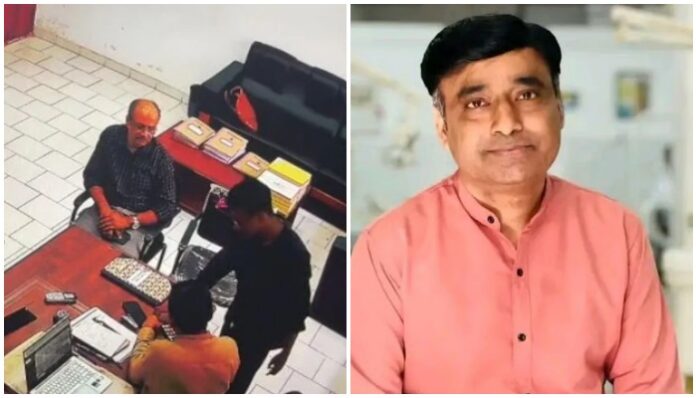
In Kerala, the suicide of a first-year dental student has sparked a controversy over allegations of casteism and bullying on campus. Nithin Raj RL, a 22-year-old Dental student, had fallen from the fifth floor of the Anjarakandy Dental College on April 10. He was later declared dead in the Kannur Medical College.
Nithin Raj’s family and fellow students in the college had levelled serious charges of caste-based insults and harassment on campus, especially over an incident where Nithin Raj was called to the principal’s office after a teacher received threatening calls from loan recovery agents. Nithin Raj had reportedly taken a loan of Rs 14,000 in December, and a teacher named Latha Sasidharan, whose name is similar to that of Nithin Raj’s mother, had received threatening phone calls.
Two faculty members, namely Dr MK Ram, the HOD of the Oral Pathology department and Sangeetha Nambiar, have been suspended by the college following allegations of caste-based harassment and insults meted out to Nithin Raj, who belonged to the Dalit community. The two teachers have not been arrested and have moved court seeking anticipatory bail.
On the complaint of Nithin’s father, Rajan, sections under the Bharatiya Nyay Sanhita for Abetment of Suicide (108), and SC/ST Prevention of Atrocities Act were added to the probe in the case. The family alleges that a bright student like Nithin would never commit suicide over a loan app’s attempt to recover Rs 14,000 from him.
The family alleges that Nithin was insulted, had his phone taken away, and harassed when he was called to the principal’s office in the presence of other teachers, just before his suicide.
Fellow students in the college have levelled serious allegations of harassment, bullying, and personally insulting remarks against Dr MK Ram, who claims he is innocent. Dr Ram has been accused of targeting students of poor socio-economic background and regularly making jokes at them, calling them slumdogs and other derogatory words. Some women students have also stated that he used to body shame them in class and throw insults at them. Frontline quotes a student saying that Nithin was being bullied a lot, and at some point, he had started answering back to Dr Ram, which caught him by surprise. Regarding the other accused teacher, Sangeetha Nambiar, students have denied any precedents of bullying or caste-based insult, citing that she is junior to MK Ram.
Some audio messages from Nithin to his classmates and family have gone viral, as per reports. He is heard saying that Dr Ram threatened to cut his marks, mocked him and shared his answer sheets in class to highlight his mistakes before others, using derogatory words against his mother.
The police investigation is also probing the loan app angle, and three operators of the InstaPay loan app were arrested from Noida on April 18.
In the court, Dr Ram has reportedly submitted a plea stating he himself is a Dalit, hence the SC ST (Prevention of Atrocities) Act should not be applied to him. Ram is reportedly from the Bajandri community, which he claims comes under the Scheduled Castes.
The prosecution, however, has objected to the claims made by Ram. They have presented documents in court showing that Dr Ram is from the OBC community and not SC. The court has accepted the argument, and the verdict will be announced in the next hearing. Ram is also claiming that Nithin’s suicide may have been driven by the circumstances at the principal’s office, and he had no connection to it. However, the prosecution has reportedly presented CCTV footage showing Ram having access to the principal’s room and hearing everything, and certain other things which indicate that Ram may also have been involved in motivating the teacher Latha Sasidharan to file a complaint against Nithin to the principal regarding the loan app.
Meanwhile, politicians in Kerala have started to link the case to the alleged “rising atrocities and discriminations’ against Dalits in college campuses, and have called for the implementation of the UGS guidelines.
The political and social media highlight over the caste angle in the case has spread a narrative that this was a case of ‘upper caste’ atrocity against a lower caste student.
