

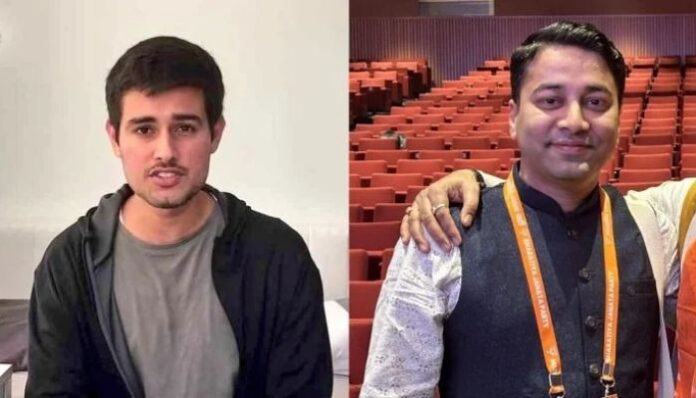
In a major development on Monday (23rd November), a Delhi court issued a non-bailable warrant against YouTuber cum Aam Aadmi Party (AAP) propagandist Dhruv rathee in 2018 defamation case targeting prominent X influencer Vikas Pandey.
The order was issued by Judicial Magistrate First Class (JMFC) Anam Rais Khan of the Saket Court. The matter has been adjourned till 3rd December, 2026.
The development comes a month after bailable warrants were issued against Dhruv Rathee but he failed to appear in court. When the notice was served to the AAP propagandist, it was found that the premises of his residence was locked.
#Breaking Delhi court issues non-bailable warrant (NBW) against Youtuber Dhruv Rathee in 2018 defamation case filed by Vikas Sankrityayan alias Vikas Pandey. @dhruv_rathee @MODIfiedVikas https://t.co/mYibqpv92A
— Bar and Bench (@barandbench) November 23, 2026
Vikas Pandey, the petitioner in the case, who has been aggrieved by the defamatory campaign of Dhruv Rathee also confirmed the development in a tweet. “Non-bailable warrant issued against Dhruv Rathee.” He also thanked his advocate, Samaksh Sharma, in a separate tweet.
Non-Bailable Warrant issued against @dhruv_rathee ✌️
— Vikas Pandey (Sankrityayan) (@MODIfiedVikas) November 23, 2026
Pandey had sought pre-ponement of the matter in October this year, highlighting that the accused (who stays in Germanay) was in India for the Cockroach Janta Party (CJP) protest.
The defamation suit against Dhruv Rathee
The case relates to a series of videos Dhruv Rathee had published in 2018, where he had alleged that Vikas Sankrityan, also known as Vikas Pandey, was a member of the BJP IT Cell and had tried to bribe some Mahaveer Prasad, who claimed is an ex BJP IT Cell member, with Rs 50 lakh to speak against him.
Friends, I have initiated Civil defamation suite against Mr. @dhruv_rathee. Hon. Court has taken cognisance of my suite. He had made false claims against me in a popular video saying I offered bribes of huge amount to someone without ANY proof. Read:https://t.co/9m7f0n1ujz [1/3]
— Vikas Pandey (Sankrityayan) (@MODIfiedVikas) October 1, 2018
After the three-part video series was released, Vikas Pandey filed a defamation case against him claiming ₹15 lakh. Rathee had claimed that Mahaveer Prasad had recording of the call where Pandey allegedly bribed him to talk against Rathee. But after Pandey filed a police complaint, Rathee in a follow-up video said that he ‘regrets’ that he didn’t have the recording of ’50 lakh bribe’ offer.
I would like to thank my family and friends who stood by me at this difficult time and special thanks to my talented lawyer friend @raghav355 who agreed to take up my case pro bono. [3/3]
— Vikas Pandey (Sankrityayan) (@MODIfiedVikas) October 1, 2018
Notably, Vikas Pandey had also sued Arvind Kejriwal for retweeting the videos of Dhruv Rathee. In February this year, the Delhi High Court upheld the suit, declining Kejriwal’s plea to quash the case. In a significant ruling, the court said that retweeting defamatory content does amount to defamation.
After that, Kejriwal told the Supreme Court that he made a mistake by retweeting the defamatory, and was ready to apologise. In August this year, the apex court granted him six weeks of time to file the apology, and stayed the case against him.
