

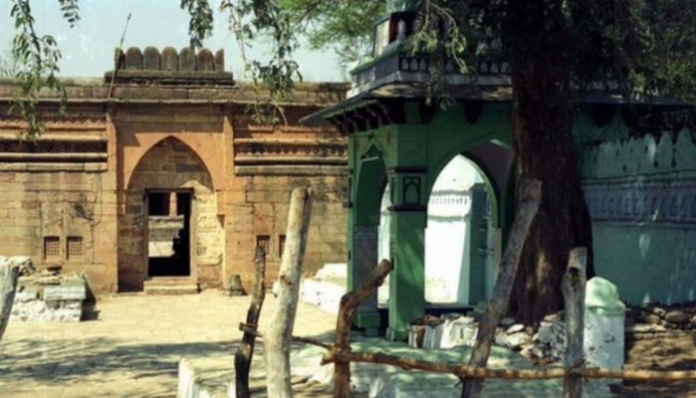
A petition was recently filed by the Maulana Kamaluddin Welfare Society in the Supreme Court, challenging an order of a Division Bench of the Madhya Pradesh High Court, as reported by Live Law. The Division Bench had ordered an inspection of the Bhojshala complex by one of its judges to examine the monument and its historical importance before the next hearing in the case, scheduled to be held on April 2, 2026.
On March 16, 2026, a Division Bench of Justice Vijay Kumar Shukla and Justice Alok Awasthi passed an order deciding that one of the judges would visit the disputed site and conduct an inspection. The order was passed during the hearing of a writ petition filed by the Hindu Front for Justice seeking recognition of the site as a Hindu temple dedicated to Goddess Vagdevi (Saraswati). The 11th-century Bhojshala is an ASI-protected monument located in Dhar, Madhya Pradesh. Hindus believe it is a temple of Goddess Vagdevi (Saraswati), but the Muslim side disputes it, claiming that it is the Kamal Maula Mosque.
In compliance with the High Court order, Justice Vijay Kumar Shukla visited the site on March 28, 2026, amid tight security, along with some experts. He was accompanied by Dhar district collector Priyanka Mishra and local superintendent of police Mayank Awasthi. Justice Shukla visited different parts of the complex and closely examined its pillars and the inscriptions and carvings on them.
On March 11, 2024, the High Court had directed the Archaeological Survey of India (ASI) to conduct a scientific investigation, survey, and excavation at the Bhojshala complex. The ASI submitted a 2,189-page survey report to the High Court on July 15, 2024. The survey report revealed that the existing structure was made from the parts of pre-existing temples, and it was modified and converted into a mosque. It notes that inscriptions dating from the 12th to the 20th centuries in multiple languages and scripts, including Sanskrit, Prakrit, local dialects in Nagari script, and Arabic and Persian, were discovered during the investigation.
