

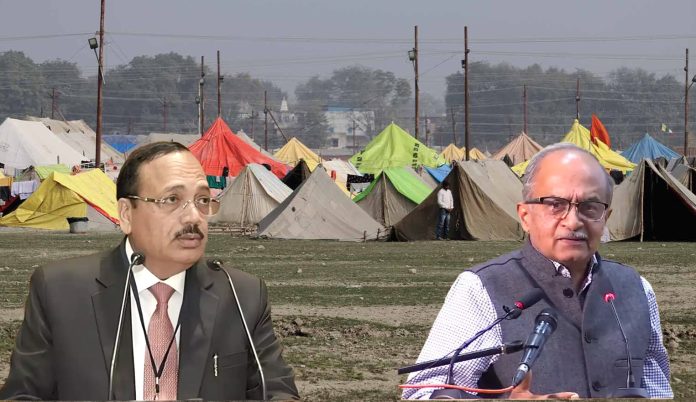
Just days after Chief Justice of India Surya Kant came down heavily on petitioners seeking to protect illegal Rohingya immigrants, a group of a group of retired judges, senior advocates, and leftist activists have together to attack the CJI. The group, including the CJAR (Campaign for Judicial Accountability and Reforms) of activist-lawyer Prashant Bhushan, today issued an open letter expressing concern over what they describe as “unconscionable remarks” made by the CJI-led bench during the hearing on Rohingya immigrants.
The letter, signed by over 30 named including former Chief Justice of the Delhi High Court A.P. Shah, claims that the comments of the CJI risk dehumanising the Rohingyas and eroding public trust in the judiciary’s commitment to human dignity.
The open letter comes just three days after the December 2 hearing of a habeas corpus petition alleging the custodial disappearance of five Rohingya individuals in Delhi. Filed by human rights activist Dr. Rita Manchanda, the petition sought information on the whereabouts of the detainees, allegedly picked up by Delhi Police in May.
During the hearing, the bench comprising CJI Surya Kant and Justice Joymalya Bagchi questioned the legal status of the Rohingyas, asking, “Where is the order of the Government of India declaring them as refugees? Refugee is a well-defined legal term and there is a prescribed authority by the Government to declare them. If there is no legal status of a refugee, and somebody is an intruder, and he enters illegally, do we have an obligation to keep that fellow here?”
The CJI further remarked, “You enter illegally by cutting a fence or through a tunnel, and then say that now that you have entered, you are entitled to all rights – notice, food, and even rights for your children. We also have poor people in this country. Are they not entitled to certain benefits and privileges? Should we give these benefits to others instead?”
The bench also said that if the court accepts the plea for the Rohingyas, it will also have to allow similar petitions from illegal immigrants from other countries.
When the petitioner’s lawyer said that they were not opposing deportation but was only asking information about the detainees and asking for following the rules of deportation, solicitor General Tushar Mehta, representing the government, countered the petition saying that it amounted to seeking sensitive deportation data on instructions from a “complete stranger.” Mehta also argued that the person who filed the petition had no right to raise these issues on behalf of the Rohingyas.
The bench deferred the matter to January, tagging it with other Rohingya-related petitions.
The open letter, drafted by the Campaign for Judicial Accountability and Reforms (CJAR) working group, target the CJI over these observations, calling them “contrary to core constitutional values.” The letter argues that court equated ‘vulnerable refugees’ with “intruders digging tunnels”.
“Such remarks provide a reasonable basis for apprehension of prejudice on the part of the bench against the rights of the Rohingya refugees and for concern that they will adversely affect public trust and confidence in the judiciary when it comes to protecting the rights of the most vulnerable amongst us,” the signatories wrote.
An open letter to the Chief Justice of India from former judges, advocates and the CJAR working group, regarding undignifying remarks on Rohingya refugees during a hearing on the 2nd of December. pic.twitter.com/jhONOlpwry
— Prashant Bhushan (@pbhushan1) December 5, 2025
The Prashant Bhushan-led group argued that Rohingyas are entitled to protections under Article 21 of the constitution, and that they are refugees, not illegal immigrants, despite the fact that Indian govt has not granted them the status of refugees. The letter argues that refugee status is declaratory in nature that the refugee status does not depend on such recognition by a country, but by self-declaration of such persons.
The open letter tries to argue that just because Rohingyas and their protectors in India claim them to be refugees, Indian govt has to agree with them.
The letter notes that the United Nations has labelled the Rohingyas “the most persecuted minority in the world,” and that the International Court of Justice has termed the action on Rohingyas in Myanmar ethnic cleansing and genocide. “They are fleeing to India, like centuries of refugees before them, seeking basic safety,” it states, talking about India’s historical protections for groups like Tibetans, Sri Lankan Tamils, and those escaping East Pakistan in 1971.
“As the head of the judiciary, the Chief Justice is not just a legal functionary—but is also the custodian and final arbiter of the rights of the poor, the dispossessed, and the marginalised,” the letter asserts. It further stated, “Your words carry weight not simply in the courtroom but in the conscience of the nation and have a cascading effect on the High Courts, the lower judiciary and other government authorities.”
The activists called on CJI Kant to publicly reaffirm “constitutional morality based on human dignity and justice for all, regardless of origin,” emphasizing that the Supreme Court’s majesty lies in the humanity of its verdicts.
The letter has been signed by three former judges, Justice AP Shah, former Chief Justice of Delhi High Court, Justice K. Chandru, Former Judge of Madras HC, and Justice Anjana Prakash, Former judge of Patna HC. Prof. Mohan Gopal, Former Director of National Judicial Academy, has also signed it.
The advocates who have signed the letter include known anti-national left-wing names like Rajeev Dhavan, Chander Uday Singh, Colin Gonzalves, Kamini Jaiswal, Mihir Desai, Gopal Shankar Narayan, Gautam Bhatia and Shahrukh Alam.
Apart from Prashant Bhushan, several other members of the CJAR have also signed the open letter.
