

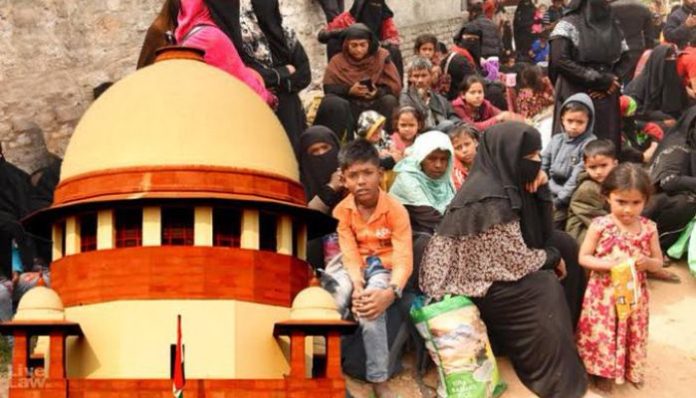
The Supreme Court of India took a very strong stance on Tuesday, 2nd December, while hearing a case about Rohingya refugees who are reportedly missing. The Court strongly questioned whether the judiciary should be expected to give special protection and benefits to people who have entered India without permission.
#BreakingNews | “Do you want us to roll out a red carpet for intruders?”#CJI questions demands for rights when poor Indian children lack access to the same. @akankshaswarups @anany_b with details pic.twitter.com/qMiXqruR4F
— News18 (@CNNnews18) December 2, 2025
Chief Justice of India Surya Kant, who was leading the panel of judges, asked directly, “Do you want us to roll out a red carpet for them?” The Court noted that Rohingyas often come into the country through hidden routes and then demand essential services like food and shelter. The CJI observed, “They enter through tunnels and demand rights like food and shelter.”
The bench also brought up the issue of India’s limited welfare resources. The Chief Justice asked if the country’s own poor children weren’t more entitled to these benefits and questioned how far the law should be stretched to help people who have entered illegally.
National security concerns raised
The judges also highlighted major security concerns connected to people crossing the border illegally, especially in sensitive areas like North India. The CJI stressed the importance of national security, asking, “If an intruder enters illegally, do we have the obligation to keep them here?”
The government questions the petition
The government’s lawyer, Solicitor General Tushar Mehta, questioned the entire case, arguing that the person who filed the petition had no right to raise these issues on behalf of the Rohingyas. He urged the Court not to hear the plea because it was filed by someone “who has nothing to do with Rohingyas.” The Court listened to the arguments and then delayed the matter, saying they would hear it again on 16th December.
The core issue in India is whether the persecuted Muslim minority from Myanmar should be allowed to stay or be sent back because they entered illegally. The Indian government calls them “illegal migrants” because India has not signed the UN Refugee Convention. The government’s main point is that their presence is a security risk.
Intelligence reports have previously flagged issues like people being trafficked, the use of forged identity documents, and connections to extremist groups. However, human rights groups argue that the Rohingyas, who are escaping ethnic cleansing, deserve protection based on international humanitarian principles, and that India must protect the life and dignity of all persons, which is guaranteed by the Constitution, regardless of their nationality.
Most Rohingyas in India have crossed the border illegally through Bangladesh, often with the help of smugglers. They use river routes and jungle paths in states like West Bengal, Tripura, and Assam. They also come in through Jammu and parts of the Northeast. They settle in basic camps in places like Delhi, Jammu, Hyderabad, Mewat, and Rajasthan.
Since they don’t have proper papers, they rely on fake documents like Aadhaar cards or voter IDs to get access to basic services. These illegal entries and fake IDs are the main reasons the government insists the community cannot be given all rights without restrictions.
