

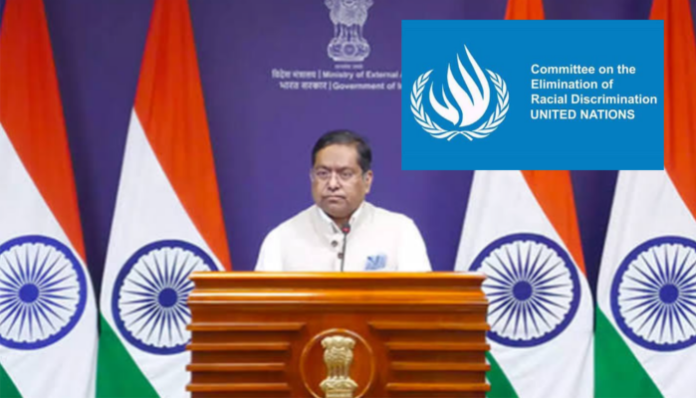
On 26th August (Wednesday), the United Nations Committee on the Elimination of Racial Discrimination’s alleged findings against India have been rejected by New Delhi. The Modi government described the report as “politically motivated” and “highly malicious.” The report was released after India’s eleventh ICERD (International Convention on the Elimination of All Forms of Racial Discrimination) periodic review, which took place in Geneva on 11th and 12th August. The Ministry of External Affairs (MEA) stated that it has reviewed the observations made by the body.
The MEA informed that it was a standard treaty-body assessment and India took part in the process in a constructive manner. It emphasised that the nation continues to be steadfast in its resolve to end racial discrimination. India emphasised its constitutional protections, extensive legal system, pluralistic culture, and ongoing initiatives to protect marginalised populations throughout the evaluation phase.
The MEA countered, “While we will respond to the Committee’s observations through the established procedure, the inter-Ministerial delegation, which was led by the Solicitor General of India, Shri Tushar Mehta, had already rejected the sweeping generalisations, unsubstantiated allegations, or tendency to exceed the Convention’s mandate during the review meeting. India rejects any politically motivated, highly malicious references in the report with all the contempt that it deserves.”
The 12th and 21st combined periodic reports that India submitted to CERD in 2023 were included in the latest review. According to a statement from India’s Permanent Mission in Geneva, discussions included a range of topics, such as the administrative framework for implementing ICERD, advancements made by marginalised groups and policy initiatives to combat prejudice and intolerance.
“The Indian delegation highlighted our pluralism; diversity; scale and complexity; constitutional and legal framework and safeguards; affirmative actions, democratic accountability; judicial remedies; targeted public policy; and sustained socio-economic development, as we continue our journey towards ensuring equality, dignity and opportunity for all Indians,” the formal release read.
The assessment process demonstrated India’s ongoing commitment to upholding and advancing the fundamental rights of all citizens as well as its ongoing interaction with the international human rights framework. In the 1960s, as developing countries fought colonialism, apartheid and racial discrimination, India actively participated in the negotiations and writing of the ICERD.
However, UNCERD’s most recent report on India was filled with anti-India rhetoric, disconnected from the actual realities on the ground, and seemingly aimed at portraying the nation as intolerant and oppressive both towards its own citizens and others. The report criticised India for having the audacity to secure its borders against illegal immigration and for taking measures to protect the lives of its people from terrorist attacks.
