

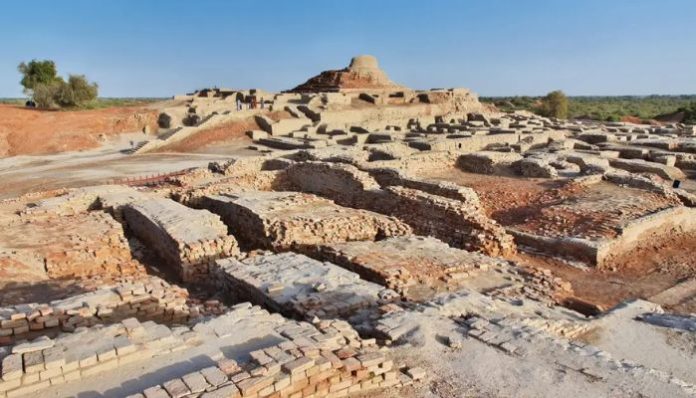
Back in its prime, the Indus Valley Civilisation covered a huge chunk of what’s now Pakistan and northwest India. They had super smart city planning with straight grid streets, brick houses going up multiple stories, and even fancy sanitation like flush toilets, stuff that was way ahead of its time.
There is no clarity on why such an advanced civilisation collapsed. People used to think it crashed because of one big disaster or mysterious event. But now a fresh study suggests that it was not big devastating event, but a bunch of long droughts over centuries that dried things up and broke it down slowly.
What the new study found
A team from places like India’s IIT Gandhinagar and the University of Colorado Boulder of USA put out this research in the journal Communications Earth & Environment. They dug into old climate records and ran computer models looking at weather from 3000 to 1000 BCE. Their findings show that the famous city of Harappa didn’t drop off from a single blow; it got hit by ongoing dry spells that lasted hundreds of years, sucking rivers and soils dry.
Lead author Hiren Solanki explained that these droughts kept pushing folks to pack up and move to spots with better water. His co-author, Balaji Rajagopalan, added that while the dry weather was huge, it teamed up with food shortages and shaky leadership to really tip things over. Still, these people hung on for about 2,000 years by switching crops, spreading out trade, and shifting camps closer to steady rivers like the Indus and its branches. It’s a cool reminder today about planning smart for water, mixing up farming, and handling climate shifts head-on.
From wet times to drought hell
Early on, around 3000 to 2475 BCE, super strong monsoons, kicked off by cool Pacific Ocean vibes like La Nina, brought tons of rain, making the land wetter than now. That let them set up shop where rain was plentiful. But then the Pacific warmed up, monsoons weakened, rains dropped, temperatures climbed, and droughts took over.
The researchers spotted four massive droughts between 2425 and 1400 BCE, each dragging on over 85 years. The worst one around 1733 BCE lasted about 164 years and hit almost the whole area. Overall, temperatures went up 0.5°C (0.9°F), and rain fell by 10-20%. Lakes shrank, rivers ran low, soils turned to dust, messing with the boat trade and farming far from water. People had to migrate, which chipped away at their big society.
Co-author Vimal Mishra’s group showed how these water changes wrecked river travel for goods and made growing food tougher without nearby streams. But the Harappans didn’t just give up; they adapted big time, moving east and south toward the Ganga plains or Himalayan foothills for reliable water. Their water systems, like big cisterns and pipe sewers, bought time, but endless dry stretches wore them down.
Geoscientist Liviu Giosan from Woods Hole called this a game-changer for linking weather to old societies. Past work used spotty data on rain, but this mixes cave stalactites, lake levels, and models for the full water picture. It could explain other river cultures in spots like Mesopotamia, Egypt, or China, too. Giosan says the surprise is how droughts reshaped where people lived, giving archaeologists new stuff to check. Rajagopalan points out that watching Pacific Ocean swings will clue us into future rains here, super relevant as our world heats up.
