

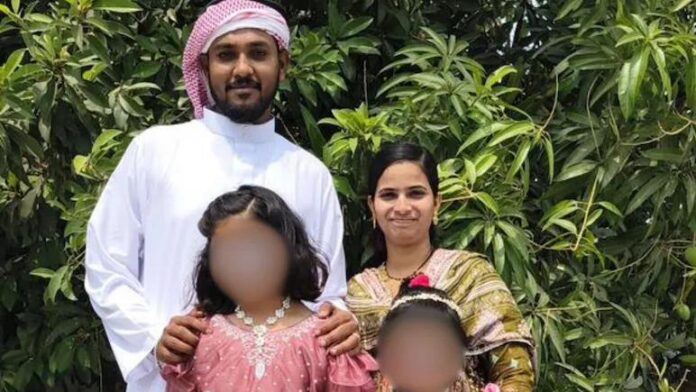
A tragic incident in Warangal that initially appeared to be a case of accidental drowning has taken a chilling turn, with police now stating that a man, identified as Azharuddin, murdered his pregnant wife and their two young daughters over a dispute rooted in gender bias.
The victims, 26-year-old Farhat and her daughters, Umera (8) and Ayesha (6), were found unconscious in a swimming pool owned by the family near the Warangal–Khammam National Highway on Wednesday night. The pool, which the family rented out to visitors, was their primary source of livelihood.
According to early accounts, Farhat and her daughters had stepped near the pool along with relatives when they reportedly slipped into the water. Within minutes, panic spread as family members and locals rushed to pull them out. They were immediately shifted to MGM Hospital in Warangal, where doctors declared all three dead.
Farhat’s husband, Azharuddin, initially told police it was a tragic accident.
However, as investigators began piecing together the sequence of events, the narrative started to unravel.
Police sources revealed that Farhat was pregnant with the couple’s third child, believed to be a girl. Azharuddin allegedly wanted a male child and had been pressuring his wife to terminate the pregnancy. Farhat had refused.
What followed, investigators now believe, was premeditated.
Evidence gathered during the probe raised serious red flags. CCTV cameras at the swimming pool had been switched off shortly before the incident. Phone location data placed Azharuddin at the scene at the critical time. More importantly, inconsistencies in his statements deepened suspicion.
Based on these findings, police suspect that Azharuddin took his wife and daughters to the pool and pushed them into the water, leading to their deaths.
A murder case has since been registered, and special teams have been deployed to track down the accused, who is currently absconding.
The case gained further weight after Farhat’s father, Ali, approached the police with allegations of sustained domestic tension. He claimed his daughter had been under immense pressure in recent days, primarily over the pregnancy and the possibility of giving birth to another girl.
“My daughter was being forced repeatedly. We cannot accept that this was an accident,” he told investigators.
The incident has sent shockwaves through the region, highlighting not just the brutality of the crime but also the deep-rooted societal prejudices that can turn deadly within the confines of a family. As the search for Azharuddin continues, the case stands as a grim reminder of how gender bias and domestic coercion can escalate into irreversible tragedy.
