

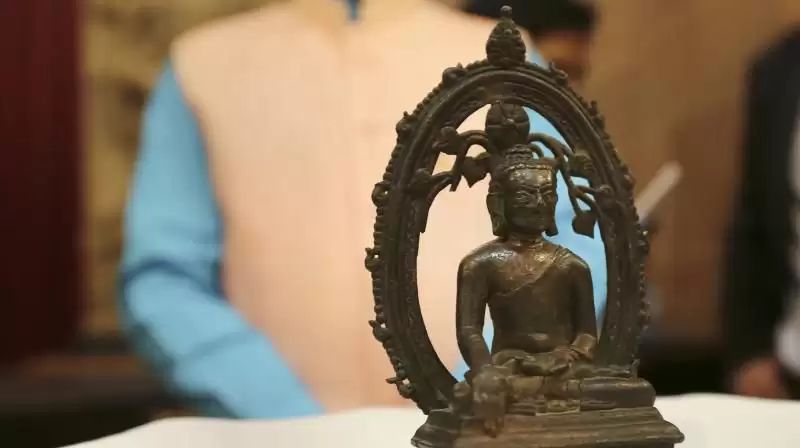
A 12th-century bronze statue of Buddha that went missing from the site museum at Nalanda 57 years ago has been returned to the Indian High Commission in London by London Police. According to reports, the statue was stolen in 1961 with 13 other statues from the Archeological Survey of India site museum at the historical site of Nalanda.
On #IndependenceDay, London’s Metropolitan Police Service (MPS) has returned India a 12th century statue of Lord Buddha stolen from India 57 years ago. The bronze statue is one of the 14 statues stolen in 1961 from Archaeological Survey of India (ASI) museum in Nalanda. pic.twitter.com/FLbiFU7ZSs
— ANI (@ANI) August 15, 2018
The statue was reportedly identified at a trade fair in London in March 2018. A researcher Lynda Albertson of the Association for Research Into Crimes Against Art (ACRA) and Vijay Kumar from India Pride Project identified and reported to the authorities. The case was then taken over by the Metropolitan Police’s Art and Antiques Unit and upon inquiry, the Archeological Survey of India confirmed the identity of the statue. The dealer and the current owner of the statue have reportedly cooperated with the police and the London authorities reportedly believe that the statue had changed hands several times over the years.
The UK government’s department of Digital, Culture, Media and Sports, (DCMS), along with the London Metropolitan Police handed the statue over to the Indian High Commission in London marking India’s 72nd Independence Day yesterday.
This was the second such incident of ancient Indian artefacts being returned to India after the MET museum of the United States of America returned two statues to India just days ago. One statute was an eighth-century statue of Devi Durga and another was a third-century limestone statue of a male deity. The Durga statue is reportedly from the Chakravarteswar Temple in Uttarakhand’s Bajinath, a medieval capital city and the other statue was a part of the excavated inventory form the Nagarjunakonda site museum.
India has a rich cultural heritage and the theft and smuggling of ancient idols have always been a problem. Not only the statues and artefacts are highly valued in international markets, they represent a part of India’s history and hence are regarded as priceless. The government of India has been trying to get previously stolen statues and artefacts back to India through diplomatic channels. During PM Narendra Modi’s US visit, 200 ancient artefacts have been handed back to India.
Two years ago, Australia had returned three ancient Indian statues and currently, the Tamil Nadu government is in talks with the Australian authorities for the return of seven ancient temple idols currently on display in the Canberra based National Gallery of Australia.
A UNESCO estimate states that by the year 1989, over 50,000 idols and artefacts had been stolen from India to be sold in international markets. The business of stolen artefacts is believed to be of Rs 40,000 crores a year. There are still hundreds of priceless statues missing from India.


