

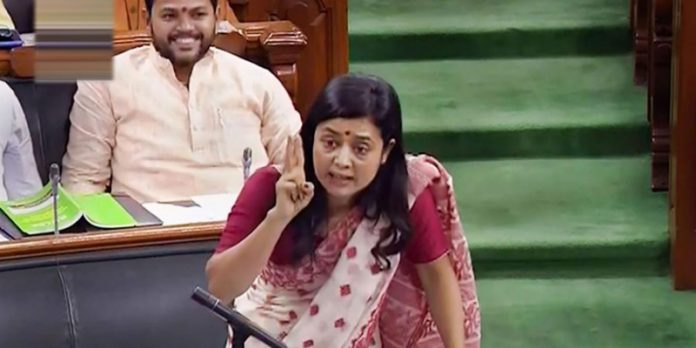
Trinamool Congress (TMC) member of Parliament Mahua Moitra has been served a notice over a privilege motion after she made some controversial remarks targeting former Chief Justice of India and current Rajya Sabha MP Ranjan Gogoi in the Lok Sabha last month. Moitra took to Twitter to inform that she has been served a notice for “speaking truth in parliament” calling the notice a “badge of honour”.
What better way to end Women’s Day than to learn I have apparently been served notice for speaking truth in parliament about ex CJI accused of sexual harassment being rewarded by misogynistic patriarchy with seat in RS!
— Mahua Moitra (@MahuaMoitra) March 8, 2021
Thank you God, for this badge of honour!
Moitra was served the notice after BJP MP from Jharkhand Nishikant Dubey moved a privilege motion against her. She has been asked to file her response to the notice by March 25. Dubey had filed a privilege motion notice against Moitra on February 10. Moitra had reportedly launched an attack at the government, judiciary and media in her speech during the discussion on the Motion of Thanks to the President’s address. Her remarks were expunged by the Lok Sabha later.
Commenting on Moitra’s remarks, Dubey said that members of Parliament think that they can say anything using their Parliamentary protection. “Members believe that using the parliamentary protection, they can say anything against anyone and get away. I want this perception to change. I am grateful to the Speaker for admitting the motion”, he said.
Notice demands termination of Moitra’s membership
The notice served against Moitra demanded the termination of her membership in the Lok Sabha. Referring the matter to the committee of privileges under rule 227 of the rules of procedure and conduct of business in Lok Sabha for examination, investigation and report, the notice read, “Despite the fact that the remarks were expunged from the record, it continued to be put on social media and was published by a daily. Thus I demand action should be taken against the said member and her membership be terminated”.
Constitutional and procedural bar on discussing the conduct of a judge in Parliament
Article 121 of the Constitution of India prohibits any discussion in the Parliament regarding the conduct of any judge of the Supreme Court or of a High Court in the discharge of his duties except upon a motion for presenting an address to the President praying for the removal of the judge. The Rules of Procedures 352(5) of the Parliament provides that the conduct of people in constitutional positions cannot be questioned. Despite the direction of the Chair in the parliament house, Moitra reportedly kept repeating her statements in violation of Rule 356 of Lok Sabha procedure.


