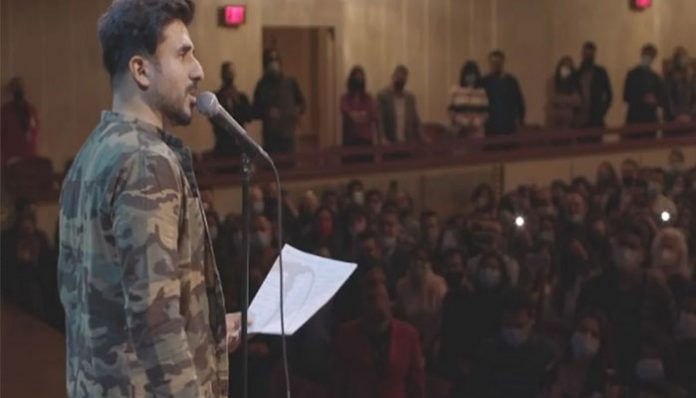
On November 16, ‘comedian’ Vir Das responded to the allegations that he defamed and spoiled the image of India in the USA. He published the reply on his social media accounts in which he said that a video that he had posted on YouTube was getting a sizeable response. Calling the video satire, he claimed that he wanted to show the dual image of India. He said, “The video is a satire about the duality of two very separate Indias that do different things. Like any nation has light and dark, good and evil within it. None of this is a secret.”
— Vir Das (@thevirdas) November 16, 2021
He further added that the video ended in a ‘gigantic patriotic round of applause for a country we all love, believe in, and are proud of’. He claimed that the point he wanted to make in the video was that ‘there is more to our country than the headlines, a deep beauty’.
He urged the people on social media not to get ‘fooled by edited snippets’. He said, “People cheer for India with hope, not hate. People clap for India with respect, not malice. You cannot sell tickets, earn applause, or represent a great people with negativity, only with pride.”
He claimed he takes pride in India and carries that pride across the world. “To me, a room full of people anywhere in the world, giving India an ovation is pure love. I ask of you, the same thing I asked of that audience…to focus on the light, remember our greatness, and spread the love.”
Complaint against Vir Das
Advocate Ashutosh J Dubey, a practising legal solicitor at Bombay High Court and the legal advisor of BJP-Maharashtra, shared a copy of the complaint he filed against the comedian. He accused Das of “defaming and spoiling the image of India in the USA”, which he said “is venomous and inflammatory”. Advocate Dubey accused the ‘comedian’ of willfully spelling inciting and derogatory statements against India, Indian women and the Prime Minister of India in his show at the John F. Kennedy Center for the Performing Arts in Washington DC.
In his 7-minute monologue, Vir Das had claimed, “I come from an India where we worship women during the day and gangrape them during the night.” Das used humour to push an anti-India propaganda in his 7-minute monologue. He talked about politics, religion, and nationality, all while instilling fear that India, which was once built by great men, would soon be forgotten. The comedian carefully sandwiched the propaganda material between comic elements and punchlines in his tirade.