

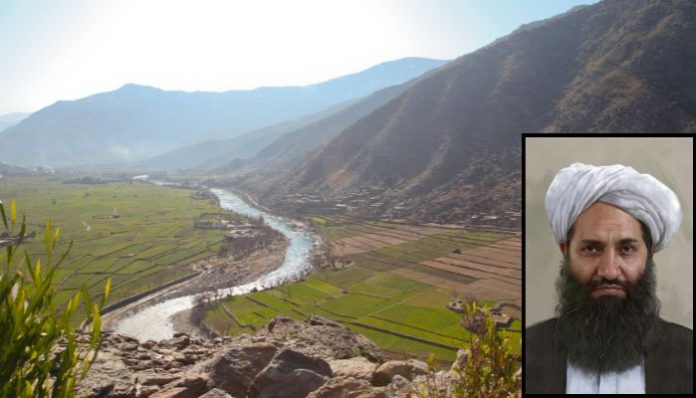
Taliban-ruled Afghanistan has announced plans to build dams to stop water flow into Pakistan.
According to Afghanistan’s Ministry of Information, Taliban Supreme Leader Mawlawi Hibatullah Akhundzada has ordered the construction of a dam on the River Kunar “as fast as possible.” The ministry said the decision is part of Afghanistan’s effort to assert its “right to water,” even as tensions with Pakistan have been running high after weeks of deadly border clashes.
AFTER INDIA, AFGHANISTAN TO RESTRICT WATER TO PAK.
— Rahul Shivshankar (@RShivshankar) October 24, 2025
Blood and water can't flow together.
Afghanistan is reviving a 2023 plan to curb Pak's access to water from cross-border rivers. Taliban's Supreme Leader said that Kabul will build a dam on the Kunar River. pic.twitter.com/2I4BQ5rJWN
Taliban moves to restrict Pakistan’s water supply
The announcement came just days after India decided to suspend the Indus Water Treaty with Pakistan, following the 22nd April terrorist attack in Pahalgam that killed 26 civilians. Many analysts now see Kabul’s move as a signal that Afghanistan, too, is ready to use its water resources as a tool of pressure against Pakistan.
The Afghan Ministry of Water and Energy confirmed that Akhundzada had instructed officials to immediately begin work on dams along the Kunar river and to award construction contracts to domestic Afghan companies instead of waiting for foreign firms. Muhajer Farahi, Afghanistan’s Deputy Minister of Information, made the announcement on X (formerly Twitter).
London-based Afghan journalist Sami Yousafzai also commented on the development, saying, “After India, it may now be Afghanistan’s turn to restrict Pakistan’s water supply.” He added that the Taliban leadership has made it clear that dam construction will move ahead without outside dependence.
The Kunar River: A lifeline for Pakistan
The 480-kilometre-long Kunar river originates in the Hindu Kush range of northeastern Afghanistan at the Broghil Pass near the Pakistan border. It flows through Afghanistan’s Kunar and Nangarhar provinces to enter Pakistan’s Khyber Pakhtunkhwa, where it joins the Kabul river near Jalalabad. In Pakistan, it is called the Chitral river.
The Kabul river, to which the Kunar empties, is the most significant transboundary river that Afghanistan and Pakistan share. It finally merges into the Indus near Attock and is crucial for Pakistan’s irrigation of Khyber Pakhtunkhwa and Punjab provinces. Specialists assert that if Afghanistan closes off the Kunar, it might have a cascading impact on Pakistan’s whole river system, aggravating water scarcity and influencing millions of farmers.
“The Kabul and Kunar rivers have long been major water sources for Pakistan,” Yousafzai said. “Any disruption to these rivers could seriously impact Pakistan’s agriculture and energy generation.”
Growing tensions over water and border disputes
This new move from the Taliban government comes just weeks after fierce fighting along the Durand Line, the disputed border between Afghanistan and Pakistan that was drawn by British colonial authorities. The Taliban refuses to recognise the Durand Line as an international border, calling it an illegitimate division of the Pashtun homeland.
Since taking power in 2021, the Taliban has prioritised asserting Afghanistan’s control over its natural resources, particularly water. It has pushed aggressively to expand hydropower and irrigation projects to boost domestic energy generation and reduce dependence on neighbouring countries.
Pakistan and Afghanistan, however, have no water-sharing agreement. Islamabad has already protested against Afghanistan’s increasing emphasis on water sovereignty. Pakistani government officials have cautioned that unilateral initiatives on common rivers would set off a regional water crisis at a time when Pakistan itself is suffering from extreme food and energy security challenges.
India and Afghanistan strengthen cooperation on water projects
The Taliban’s announcement comes only a week after Afghanistan’s Foreign Minister Mawlawi Amir Khan Muttaqi met Indian External Affairs Minister S. Jaishankar in New Delhi. Both countries agreed to strengthen cooperation on hydropower and dam projects during that meeting.
According to their joint statement, the two ministers “appreciated India’s assistance in the construction and maintenance of the India-Afghanistan Friendship Dam (Salma Dam) in Herat” and emphasised the importance of “sustainable water management.” They also agreed to work together on new hydroelectric projects to meet Afghanistan’s energy and agricultural needs.
India’s long-standing partnership with Afghanistan in the field of water and energy development has already produced major results. The Salma Dam, completed in 2016 with about $300 million in Indian funding, provides 42 megawatts of power and irrigates nearly 75,000 hectares of land in Herat province. It has significantly reduced Afghanistan’s reliance on imported electricity.
Building on this, the Shahtoot Dam on the Maidan river, a tributary of the Kabul river, was formalised under a 2021 MoU with India’s $250 million commitment to store 147 million cubic meters of water. This will provide clean water to over two million Kabul residents and irrigate 4,000 hectares of semi-arid land for agriculture.
