

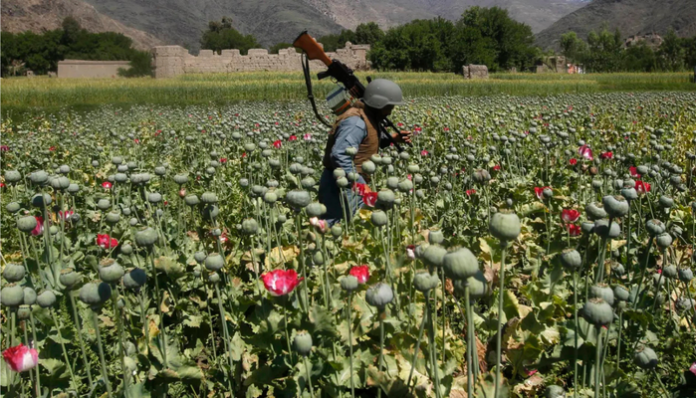
The area under opium poppy cultivation in Afghanistan shrank by 20% this year, as estimated by a new report by the UN Office on Drugs and Crime released on Thursday (6th November). The area under opium cultivation this year came down to 10,200 hectares from 12,800 hectares in 2024. The decline followed an initial plunge in opium farming in 2023 after it was banned by the Taliban.
The current area under opium cultivation is far below the 232,000 hectares recorded before the ban. According to Reuters, the current reduction in the area under opium cultivation followed a 19% rebound in 2024. A massive drop was registered in opium cultivation in 2023 after the Taliban banned narcotics production in 2022.
The survey states that the opium harvest experienced a sharp decline of about a third, stopping at 296 tons annually (32%). Additionally, despite a significant decline in opium production, the prices for dry opium also dropped by 27% to $570 per kilogram, which has led to a fall in the income of opium farmers. As a result, several farmers have switched to growing cereals and other crops.
The UNODC report stated that over 40% of the farmland is left barren due to drought and low rainfall. The situation is worsened with the return of about four million Afghans from neighbouring countries. This has increased pressure on jobs and resources available in the country. Taking into consideration factors like the ban on opium cultivation and strain on the resources, the UNODC emphasises the need to combine opium cultivation eradication efforts with support for alternative livelihoods and demand-reduction measures to prevent illegal farming.
Noting that the instances of confiscation of synthetic drugs like methamphetamine increased by 50% in and around Afghanistan in 2024, the UNODC report cautioned that organised criminal gangs might be lured towards synthetic drugs after the opium ban, as they are easier to produce, harder to detect and less vulnerable to climate shocks. “As agricultural-based opiate production declines, synthetic drugs appear to have become the new business model for organized crime groups due to the relative ease of production, the greater difficulty in detection and relative resilience to climate changes,” the report stated.
Deputy Special Representative of the Secretary-General for Afghanistan and Officer-in-Charge of the UN political mission in the country, Georgette Gagnon, said that drug-trafficking is a global menace and is not limited to Afghanistan. “The dynamics of supply, demand and trafficking involve both Afghan and international actors,” Gagnon said, asserting that the solution requires a collaboration among key stakeholders. The report stresses the need for counternarcotics strategies that address synthetic drugs as well.
