

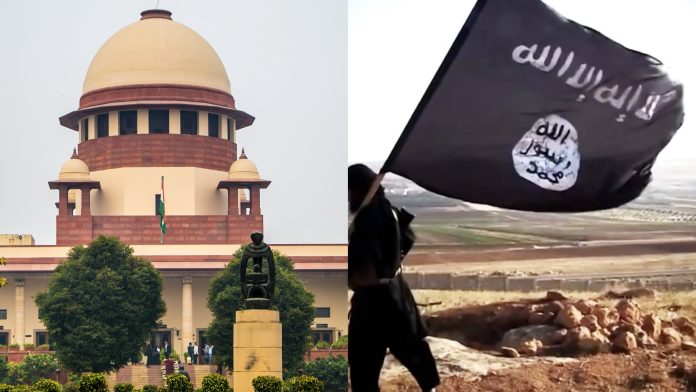
A day after the horrific car blast near Delhi’s Red Fort that killed nine people and reignited concerns about growing terror networks, the Supreme Court on Tuesday sent out a strong message on national security while hearing an unrelated UAPA case.
During the proceedings, Senior Advocate Siddhartha Dave, representing the accused, began on a sombre note: “Not the best morning to argue this case after the events of yesterday.”
But the Bench of Justices Vikram Nath and Sandeep Mehta offered a pointed rejoinder: “Best morning to send a message.”
The remark, made in the backdrop of the capital’s fresh brush with terror, underscored the Court’s intent to take a firm stance on cases involving alleged extremist activity.
The accused had sought bail under the Unlawful Activities (Prevention) Act (UAPA). When the Bench noted that inflammatory material was recovered from him, Dave argued that it was “only Islamic literature.” The Court, however, was unconvinced, citing the sensitivity of the material and its possible implications.
Justice Mehta further noted that the accused had created a WhatsApp group on which an image of a flag “almost identical to that of ISIS” was shared.
Dave countered that his client had already spent over two years in custody, that no RDX or explosive material was recovered, and that the man was 70% disabled. Despite these submissions, the Court refused bail, stressing the gravity of the charges under the stringent UAPA provisions.
However, balancing fairness with firmness, the Bench directed that the trial must conclude within two years, adding that if proceedings are delayed without fault on the accused’s part, he may reapply for bail.
