

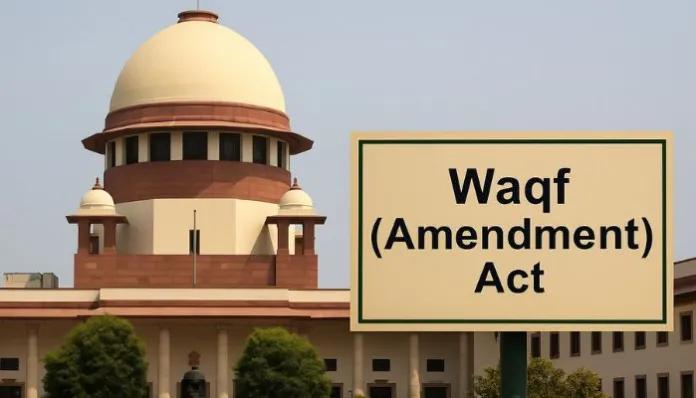
In a major boost for the Centre’s Waqf reforms, the Supreme Court on Monday declined to extend the December 6 deadline for uploading details of registered Waqf properties on the Umeed portal. Petitioners had sought more time, citing persistent technical glitches and the practical difficulty of locating mutawallis of very old endowments.
But the Bench of Justice Dipankar Datta and Justice Augustine George Masih was unmoved. Parliament has already created a statutory mechanism, the judges said, and the Court cannot step in to rewrite the law. “Approach the Tribunal. Let them decide case by case… the statute already provides a remedy,” the bench observed, making it clear that judicial intervention was unnecessary when a specialised forum exists.
The Court also clarified that applicants won’t be penalised for genuine technical failures: if the portal freezes or prevents uploads, the Waqf Tribunal can take note of it and decide whether the mandatory six-month period should be counted from a later date.
With the deadline intact, stakeholders must now file their representations before the Tribunal, document any portal-related issues, and seek extensions or directions directly from the body empowered under the amended law.
The decision comes as the Centre pushes a comprehensive overhaul of Waqf administration. After the Waqf (Amendment) Act, 2025 came into force in April, the government launched the UMEED portal on June 6, a digital, geo-tagged registry aimed at bringing all Waqf properties under one transparent, centralised system.
Every Waqf asset is required to be uploaded within six months of the portal’s rollout.Appearing for the applicants, Senior Advocate Kapil Sibal argued that the time frame was too short, especially for century-old Waqfs where even basic information on the original Waqif is missing, a prerequisite for uploading details on the portal.
