

HomeSpecialsAlchemy of superalloys and single-crystal blades: How India is mastering the metallurgical hellscape of...

Alchemy of superalloys and single-crystal blades: How India is mastering the metallurgical hellscape of aero engines

For decades, this intricate dance of vacuum casting, exotic metallurgy, and laser drilling was an impenetrable barrier to entry, fiercely guarded by a handful of Western and Russian manufacturers. India has now started to master these technologies.

This is Part 3 of a three-part series on aero engines in India. You can read Part 1 here and Part 2 here.

Having explored the state-led programmes powering India’s fighters and helicopters in Part 1, and the private start-ups building missile engines and high-speed drones in Part 2, we now arrive at the ultimate engineering bottleneck: the physical science of jet engine survival.

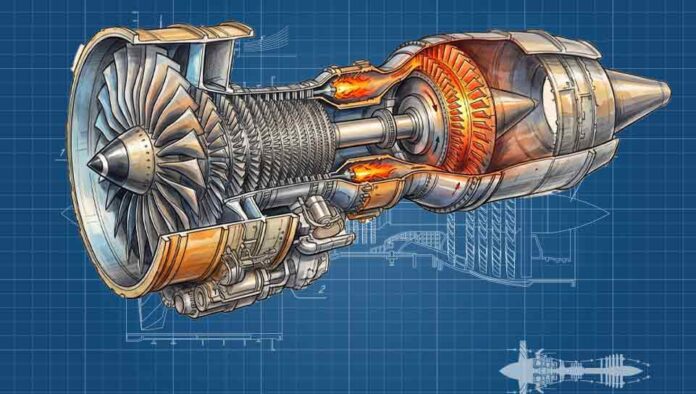
Building a modern jet engine ranks among the most demanding feats of engineering. To understand why building a jet engine is often considered the apex of human engineering, one must look inside the combustion chamber and the high-pressure turbine that immediately follows it. It is a genuine metallurgical hellscape. Here, gases explode and expand at temperatures well exceeding 1,700°C, a heat ferocious enough to liquefy the very metals designed to contain it.

how a jet engine with afterburner works

Components spin at tens of thousands of revolutions per minute, experience extreme centrifugal forces, thermal gradients, oxidation and corrosive gases, and must survive thousands of hours of cyclic loading without catastrophic failure. A single blade failure can destroy an engine and endanger the aircraft. Consequently, the materials and manufacturing processes used in the hot section—particularly the high-pressure turbine blades and discs—have become the most closely guarded technologies in aerospace.

The material science of jet engines

The true secret of modern jet propulsion is not merely aerodynamic design; it is materials science pushed to the absolute edge of physics. The first line of defence against this inferno is the superalloy. Standard aviation steel or titanium would simply wilt under the combined assault of extreme heat and the immense centrifugal forces of spinning at tens of thousands of revolutions per minute. Instead, engineers rely on complex nickel-based superalloys. These complex alloys, typically containing chromium, cobalt, aluminium, titanium, tungsten, tantalum, rhenium and other elements, derive their strength from a carefully controlled microstructure of gamma and gamma-prime phases. These exotic alloys maintain their immense structural strength even as they approach their melting points, resisting both thermal creep and violent oxidation. The gamma-prime precipitates provide the high-temperature strength and creep resistance essential for turbine blades.

Yet, even the finest superalloys are not enough. In standard metallurgy, as liquid metal cools, it forms microscopic grains. Even the best polycrystalline superalloys eventually fail because grain boundaries act as weak points under prolonged high-temperature stress. The boundaries where these grains meet are inherently weak points—prime targets for microscopic fractures under the crushing stress of high-G combat manoeuvres. Directionally solidified blades, in which grains are aligned parallel to the principal stress axis, offered a major improvement by eliminating transverse grain boundaries, but didn’t eliminate the problem.

The solution is an engineering feat bordering on alchemy: the single-crystal turbine blade, in which the entire component is grown as one continuous crystal with no grain boundaries at all. Through a painstaking, highly classified investment casting process within a vacuum furnace, molten superalloys are cooled so meticulously that they solidify into one continuous, perfect metallic crystal. With no grain boundaries to pull apart, a single-crystal blade is astonishingly resilient. It is capable of enduring centrifugal forces equivalent to a double-decker bus dangling from its tip, all whilst operating inside a furnace. Single-crystal technology allows higher turbine entry temperatures, better efficiency, longer component life and greater thrust.

Even with this crystalline perfection, the ambient temperature of the exhaust gas still exceeds the blade’s melting point. To prevent catastrophic failure, these blades are manufactured hollow, featuring a microscopic, labyrinthine network of internal cooling channels. Cooler air bypassed from the engine’s compressor is bled through these internal arteries, weeping out through laser-drilled pores on the blade’s surface to create a protective, microscopic film of cold air. The metal never actually touches the roaring flames; it remains coated with this layer of air.

Producing a single-crystal blade is extraordinarily difficult. The process relies on vacuum investment casting. A precise wax model of the blade, complete with intricate internal cooling channels, is coated with successive layers of ceramic slurry to form a mould. After the wax is melted out, the mould is heated and molten superalloy is poured under high vacuum to prevent oxidation and contamination. A carefully controlled temperature gradient and solidification rate, often guided by a helical “pigtail” or seed crystal, force the metal to solidify as a single crystal of the desired crystallographic orientation.

Any defect—stray grains, freckles, porosity or misoriented crystals—renders the blade scrap. Subsequent steps include complex heat treatments to optimise the microstructure, machining to final aerofoil contours, drilling of thousands of microscopic film-cooling holes, application of bond coats and thermal barrier coatings, and exhaustive non-destructive evaluation. Thermal barrier coatings, usually yttria-stabilised zirconia deposited by electron-beam physical vapour deposition, further protect the metal by reducing the temperature the substrate experiences. The entire chain demands absolute cleanliness, precise process control and specialised equipment that only a handful of nations possess.

Beyond blades, turbine discs present their own set of problems. These massive rotating components must resist disc burst under extreme centrifugal loads while remaining resistant to fatigue and creep. Powder metallurgy routes followed by isothermal forging under carefully controlled temperatures and strain rates are often required to achieve the fine grain structure and cleanliness demanded. Titanium alloys used in the cooler compressor sections bring challenges of their own—reactivity with oxygen and nitrogen, difficulty in forging, and the need for specialised melting and processing routes. Rare-earth elements and refractory metals required in advanced alloys are themselves subject to supply constraints and geopolitical risks. Manufacturing tolerances are measured in microns; surface finishes must be near-perfect to avoid stress concentrations; and every process must be qualified to airworthiness standards that leave almost no margin for error.

For decades, this intricate dance of vacuum casting, exotic metallurgy, and laser drilling was an impenetrable barrier to entry, fiercely guarded by a handful of Western and Russian manufacturers. For decades, the full single-crystal technology remained the preserve of a handful of nations.

India’s breakthrough

India recognised these barriers early and has pursued a systematic, multi-decade effort to overcome them. The Defence Metallurgical Research Laboratory, a premier DRDO lab based in Hyderabad, has stood at the centre of this endeavour. Drawing on expertise gained during earlier aero-engine programmes, DMRL established complete vacuum investment casting capabilities for both directionally solidified and single-crystal components.

In April 2021, India formally shattered the monopoly. The Defence Metallurgical Research Laboratory successfully achieved the holy grail of aero-engine metallurgy by developing indigenous single-crystal high-pressure turbine (HPT) blade technology.

To achieve this, DMRL scientists worked with CMSX-4, a highly complex nickel-based superalloy. The engineering hurdles were immense. DMRL had to formulate entirely novel ceramic compositions to create moulds capable of withstanding the extreme metallostatic pressure of the liquid CMSX-4 alloy at temperatures exceeding 1,500°C. They mastered the daunting challenge of maintaining exact temperature gradients during the casting process, ensuring the metal solidified as a single, uninterrupted crystal.

Following the casting, DMRL established a multi-step vacuum solutionising heat treatment schedule to lock in the required microstructure and mechanical properties. Because a single imperfection could cause a catastrophic engine failure mid-flight, they also developed stringent non-destructive evaluation (NDE) methodologies, using advanced techniques to verify the crystallographic orientations of the finished blades.

The process encompassed die design, wax patterning, ceramic moulding, vacuum casting, multi-step heat treatment tailored to complex alloys such as CMSX-4 equivalents, crystallographic orientation measurement and stringent non-destructive evaluation. This achievement placed India among the small group of nations capable of producing such components.

Crucially, this was not merely a laboratory experiment; it was rapidly translated into production. Driven by the needs of Hindustan Aeronautics Limited’s (HAL) indigenous helicopter engine development programme, DMRL committed to producing a total of 300 single-crystal HPT blades, divided into five batches of 60.

Upon announcing the breakthrough in April 2021, DRDO immediately supplied the first operational batch of 60 high-pressure turbine blades to HAL for integration and testing. With the production pipeline established to deliver the remaining four sets, the fact that Indian entities have cracked the code of single-crystal casting is the truest indicator that India’s aero-engine renaissance is built on an unshakable, sovereign foundation.

Progress has continued steadily after that. By 2024, single-crystal high-pressure turbine blade castings had been delivered, with vane casting progressing. Ready-to-fit blades and vanes incorporating advanced thermal barrier coatings have been manufactured.

In October 2025, PTC Industries received a landmark purchase order from the Gas Turbine Research Establishment for post-cast operations on single-crystal blades—machining, grinding, brazing, vacuum heat treatment and thermal barrier coating. This marked the first time an Indian private company had been entrusted with the complete finishing chain for these critical components. DMRL has since invited industry partners through formal requests for information to industrialise creep-feed grinding, film-cooling-hole drilling and coating processes, signalling the transition from laboratory success to production-scale capability.

Parallel advances have occurred in superalloy development and disc forging. DMRL, working with Mishra Dhatu Nigam Limited, has indigenised several nickel-based superalloys and established near-isothermal forging technology using a two-thousand-tonne press. High-pressure compressor discs in difficult-to-deform titanium alloys have been produced and supplied to HAL for engines such as the Adour.

MIDHANI has received airworthiness clearances for multiple grades of superalloys, titanium alloys and special steels required for both indigenous programmes and the sustainment of engines such as the AL-31FP. Powder-metallurgy methods for advanced turbine discs capable of operating at higher temperatures are also under active development. Thermal barrier coating technology, including platinum-aluminide bond coats and ceramic top coats, has been established at DMRL in collaboration with the International Advanced Research Centre for Powder Metallurgy and New Materials.

These material and process advances are not isolated laboratory curiosities. They directly support the Kaveri derivative engines, the HTSE-1200 and HTFE-25 programmes, and the future high-thrust engine intended for the Advanced Medium Combat Aircraft. By mastering single-crystal casting, advanced superalloys, isothermal forging and protective coatings, India is progressively closing the technology gap that once made indigenous jet engines appear almost unattainable.

Challenges remain — scaling production volumes, further raising temperature capability, reducing costs and achieving full type certification for the most advanced alloys — but the foundational barriers have been breached. The combination of sustained laboratory effort at DMRL, industrial participation by organisations such as MIDHANI, PTC Industries and HAL, and the growing ecosystem of private manufacturing capability is steadily converting one of the world’s most difficult technological domains into an Indian strength.

The cumulative effect of these parallel efforts is a propulsion ecosystem that no longer rests on a single fragile programme. Lessons from Kaveri’s difficulties—realistic timelines, better test infrastructure, earlier industry involvement and selective collaboration on the most complex technologies—are being applied across the board. Public laboratories retain design authority while private firms take on manufacturing and even development of engines. Materials science, once the weakest link, is steadily strengthening. The result is not yet complete self-sufficiency in every thrust class, yet the trajectory is unmistakable. India is moving from a narrative defined by the shortcomings of one engine to a broader story of multiple successful programmes that together are building the industrial and technological foundation for long-term aerospace autonomy.

Join OpIndia's official WhatsApp channel

  Support Us  

For likes of 'The Wire' who consider 'nationalism' a bad word, there is never paucity of funds. They have a well-oiled international ecosystem that keeps their business running. We need your support to fight them. Please contribute whatever you can afford

Raju Das
Raju Das
Editor and Analyst | Facts first. Bharat above all.

Related Articles

Trending now

Private thrust: How Indian start-ups are building aero-engines from scratch

The story of Indian aerospace propulsion is no longer confined to PSUs. Across the country, a quiet revolution is underway as private companies are manufacturing their own jet engines from scratch.

Global trade choke points and the need for new routes: India, Central Asia and the INSTC

"Risks related to the Bosporus and the Strait of Hormuz might require alternative routes," stated deputy PM Khusnullin.
- Advertisement -

